


Wheelchair Ramps Australia: The Complete Guide

A wheelchair ramp is a sloped surface — usually rubber, aluminium or timber — that replaces or bridges a step so a wheelchair, mobility scooter or walking frame can move between two levels safely. In Australia, AS1428.1 sets the maximum gradient at 1:14 for ramps over 1,900mm, with landings, handrails and a slip-resistant surface required for compliant, safe use. Ready to buy? Shop our wheelchair ramps in rubber, aluminium and timber.
Which wheelchair ramp do I need?
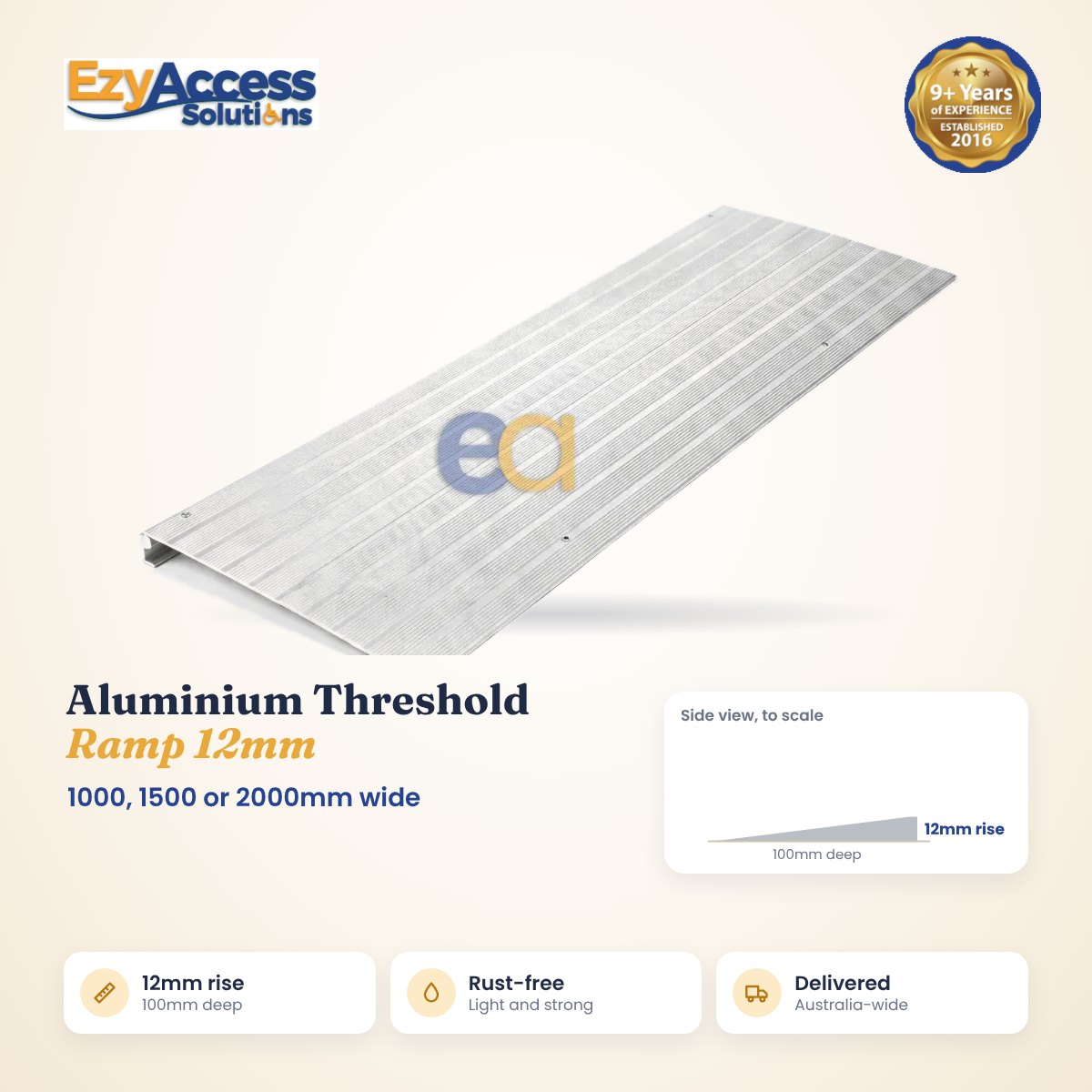
- Under 25mm: an aluminium threshold ramp or strip for door sills and sliding door tracks.
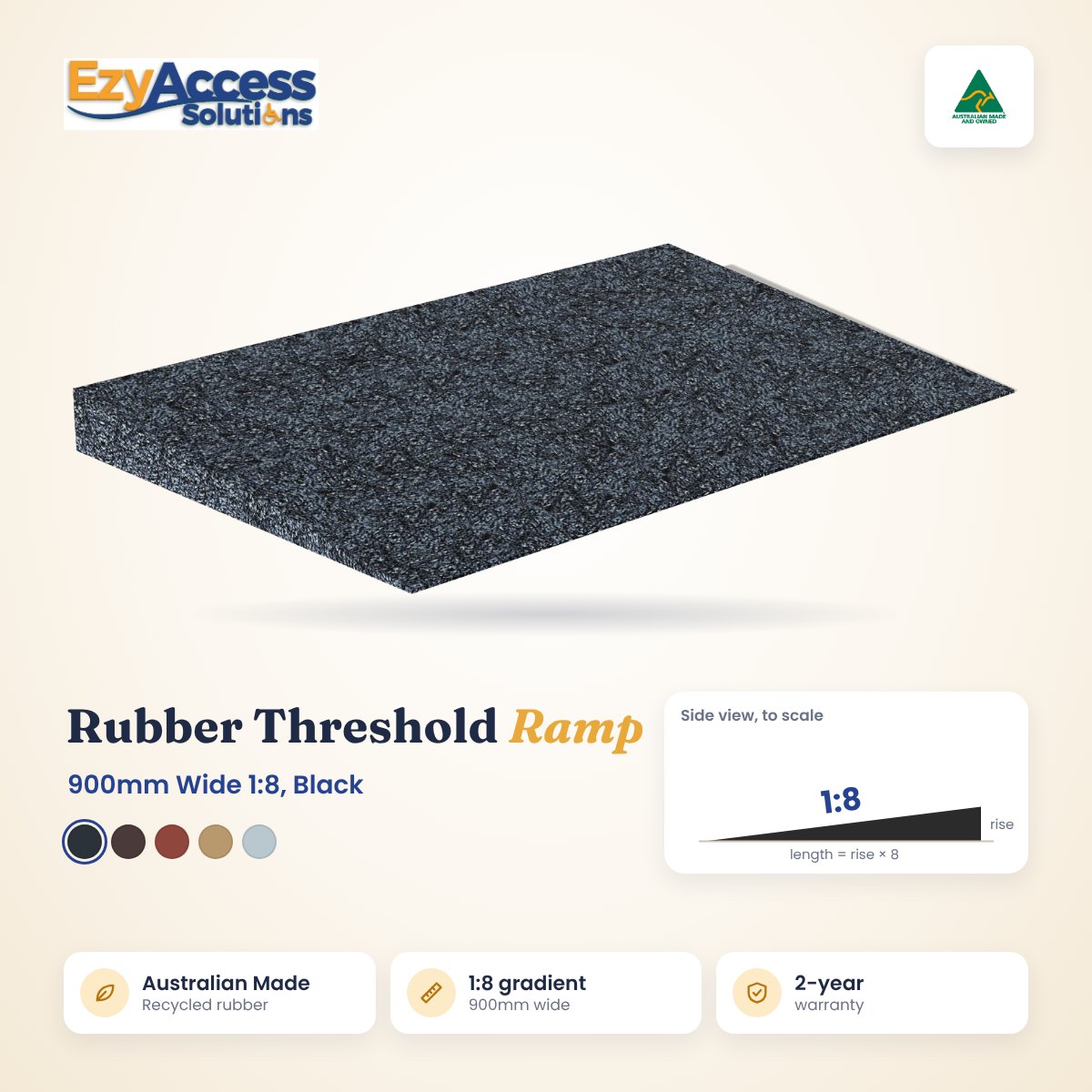
- 25mm to 160mm: a recycled rubber threshold ramp, at 1:8 for most doorways or the gentler 1:10.
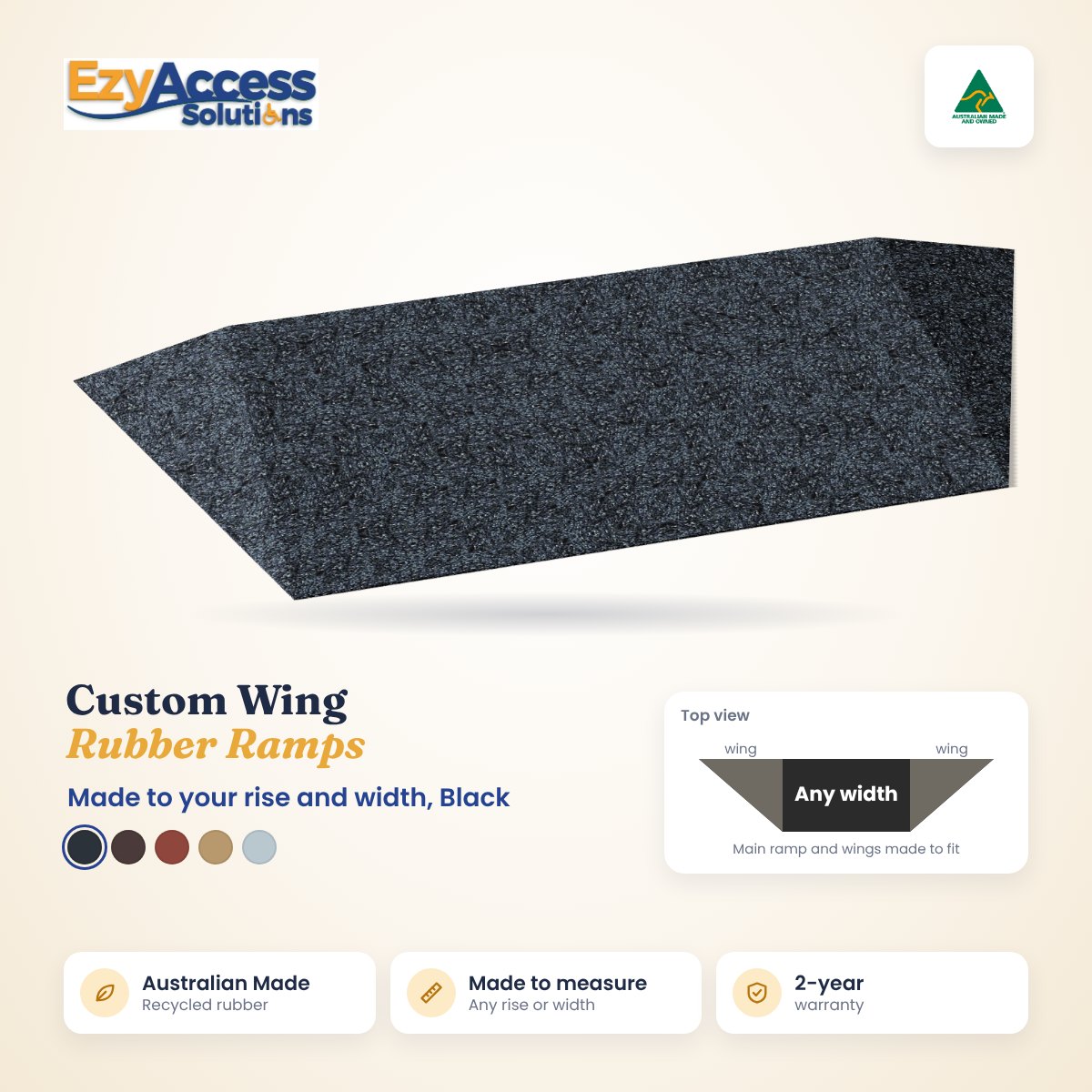
- Higher steps: a custom rubber ramp made to your exact height, width and shape, or a timber ramp.
Shop by step height
Which wheelchair ramp should you buy?
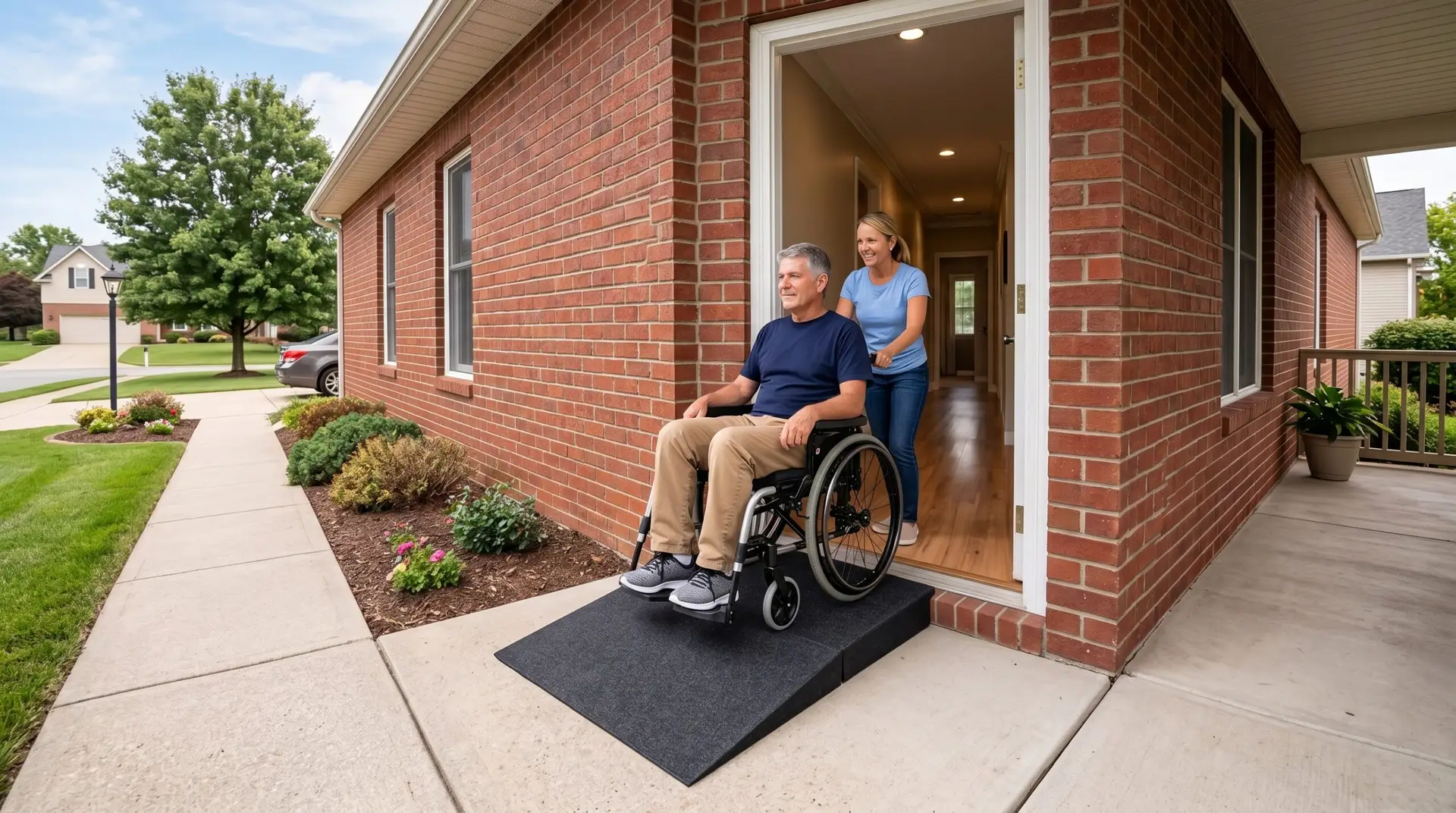
- A doorway lip or small step, up to 200mm: a rubber threshold ramp. It sits in place with no fixings and works inside and out.
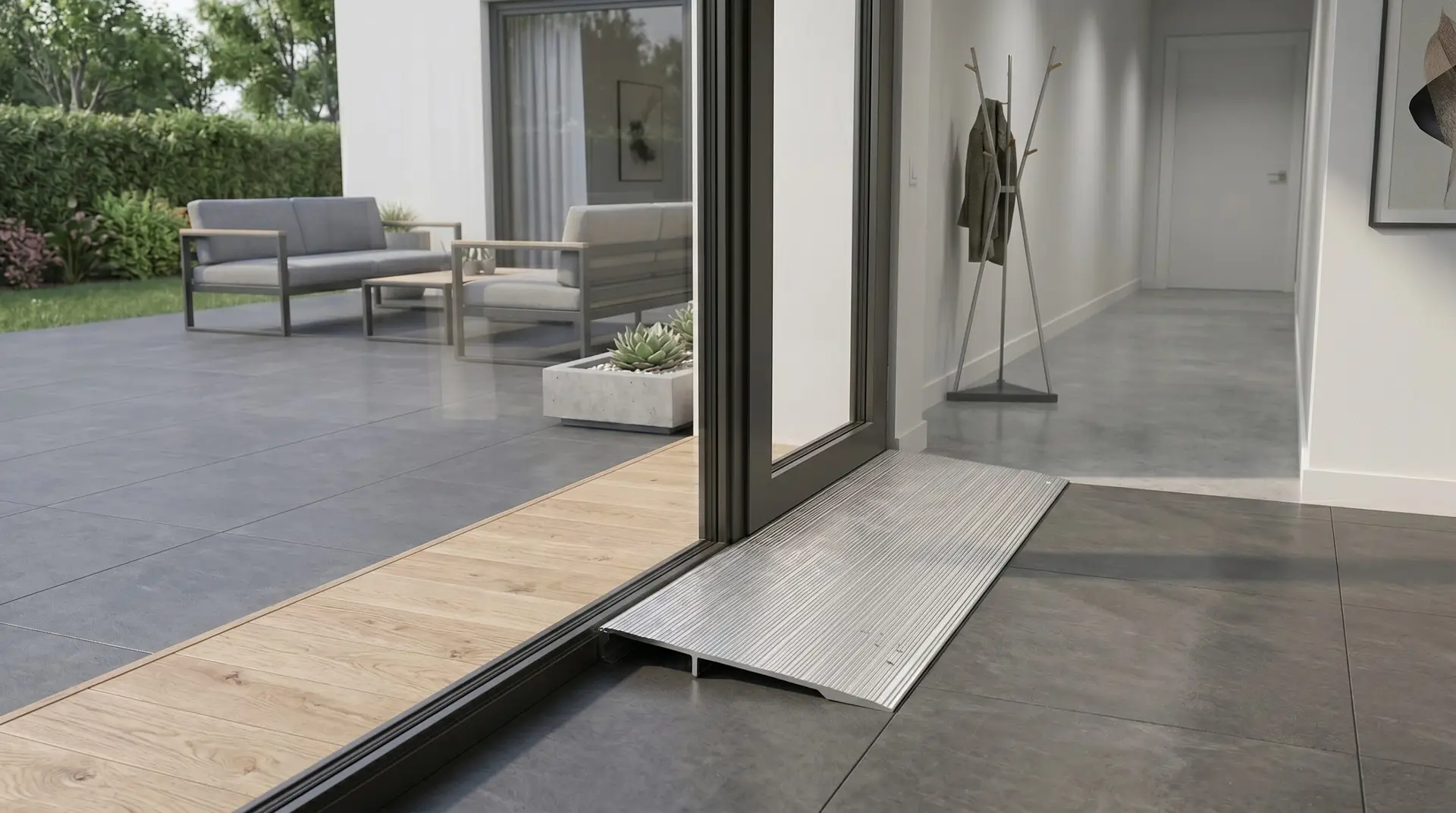
- A small indoor lip under about 25mm: an aluminium threshold ramp.
- An odd size, a sliding door track, or a frame in the way: a made-to-measure rubber ramp.
- A higher step that needs a longer ramp and a landing: a custom timber ramp, measured and installed in Victoria.
Not sure which one fits? Send us a photo of the step with a tape measure against it, or call (03) 7073 2121.
Key Takeaways
- AS1428.1 caps standard ramp gradient at 1:14 for runs over 1,900mm; shorter thresholds can be steeper, but only for small rises — see our full gradient guide for the exact figures.
- rubber wheelchair ramps suit small single-step thresholds and outdoor entries; aluminium threshold ramps and strips suit doorways and sliding-door tracks; timber ramps suit longer, permanent runs.
- Whether the NDIS funds a ramp depends on your plan and your OT’s assessment. Check the current NDIS guidelines or ask your planner.
- A compliant ramp needs a level landing at the top and bottom, and handrails on both sides once the rise passes roughly 150–190mm.
- Rubber ramps made from recycled rubber are an increasingly common, more sustainable alternative to virgin-material or sealed timber surfaces.
- Getting the gradient wrong is the most common compliance failure — measure the exact rise before choosing a ramp length, or run it through our Ramp Calculator.
What Is a Wheelchair Ramp, and What Types Are Available?
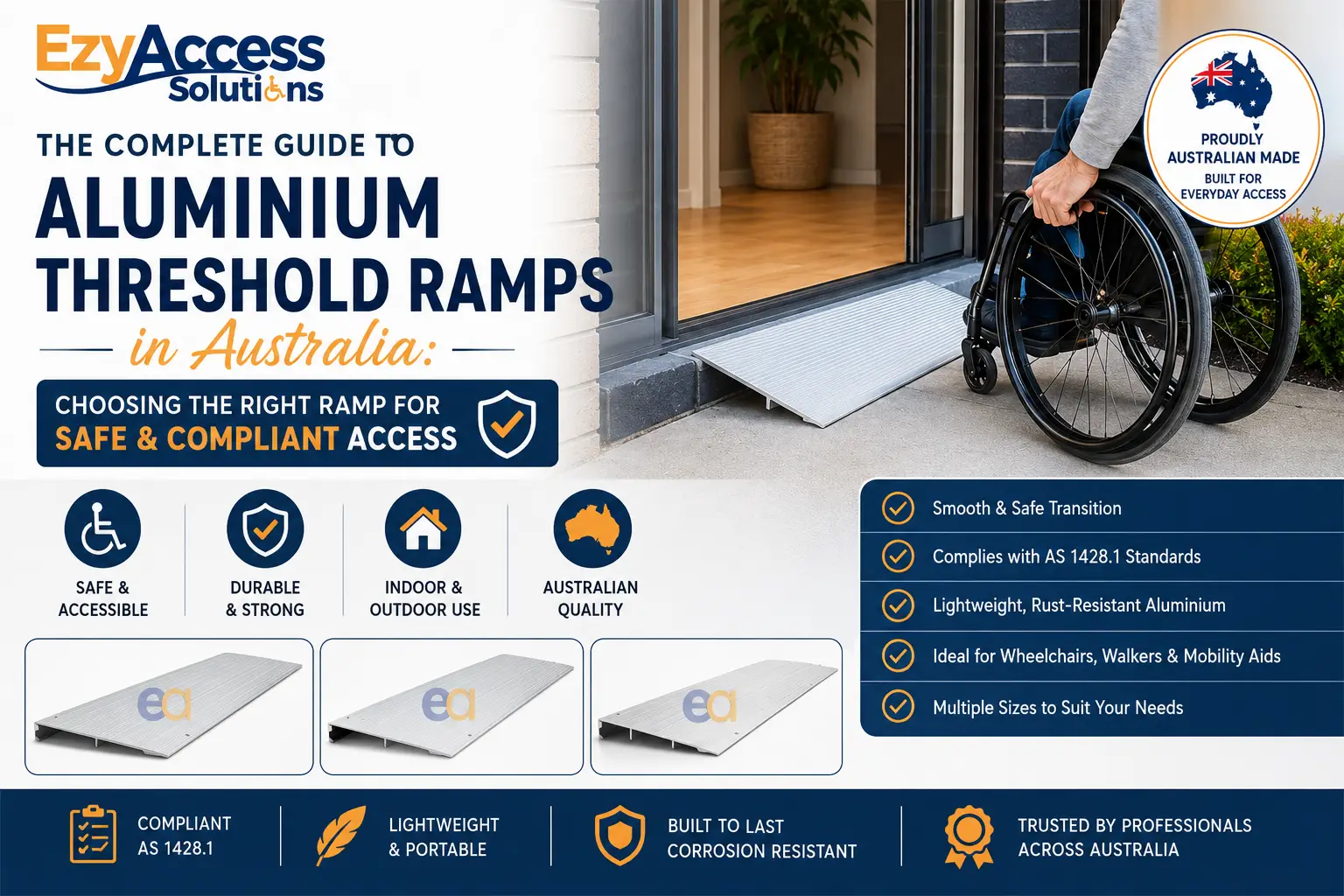
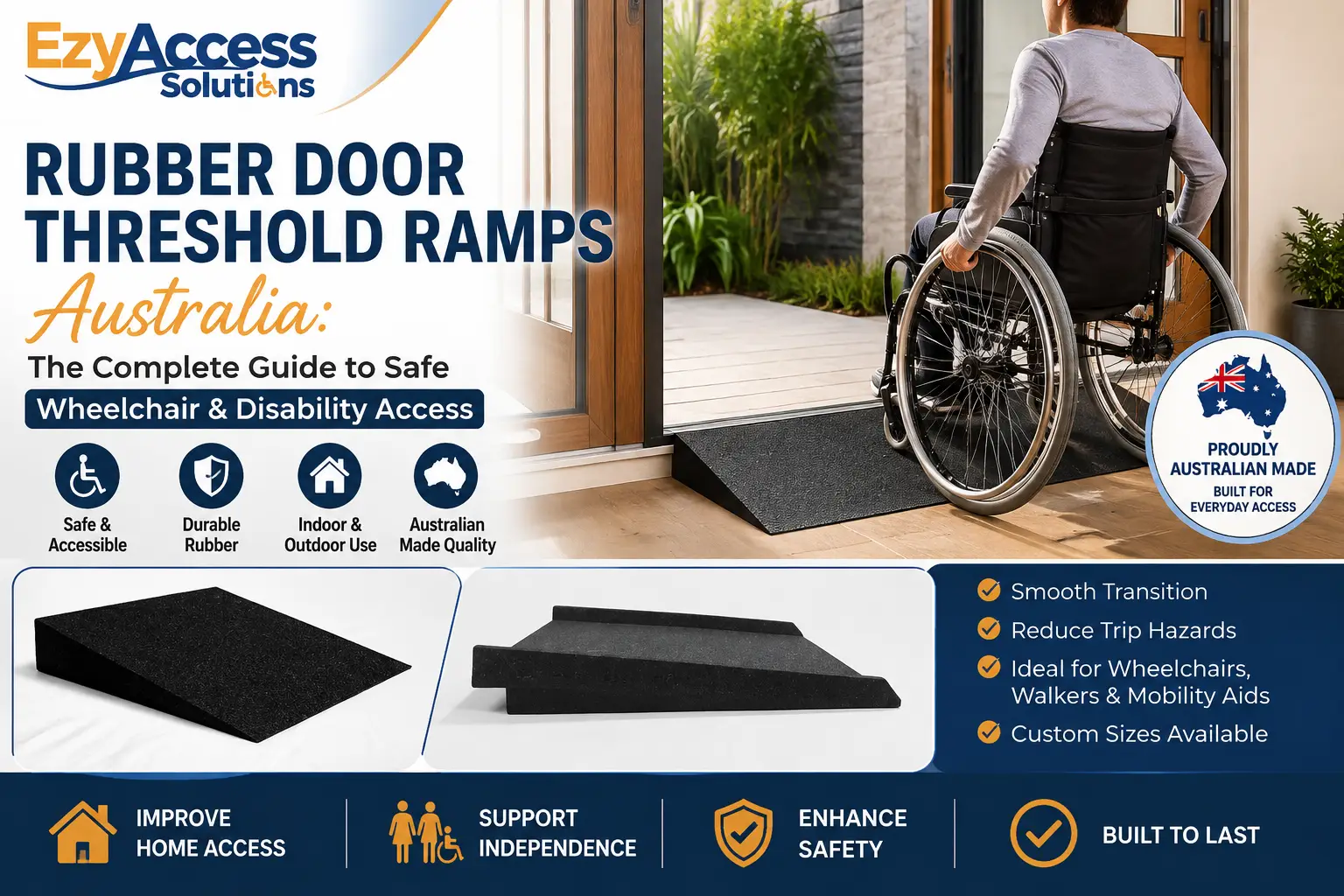
A wheelchair ramp is a fixed or portable sloped surface that replaces a step, made from rubber, aluminium or timber depending on the rise, location and whether it needs to be permanent. Rubber ramps are cut or moulded to bridge a single small step and work well outdoors. Aluminium threshold ramps and strips are thin, modular, and made for doorway thresholds and sliding-door tracks. Timber ramps are built for longer runs — a raised deck, a driveway step, or a permanent front-entry ramp — and can be custom-built to length and width.
For a doorway lip or small step, a door ramp is usually all you need. See our door ramp buying guide.Threshold Ramp vs Full Wheelchair Ramp — What’s the Difference?
A threshold ramp bridges a small step or door sill, typically under 25mm high, in a single short piece. A full wheelchair ramp covers a larger rise using a longer run that meets a compliant gradient ratio, often with a mid-landing if the rise is significant. If the change in level is a doorway lip rather than a full step, a threshold ramp is usually the right — and far cheaper — solution.
Rubber vs Aluminium Threshold Ramp vs Aluminium Threshold Strip — Which Do I Need?
| Rubber Ramp | Aluminium Threshold Ramp | Aluminium Threshold Strip | |
|---|---|---|---|
| Best for | Single steps, outdoor entries, uneven ground | Doorway thresholds, sliding tracks | Very low sills, carpet-to-tile transitions |
| Typical rise covered | Up to ~100mm | 12–25mm | 50–150mm width, low profile |
| Indoor/outdoor | Both | Mostly indoor/doorway | Mostly indoor |
| Installation | Sits in place or screw-fixed | Screw-fixed, modular | Screw-fixed |
Still not sure which one fits your doorway? Our full Rubber vs Aluminium Threshold Ramps vs Threshold Strips guide walks through it case by case, or run your measurements through the Ramp Calculator.
How Do I Calculate the Right Ramp Length and Gradient?
Divide the vertical rise by the gradient ratio your situation allows. Under AS1428.1, the standard maximum for ramps longer than 1,900mm is 1:14, with 1:20 preferred where space allows — so a 100mm step needs roughly 1.4m of ramp length at minimum, more if you can spare the room. Shorter thresholds are permitted a steeper ratio, but the exact cut-off depends on the exact rise — see our AS1428.1 gradient guide for the full rise-to-length table, or use the Ramp Calculator to skip the maths.
How long does my ramp need to be?
| Step height | Ramp depth at 1:8 | Ramp depth at 1:10 |
|---|---|---|
| 20mm | 160mm | 200mm |
| 30mm | 240mm | 300mm |
| 50mm | 400mm | 500mm |
| 75mm | 600mm | 750mm |
| 100mm | 800mm | 1000mm |
| 120mm | 960mm | 1200mm |
How Much Does a Ramp Cost, and Is It NDIS-Fundable?
Small aluminium threshold ramps run from around $75 to $135; longer custom timber or modular ramps run into the thousands depending on length and complexity. Whether the NDIS funds a ramp depends on your plan and your OT’s assessment. Check the current NDIS guidelines or ask your planner. Complex or structural ramp builds may need an occupational therapist assessment and sit under a different NDIS funding pathway. Get a free quote for an exact price on your setup.
How Steep Can a Wheelchair Ramp Legally Be?
Under AS1428.1, the standard maximum gradient for a ramp longer than 1,900mm is 1:14 (about 7.14%), with 1:20 preferred where there’s room for a gentler slope. A ramp that’s too steep isn’t just uncomfortable — it can fail an OT or NDIS home-modification assessment, and for a business or landlord it can become a liability issue. Landings are required roughly every 9 metres of run, and handrails are generally required once the rise exceeds about 190mm. See the full gradient breakdown for the rise-by-rise table.
How Do I Maintain a Rubber or Timber Ramp?
Rubber ramps hold up well outdoors but should be hosed down periodically to clear grit that can accelerate wear at the edges, and checked for lifting or curling at the seams. Timber ramps need their surface checked for splitting, re-sealed or re-oiled on the schedule the timber type calls for, and inspected for loose fixings before each change of season. Either material should be re-checked for slip resistance if the surface finish visibly wears smooth.
Where Can I Get a Ramp Made and Installed in Melbourne or Sydney?
Ezy Access Solutions manufactures its ramps in Epping, Melbourne, and supplies Australia-wide, with Melbourne installation available directly from our own team. Installation typically takes a few hours to one day depending on the ramp type and size. Order a free rubber sample to check the quality before you commit, or get a free quote to start.
Are Recycled-Rubber Ramps a Newer, More Sustainable Option?
Rubber ramps made from recycled rubber are a lower-waste alternative to ramps made from virgin material, while offering comparable durability and slip resistance for outdoor use — a trend gaining traction as more Australian manufacturers move to recycled-content materials.
Ramps for homes: which house ramp do you need?
Most house ramps solve one of three problems. Work out which one you have and the choice gets simple.
| At your house | Ramp that suits | How you get it |
|---|---|---|
| A door sill, sliding door track or lip up to 25mm | Aluminium threshold ramp or strip | Buy online, fit it yourself |
| One step at the front or back door, 15mm to 200mm high | Rubber ramp, standard or made to measure | Buy online, it sits in place without fixings |
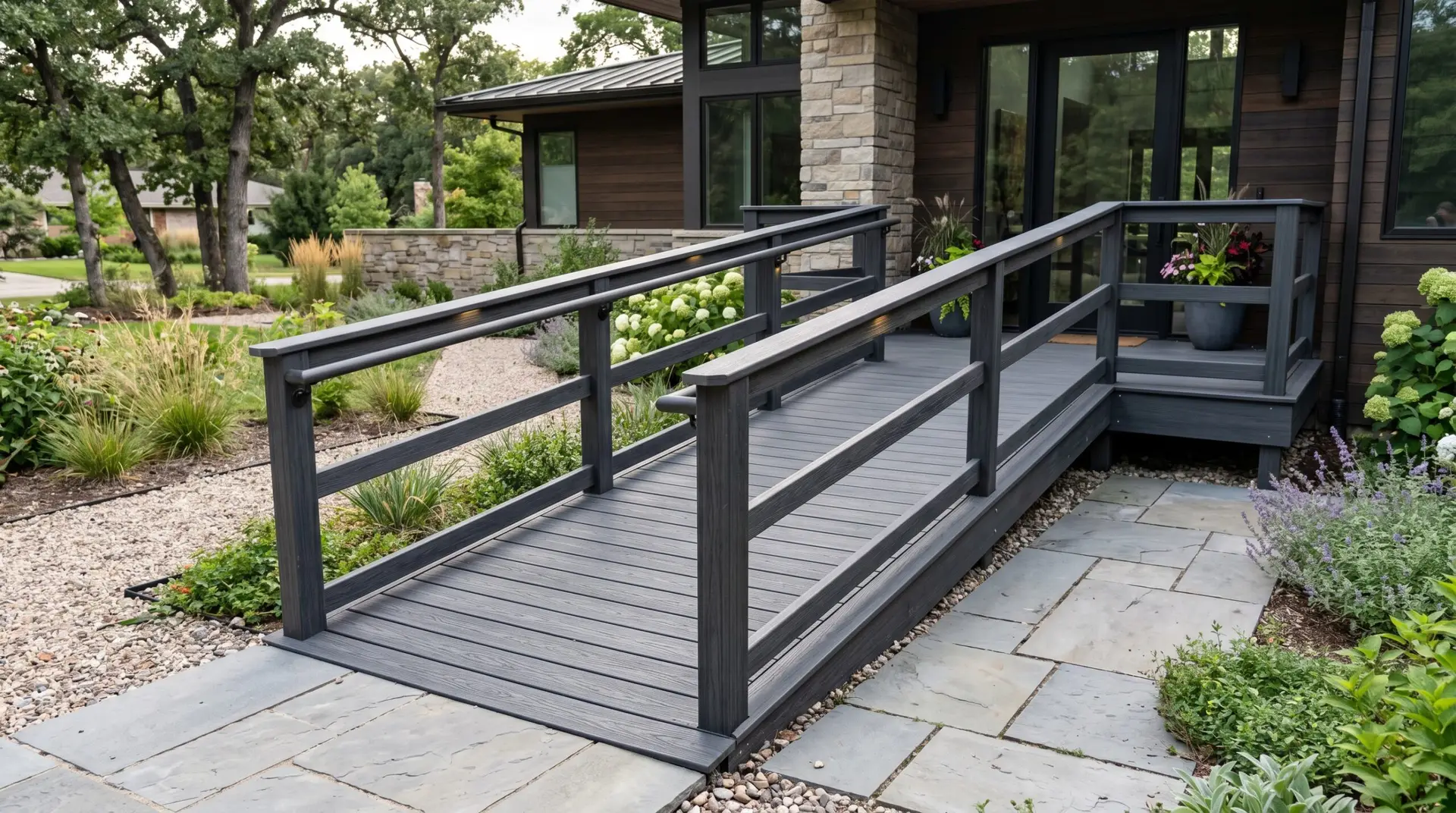
| Two or more steps, a porch or a raised deck | Timber ramp with a landing and handrails | Measured, built and installed (we do this across Victoria) |
For a house ramp that someone will push themselves up, aim for a gentle slope such as 1:10 or 1:14. Our 1:10 step ramps and 1:14 ramps are made to meet AS 1428.1 requirements for gradient, width and landings. Our 1:8 threshold ramps meet it for rises up to 35mm. If the ramp is for a rental or a short stay, a rubber ramp is the easy choice because it lifts away and leaves no marks. Not sure which one fits? Use the ramp calculator or send us a photo of the step.
Frequently Asked Questions
Most small, non-structural ramps — a threshold ramp or a modular rubber or aluminium ramp — don’t need council approval. Larger, permanent structural ramps that alter the building’s footprint may need a permit; check with your local council or installer before building.
Often, yes, if it’s a minor, non-structural modification directly related to your disability support needs and the total cost sits under the NDIS’s minor-modification threshold. Complex or structural installs generally need an OT assessment first.
Yes — most threshold ramps and many modular ramp systems are designed to sit in place or screw-fix without altering the structure of the home.
Most single-ramp installations are completed within a few hours to one day, depending on the ramp type, size, and site access.
Yes — quality rubber ramps are designed to handle UV exposure, rain and temperature swings without becoming brittle or losing slip resistance, though periodic cleaning extends their life.
For a single small step or doorway threshold, a rubber ramp or an aluminium threshold ramp is usually the simplest and cheapest fix — no permanent fixing or renovation required.
It depends on the step. For a doorway lip or small step up to about 200mm, a solid rubber threshold ramp is the simplest choice: it sits in place without screws, works indoors and outdoors, and goes from 10mm to 200mm rise. For sliding door tracks and lips of 12 to 25mm, an aluminium threshold ramp is lighter and slimmer. For a higher step or a long approach, you need a custom ramp built to the gradient.
They are the same thing. A door ramp, doorway ramp or threshold ramp is a short ramp that bridges the lip or step at a doorway so a wheelchair, walker or scooter can roll over it. They come in rubber or aluminium, sized to the height of the step.
Yes. Ezy Access Solutions makes rubber ramps by hand in Epping, Melbourne, installs across Victoria, and delivers Australia-wide. In other states we can arrange an installer for you. Call (03) 7073 2121 or send us a photo and the step height.
For most doorsteps between 25mm and 160mm, a recycled rubber threshold ramp at 1:8 works well. It’s heavy, sits in place without screws and works inside or outside. For a gentler slope, choose 1:10.
Multiply your step height by the gradient: at 1:8 the ramp is 8 times as long as the step is high, and at 1:10 it’s 10 times. A 50mm step needs a 400mm ramp at 1:8.
Yes. We make custom rubber ramps in any height, width and shape in Epping, Victoria, and deliver Australia-wide.
For doorways and sliding doors specifically, see How to Measure for a Door Threshold Ramp and Ramps for Sliding Door Tracks.
Wheelchair ramps near you
We make and install ramps across Victoria and deliver Australia-wide.
- Wheelchair Ramps Melbourne
- Wheelchair Ramps Victoria
- Wheelchair Ramps Geelong
- Wheelchair Ramps Ballarat
- Rubber Ramps Delivered to Sydney and NSW
- Rubber Ramps Delivered to Brisbane and Queensland
- Wheelchair Access Solutions for House Entrances: Ramps, Rails & Threshold Fixes
- NDIS Home Access Changes: Ramps, Rails and Thresholds (NDIS-Friendly Guide)
- Ramps and access products for OTs, builders and home-mod contractors
- Everything we do