






Kerb ramps for mobility scooters and wheelchairs: how to choose the right one

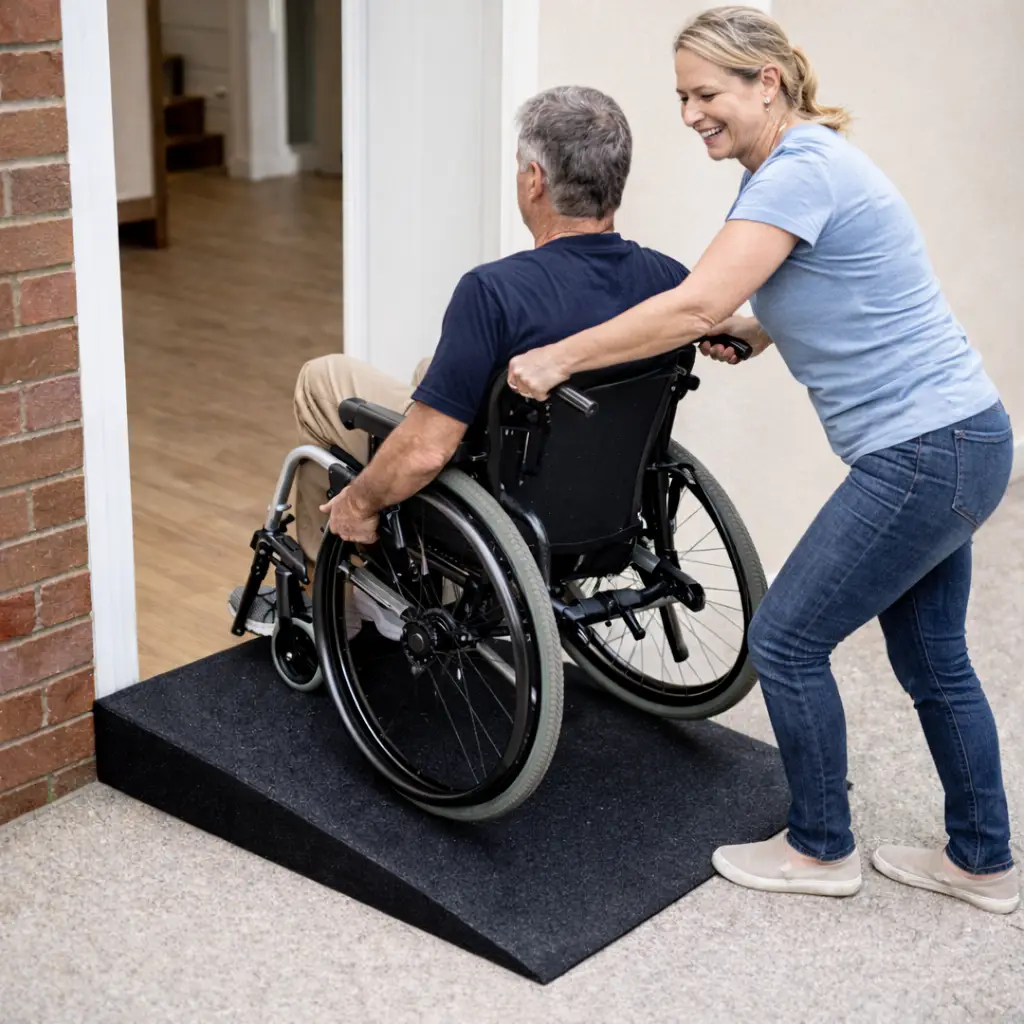
A kerb at the driveway, a step at the front door or a raised garage lip can stop a mobility scooter or wheelchair. A kerb ramp fills that gap so you can roll over it safely. The right ramp depends on three things: how high the step is, how much space you have in front of it, and what will be using it.
Step 1: Measure the rise
Put a straight edge flat on the higher surface and measure straight down to the lower surface. Measure in a few places, because concrete and pavers are rarely level. Use the highest number. Our guide How to measure for a door threshold ramp shows the same method with pictures.
Step 2: Pick a gradient that suits the user
The gradient is how long the ramp is compared with its height. A gentler ramp is easier to climb and safer to come down, but it needs more room.
| Rise | 1:8 depth | 1:10 depth | 1:14 depth |
|---|---|---|---|
| 50mm | 400mm | 500mm | 700mm |
| 75mm | 600mm | 750mm | 1050mm |
| 100mm | 800mm | 1000mm | 1400mm |
| 150mm | 1200mm | 1500mm | 2100mm |
Depth = rise x gradient. Try different numbers in our ramp calculator.
- Mobility scooters: check the scooter’s manual for its maximum climbing slope, and choose a ramp gentler than that limit.
- Self-propelled wheelchairs: a gentler gradient means less effort and more control.
- Walkers and people on foot: keep the surface non-slip and the edges low so nothing catches a toe.
Our 1:10 step ramps and 1:14 ramps are made to meet AS 1428.1 requirements for gradient, width and landings. Our 1:8 threshold ramps meet it for rises up to 35mm.
Step 3: Choose the material
- Rubber: heavy, stays put, quiet, non-slip in the wet and suits outdoor kerbs and steps. Our rubber ramps are Australian Made from recycled rubber and can be made to your exact rise and width.
- Aluminium: light and neat for small indoor door lips. See rubber vs aluminium threshold ramps.
- Timber or concrete: better for long ramps or permanent entry ramps. We build these as part of our home modifications work in Victoria.
Step 4: Check the width and the landing
Measure the scooter or wheelchair from wheel to wheel and add room on each side. Leave a flat, clear space at the top and bottom so the user can stop and turn before the door or gate.
Cheap kerb ramps vs made-to-fit ramps
Many low-cost kerb ramps come in one or two fixed heights. If your step doesn’t match, the ramp leaves a lip or rocks under load. A ramp made to your measured rise sits flat and meets the edge cleanly. That is why we make custom rubber ramps to the size you need.
Frequently asked questions
What size kerb ramp do I need for a mobility scooter?
Measure the rise, then multiply it by the gradient you want. A 100mm kerb at 1:10 needs a ramp about 1000mm deep. Make it wider than the scooter’s wheels.
Can a rubber ramp stay outside?
Yes. Rubber suits outdoor kerbs, driveways and front steps, and it stays non-slip when wet.
Is a kerb ramp OK on a public footpath?
Footpaths and council kerbs are controlled by your local council. Ask them before placing anything on public land. Our ramps are for private homes and businesses.
Can you make a kerb ramp to my exact height?
Yes. Send us your rise, the width you need and a photo, and we will quote within 1 business day.
Do you install?
We supply and install all over Victoria. Installation in other states is on request, and we deliver Australia-wide.