



The Hidden Access Problems Around Australian Homes That Most Families Notice Too Late

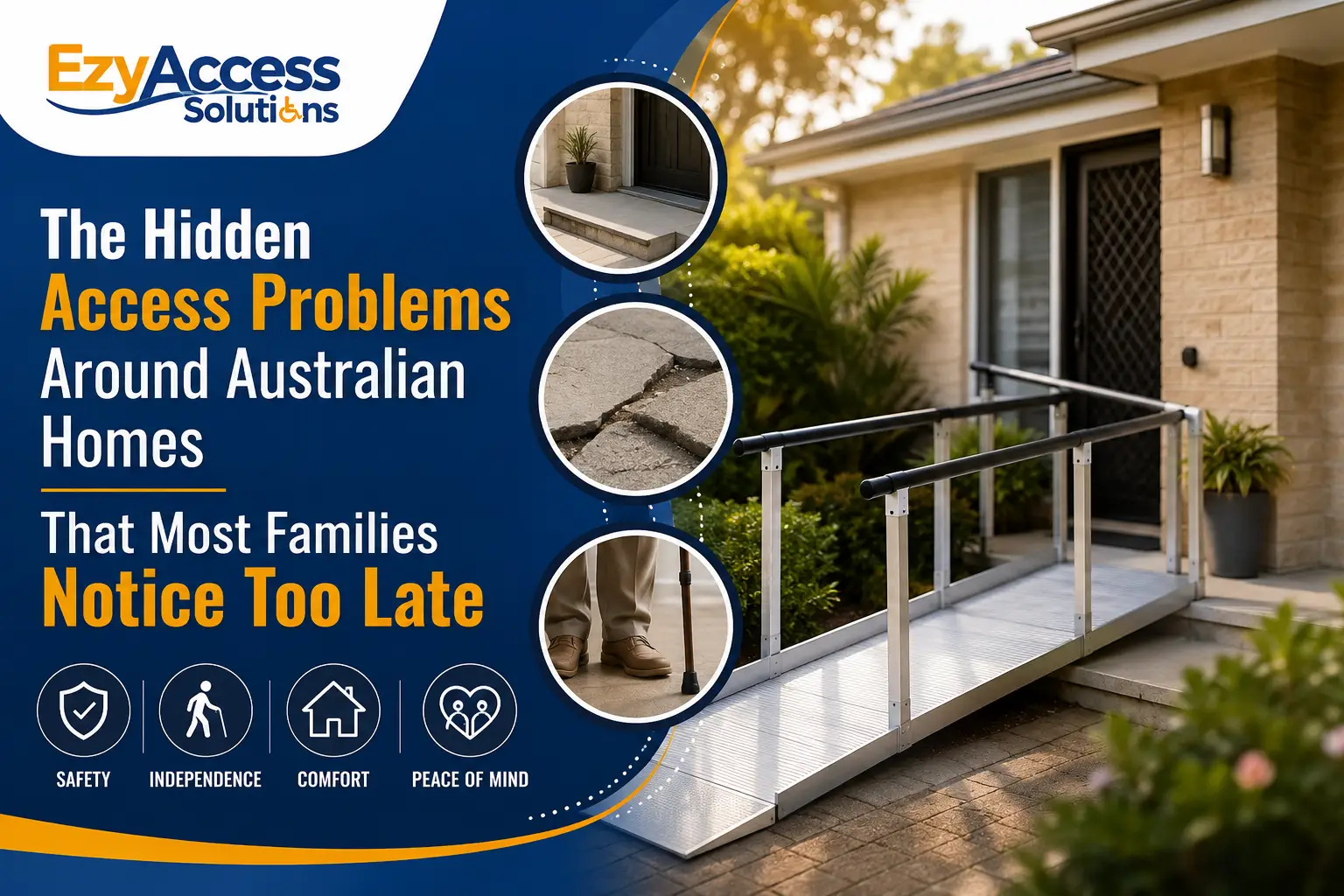
A home can feel perfectly safe until someone’s mobility changes.
A parent begins finding the front step harder to manage. A grandparent starts using a walking frame. A family member returns home after surgery. Someone develops a disability that makes everyday movement more difficult. Suddenly, a small threshold, narrow entrance or slippery pathway becomes more than an inconvenience.
It becomes a daily obstacle.
Many Australian homes were built with little consideration for changing mobility needs. Entrances may have raised doorways, uneven paths, steep steps or limited hand support. These features can go unnoticed for years because most people move through them without thinking.
The problem usually becomes visible only after a fall, injury or frightening near miss.
Planning disability access solutions for homes before a situation becomes urgent can help families create safer, more comfortable living spaces. It can also give older adults and people with disability greater independence without forcing them to leave a home they know and love.
Why Home Access Problems Are Easy to Miss
Families naturally focus on obvious household risks. They may repair damaged flooring, improve lighting or replace broken locks. Access barriers are different because many of them appear to be part of the home’s normal design.
A raised sliding-door track may seem harmless. A single step at the back entrance may not look dangerous. A narrow passage might not matter until someone needs to use a wheelchair, walking frame or mobility scooter.
Access problems are often noticed late because:
- Mobility changes can happen gradually
- Family members adapt without discussing the difficulty
- Small barriers do not initially appear dangerous
- Temporary mobility issues can become long-term needs
- Families assume major renovations are the only solution
In reality, practical home mobility solutions for disabled residents can often address these barriers without rebuilding the entire property.
The earlier these issues are identified, the more choices a family usually has.
The Front Entrance Is Often the First Barrier
The front entrance creates the first point of access to a home, yet it is also one of the most common problem areas.
Many Australian houses have one or more steps leading to the front door. Others have steep paths, uneven paving or narrow landings that provide little room to turn safely. During wet weather, smooth tiles and exposed surfaces can become slippery.
A person with limited balance may find the entrance tiring or intimidating. Someone using a wheelchair may need assistance every time they enter or leave. Even carrying groceries while using a walking aid can become difficult.
Suitable disability access solutions for homes may include a portable ramp, modular ramp, custom threshold ramp, safer pathway or additional support near the entrance. The right option depends on the available space, the height of the obstacle and the mobility equipment being used.
A well-planned entrance does more than reduce physical effort. It allows a person to leave the house with confidence, welcome visitors and maintain a more active routine.
Small Door Thresholds Can Cause Serious Trouble
Door thresholds are among the most underestimated barriers in a home.
A raised lip of only a few centimetres may catch the wheel of a mobility device. It can also create a tripping risk for seniors who shuffle their feet or have reduced leg strength. Sliding doors often present an additional challenge because their tracks can be difficult to cross smoothly.
Families sometimes respond with temporary pieces of timber or unstable makeshift ramps. These may appear helpful but can move, bend or create an unsafe slope.
Purpose-designed threshold ramps provide a more stable transition between floor levels. Depending on the doorway, rubber, aluminium or customised options may be suitable.
For many households, improving a threshold is one of the simplest disability home modifications in Australia. It can make movement between indoor and outdoor areas noticeably easier without changing the character of the property.
Garages and Side Entrances Are Frequently Overlooked
The front door is not always the entrance used most often.
Many families enter through the garage, laundry or side door. These areas may contain steep steps, tight corners, poor lighting or cluttered walkways. A garage floor may also become slippery when wet, especially during rainy weather.
The problem is that these entrances are usually designed for convenience rather than accessibility.
A person may need to step around a parked car, carry items through a narrow doorway and manage a height difference at the same time. For someone with limited mobility, this combination can increase the risk of losing balance.
A home access assessment should consider the route a person actually uses each day, not just the most visible entrance. Sometimes the safest solution is to modify a secondary entrance that offers more space for a ramp or gradual transition.
Bathrooms Are Not the Only High-Risk Indoor Area
Bathrooms receive a great deal of attention when families consider accessibility, and for good reason. Wet floors, restricted movement and hard surfaces can create genuine risks.
However, access concerns often begin before a person reaches the bathroom.
Narrow hallways, loose rugs, sharp turns and changes in floor height may make it difficult to move safely through the home. Furniture placement can reduce the turning space available for a wheelchair or walking frame. Thick carpet can make mobility devices harder to push.
Bedrooms can also become difficult to navigate when there is limited space beside the bed. Kitchens may have narrow entry points or storage positioned outside a person’s comfortable reach.
Effective home mobility solutions for disabled people should therefore consider the entire journey through the home. Improving one room while ignoring the route leading to it may leave major access problems unresolved.
Outdoor Areas Can Quietly Become Off-Limits
A backyard, patio, garden or deck may be an important part of family life. Unfortunately, these spaces can become inaccessible when there are steps, raised tracks or uneven surfaces.
A person may stop going outside because crossing the doorway feels unsafe. This change can happen quietly. Family members may assume the person has lost interest when the real issue is that access has become stressful.
The right ramp or level transition can reconnect indoor and outdoor spaces. It can support social interaction, gardening, fresh air and family activities.
This is where thoughtful disability access solutions for homes can improve more than physical movement. They can help a person continue participating in the parts of home life that bring enjoyment and connection.
The Risks of Waiting for an Accident
Many access upgrades are discussed only after something has gone wrong.
A fall on the front step, a wheelchair tipping near a threshold or a senior struggling to enter the home may finally draw attention to a long-standing issue. By that point, families are often under pressure to find an immediate solution.
Urgent decisions can lead to unsuitable products, incorrect measurements or temporary fixes that do not meet long-term needs.
A proactive approach provides time to compare options and understand how the household may change. It also allows the family member using the access solution to take part in the decision.
Safe home access solutions for seniors are most effective when they preserve independence rather than simply responding to a crisis. An older person may not need extensive construction. A carefully selected ramp, smoother transition or safer entry route may provide meaningful support.
Accessibility Does Not Always Require Major Renovation
One of the biggest misconceptions about home accessibility is that every improvement requires a costly structural renovation.
Some homes will need substantial work, particularly when doorways must be widened or bathrooms redesigned. Many barriers, however, can be reduced through targeted modifications.
These may include:
- Threshold ramps for raised doorways
- Portable ramps for temporary or flexible use
- Modular ramps for larger height differences
- Rubber infill solutions for uneven transitions
- Safer access paths around entrances
- Hand support in frequently used areas
- Improved layouts with clearer movement space
The best solution is not necessarily the largest or most expensive. It is the one that matches the user, the property and the way the space is used.
Professional guidance can help families avoid buying a product that is too steep, too short or unsuitable for the mobility device involved.
What to Consider Before Choosing an Access Solution
Every household has different needs. Before arranging disability home modifications in Australia, families should look beyond the immediate obstacle.
Consider who will use the solution, how often it will be used and whether mobility needs may change. The type of wheelchair, walker or scooter can affect the space and gradient required. The surface material, drainage and available turning area are also important.
A good access solution should feel stable and natural to use. It should support the person’s daily routine rather than create a new complication.
Families should also think about carers, visitors and other household members. A modification may need to support multiple users while keeping the entrance practical for everyday use.
Why Families Choose Ezy Access Solutions
Ezy Access Solutions helps Australian families address everyday mobility barriers with practical, carefully considered access products.
Rather than treating accessibility as a generic purchase, the focus is on finding a solution that fits the person and the property. From difficult thresholds to challenging entrances, the right product can turn a stressful part of the home into a safer and more manageable space.
Families looking for disability access solutions for homes need clear advice, reliable products and options suited to real Australian living conditions. They also need solutions that respect a person’s dignity and desire for independence.
That is where early planning makes a difference.
A home should continue supporting the people who live in it, even when their mobility changes. Identifying hidden access problems today can prevent greater difficulty tomorrow.
Contact Ezy Access Solutions to discuss the barriers around your home and explore a safer, more practical way forward.
Frequently Asked Questions
Common problems include raised door thresholds, steps at entrances, uneven pathways, narrow doorways, slippery surfaces and limited turning space. These barriers may become more noticeable when a person starts using a wheelchair, walking frame or mobility scooter.
No. Many barriers can be addressed with portable, modular or customised ramp solutions. The most appropriate option depends on the height difference, available space, frequency of use and the mobility needs of the person.
Families should consider modifications as soon as movement around the property becomes difficult or uncertain. Planning before a fall or injury provides more time to select a safe and suitable solution.
The correct ramp depends on measurements, gradient, surface conditions, mobility equipment and available landing space. Professional guidance can help ensure the ramp is stable, appropriately sized and suitable for its intended user.
Appropriate access improvements can make everyday movement safer and less physically demanding. Safe home access solutions for seniors may support confidence, independence and continued participation in household and community activities.