


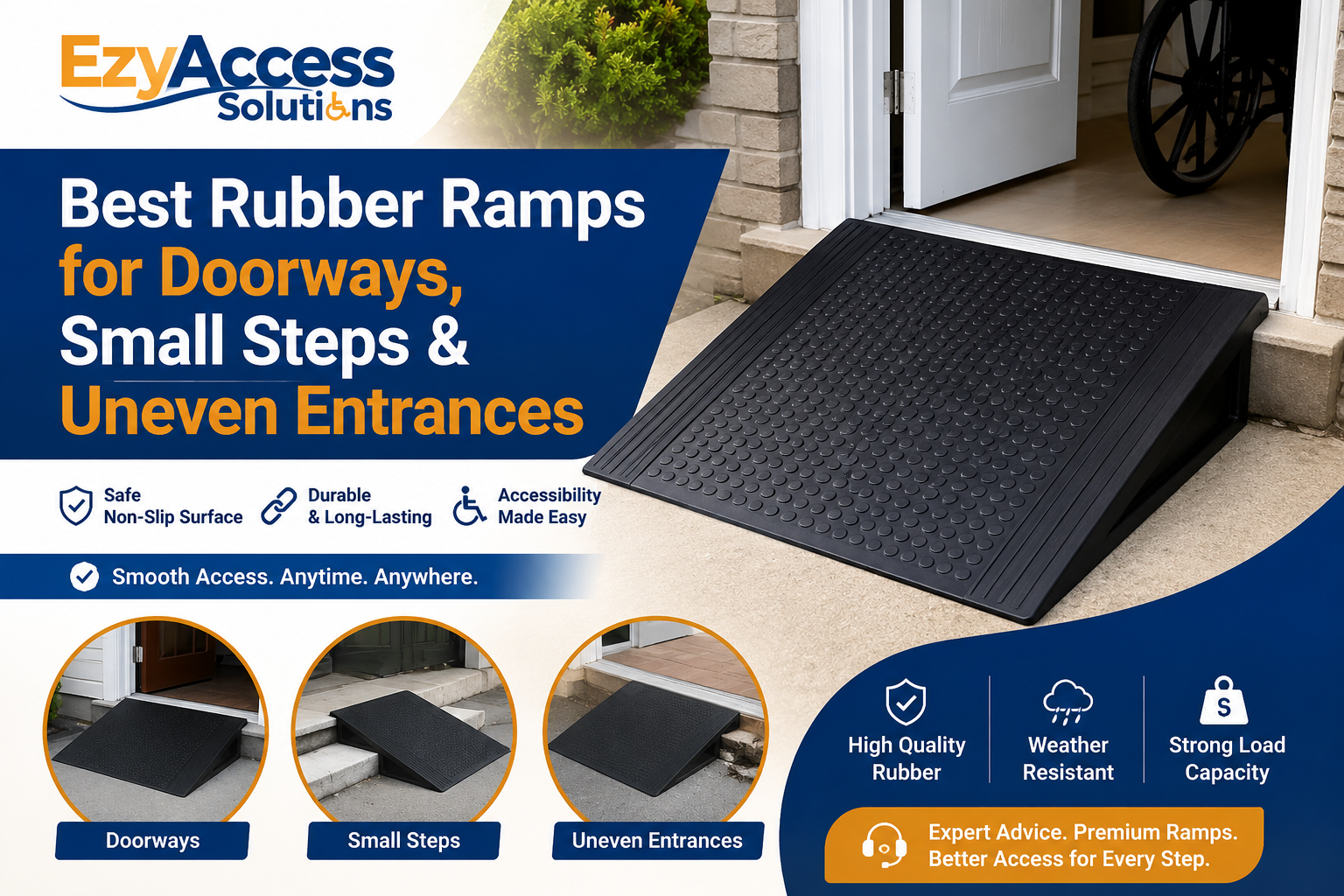
Best Rubber Ramps for Doorways, Small Steps & Uneven Entrances

Every day, thousands of Australians face a challenge most people barely notice.
A small doorway lip. A raised threshold. A single step leading into a home. An uneven entrance that makes movement difficult and, in some cases, dangerous.
For someone using a wheelchair, mobility scooter, walking frame, or simply dealing with reduced mobility, these seemingly minor obstacles can become major barriers to independence.
That is why choosing the right rubber ramps for doorways can make such a meaningful difference. A well-designed ramp creates safer access, improves confidence, and allows people to move freely without constantly relying on assistance.
At Ezy Access Solutions, we help Australians find practical accessibility solutions that work in real homes, workplaces, aged care facilities and community environments. Among the many accessibility products available today, rubber ramps continue to be one of the most versatile, affordable and effective options.
In this guide, we’ll explore why rubber ramps are so popular, where they work best, and how to choose the right ramp for your specific needs.
Why Small Height Differences Matter More Than You Think
Many accessibility issues do not involve large staircases or steep inclines.
Instead, they involve:
- Door thresholds
- Sliding door tracks
- Garage entrances
- Patio transitions
- Small internal steps
- Uneven flooring
- Entryway lips
- Raised landings
A height difference of only a few centimetres can create significant difficulty for wheelchair users, elderly individuals, and anyone with balance or mobility concerns.
These obstacles can increase the risk of:
- Trips and falls
- Wheelchair tipping
- Walking frame instability
- Reduced independence
- Injury to carers assisting movement
Installing the right ramp solution removes these hazards and creates a smoother transition between surfaces.
Why Rubber Ramps Are Becoming the Preferred Choice
Accessibility solutions have evolved considerably over the years.
While aluminium ramps and permanent structural modifications certainly have their place, rubber ramps offer several advantages that make them attractive for many Australian homes and businesses.
Excellent Slip Resistance
One of the biggest benefits of rubber is its naturally high grip.
A quality non slip rubber doorway ramp Australia homeowners can rely on provides excellent traction in both dry and wet conditions.
This is particularly important for:
- Outdoor entrances
- Areas exposed to rain
- Commercial premises
- Aged care environments
- Disability access pathways
The textured surface helps users feel secure while moving across the ramp.
Quick and Simple Installation
Unlike many permanent accessibility modifications, rubber ramps can often be installed immediately.
Most models simply sit in place without requiring:
- Drilling
- Concrete work
- Structural changes
- Building approvals
This makes them ideal for renters, temporary access needs, or situations where a fast solution is required.
Durable for Australian Conditions
Australia’s climate can be harsh.
From intense summer heat to heavy rain and coastal conditions, accessibility products need to withstand environmental exposure.
High-quality rubber ramps are designed to resist:
- Cracking
- Warping
- Moisture damage
- UV exposure
- General wear and tear
This durability makes them a long-term investment.
Suitable for Multiple Users
Rubber ramps are highly versatile and support access for:
- Wheelchair users
- Mobility scooter users
- Walking frame users
- Elderly residents
- Delivery trolleys
- Medical equipment
- Parents with prams
Their broad usability makes them suitable for both residential and commercial environments.
Best Applications for Rubber Ramps
Not every accessibility challenge requires a large ramp system.
In many situations, a simple rubber ramp provides the ideal solution.
Doorways and Thresholds
The most common use is improving access through doorways.
A raised threshold can stop wheelchairs from moving smoothly between rooms or entering a property.
A properly fitted rubber threshold ramp for uneven doorways creates a gradual transition that allows safer and easier movement.
This solution is particularly effective for:
- Front doors
- Sliding doors
- French doors
- Internal room transitions
- Balcony entrances
Small Steps
Many homes have one or two small steps that create accessibility challenges.
A wheelchair rubber ramp for small steps can eliminate these obstacles without requiring expensive renovations.
This approach is often used for:
- Garden access
- Patio entry points
- Garage transitions
- Side entrances
- Backyard pathways
Uneven Entrances
Older Australian homes frequently have entrances where surfaces do not align evenly.
This may occur due to:
- Settling foundations
- Renovations
- Different flooring materials
- Age-related building movement
Rubber ramps provide a practical way to bridge these height differences safely.
Commercial Buildings
Businesses increasingly recognise the importance of accessibility.
Rubber ramps are commonly used in:
- Medical centres
- Retail stores
- Offices
- Schools
- Community facilities
- Aged care centres
They help create more inclusive environments while supporting compliance with accessibility requirements.
What Makes a Good Rubber Ramp?
Not all ramps are created equal.
When selecting a ramp, several factors should be considered.
Weight Capacity
Always ensure the ramp can support its intended users.
This includes:
- Wheelchair weight
- User weight
- Mobility scooter weight
- Additional equipment
Higher-quality ramps are designed to accommodate substantial loads while maintaining stability.
Surface Grip
A textured surface improves safety and confidence.
Look for ramps specifically designed to minimise slipping in wet weather.
Correct Height Matching
The ramp height should correspond accurately with the obstacle being overcome.
A ramp that is too low may create a bump.
A ramp that is too high may create instability.
Proper measurement is essential before purchasing.
Edge Design
Tapered edges improve safety by reducing trip hazards and creating a smoother transition onto the ramp.
Weather Resistance
Outdoor ramps should be designed specifically for external use and capable of handling Australia’s changing weather conditions.
Benefits for Seniors Living at Home
Australia’s ageing population continues to drive demand for practical home accessibility solutions.
Many older Australians want to remain in their own homes rather than relocate to assisted living facilities.
Small modifications can make this goal far more achievable.
Rubber ramps help seniors by:
- Reducing fall risks
- Improving walking frame access
- Supporting independence
- Enhancing confidence
- Allowing easier movement throughout the home
Rather than undertaking costly renovations, many families find that strategic ramp placement addresses immediate accessibility concerns quickly and effectively.
Supporting NDIS Participants
Accessibility is not simply about convenience.
For many Australians living with disability, it directly impacts quality of life.
Many participants seeking rubber disability ramps are looking for solutions that improve daily mobility while supporting greater independence.
Suitable ramp systems can assist with:
- Home entry and exit
- Internal room access
- Community participation
- Safe movement throughout the property
- Reduced reliance on carers
The right accessibility equipment can have a significant positive impact on everyday living.
Rubber vs Aluminium Ramps
Many customers ask whether they should choose rubber or aluminium ramps.
The answer depends on the application.
Rubber Ramps
Best for:
- Door thresholds
- Small height differences
- Permanent placement
- Indoor use
- Quick installation
Advantages:
- Excellent grip
- Quiet under use
- Durable
- Low maintenance
- Cost effective
Aluminium Ramps
Best for:
- Larger rises
- Portable access requirements
- Temporary installations
- Longer ramp lengths
Advantages:
- Lightweight
- Portable
- Strong
- Suitable for larger elevation changes
In many cases, rubber ramps provide the simplest and most practical solution for everyday accessibility barriers.
Common Mistakes When Buying Rubber Ramps
Choosing the wrong ramp can reduce effectiveness and create safety concerns.
Avoid these common mistakes.
Guessing Measurements
Always measure the exact height difference before purchasing.
Even small measurement errors can affect performance.
Prioritising Price Over Quality
Cheaper ramps may wear prematurely or fail to provide adequate grip.
A quality ramp generally offers better durability and long-term value.
Ignoring User Needs
Different users have different mobility requirements.
Consider:
- Wheelchair type
- Scooter dimensions
- Walking aid usage
- Frequency of use
Choosing the Wrong Ramp Style
Different entrances require different ramp profiles.
Professional advice can help ensure the correct solution is selected.
Why Professional Guidance Matters
Accessibility products are most effective when matched correctly to the environment and user requirements.
At Ezy Access Solutions, we work closely with homeowners, carers, healthcare professionals and disability support providers to identify practical solutions that genuinely improve access.
Our team understands that every property is different.
The right ramp is not necessarily the most expensive option. It is the one that provides safe, reliable and comfortable access for the individual using it.
Final Thoughts
Small obstacles can have a surprisingly large impact on everyday life.
A doorway threshold, a single step, or an uneven entrance may seem insignificant to some people, yet these barriers can limit independence, reduce confidence and increase safety risks for others.
The good news is that effective solutions are available.
High-quality rubber ramps for doorways offer a practical, durable and cost-effective way to improve accessibility across homes, workplaces and community spaces. Whether you need a rubber threshold ramp for uneven doorways, a wheelchair rubber ramp for small steps, a non slip rubber doorway ramp Australia residents can trust, or dependable rubber disability ramps, selecting the right product can transform the way people move through their environment.
At Ezy Access Solutions, we are committed to helping Australians create safer, more accessible spaces that support independence and everyday confidence.
FAQs
Rubber ramps for doorways help bridge small height differences at entrances, thresholds and internal transitions, making access easier for wheelchair users, seniors and people with limited mobility.
Yes. A rubber threshold ramp for uneven doorways is specifically designed to create a smooth transition over raised thresholds and uneven entry points, reducing trip hazards and improving accessibility.
Absolutely. High-quality non slip rubber doorway ramps in Australia are designed to withstand rain, UV exposure and changing weather conditions while maintaining grip and durability.
Yes. Rubber disability ramps are commonly used for wheelchairs, mobility scooters and walking aids, provided the ramp is correctly matched to the height and weight requirements.
Most rubber ramps are easy to install and simply sit in place without drilling or structural modifications. However, professional guidance can help ensure the correct ramp size and style is selected for maximum safety and performance.