






Rubber Ramps vs Aluminium Threshold Ramps vs Aluminium Threshold Strips: Which One Do You Need?

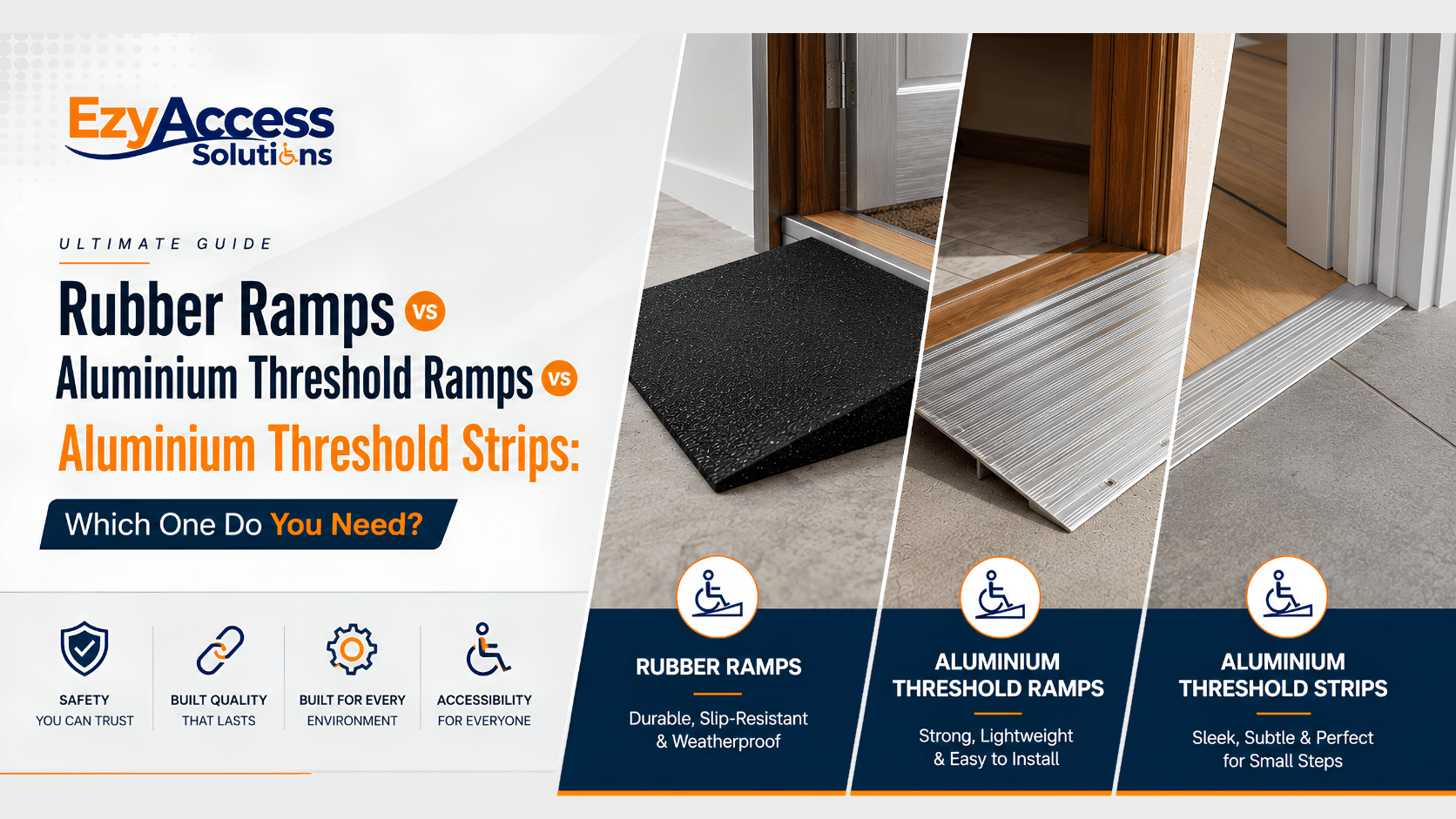
If you’ve typed “threshold ramp,” “rubber ramp” or “threshold strip” into Google and come away more confused than when you started, you’re in good company. The names sound almost interchangeable, but each one solves a genuinely different problem — and picking the wrong one usually means either paying for more ramp than you actually need, or ending up with something that doesn’t fix the trip hazard at all.
We get asked this most weeks by customers ringing our Epping workshop, so here’s the straightforward version: what each product actually does, roughly what it costs, and how to work out which one fits your doorway.
Quick Answer
Rubber ramps handle actual steps and rises — driveways, garages, outdoor entries, anywhere weather and wear come into it.
Aluminium threshold ramps are for the small, precise level changes you get at doorways and sliding doors.
Aluminium threshold strips aren’t ramps at all — they’re a flooring trim that joins two surfaces flush, with barely any rise to speak of.
Short version: real step to get over, you want a ramp. Two floors meeting at the same height, you want a strip.
What Are Rubber Ramps?
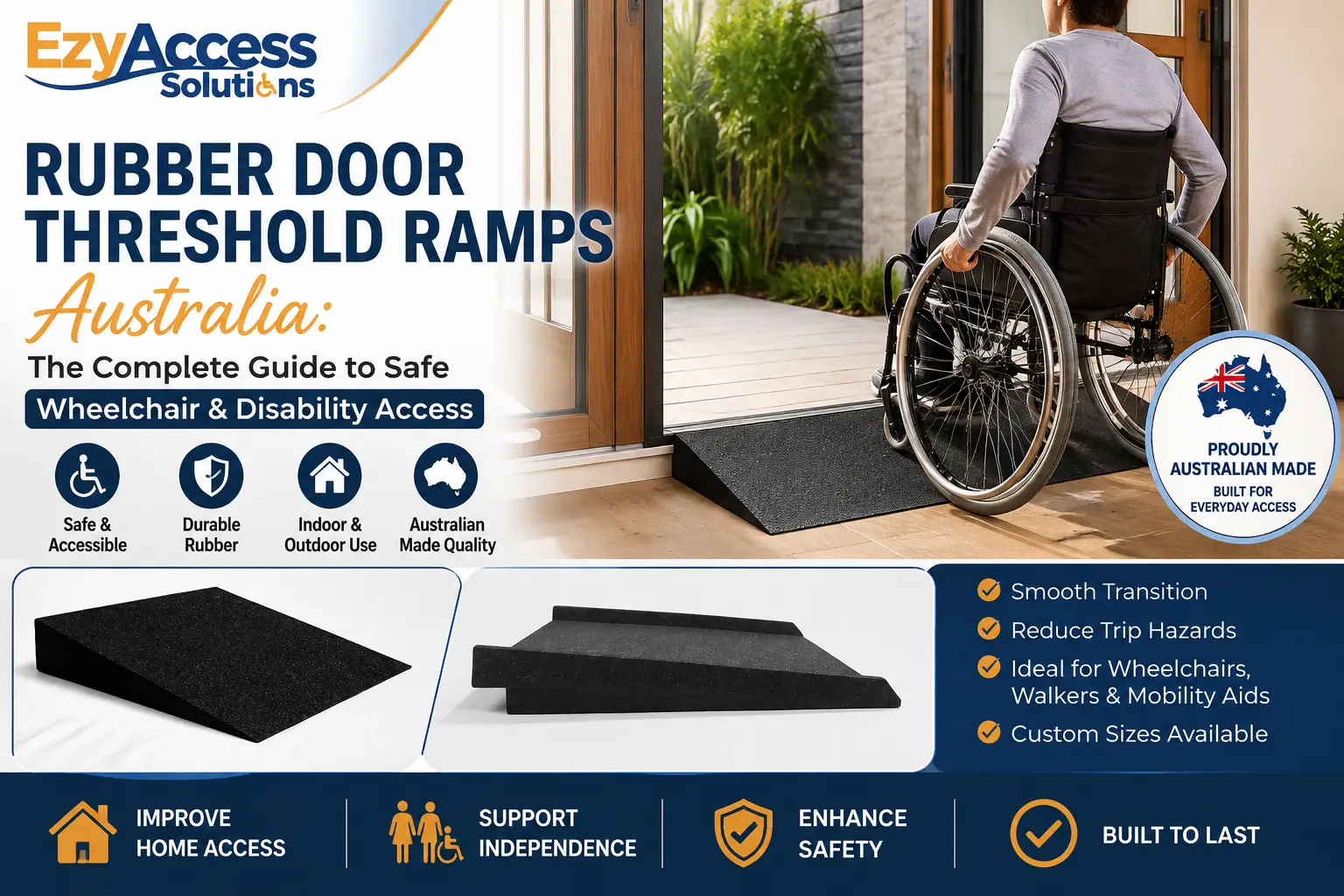
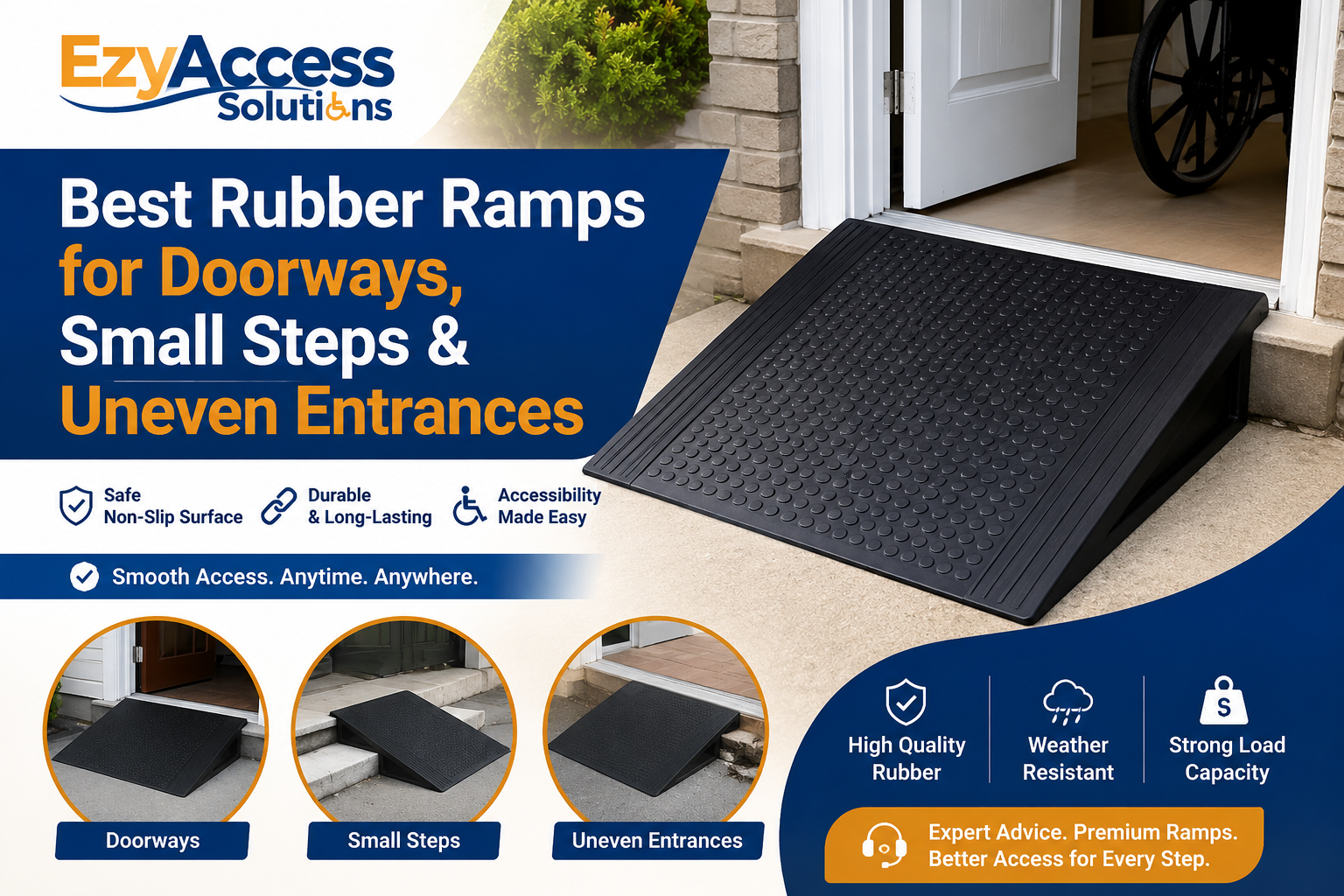
Rubber ramps are the workhorse of the range. They’re made from 100% recycled rubber, manufactured here in Australia, and built to shrug off Melbourne weather without breaking down or getting slippery when wet. If there’s a genuine step to deal with — a garage step, a raised driveway threshold, a warehouse loading bay, ground that’s never quite sat right — this is usually your answer.
The standard straight ramp comes in at 1000mm with either a 1:8 or 1:10 gradient, and pricing sits between $65 and $599 depending on the size and drop you need. If nothing off-the-shelf fits — say the entry is an odd angle or an unusual height — we can build a custom rubber ramp to the exact dimensions instead.
Have a browse through our full range of rubber ramps, or if it’s a one-off shape you’re dealing with, our custom rubber ramps page covers made-to-measure options.
What Are Aluminium Threshold Ramps?
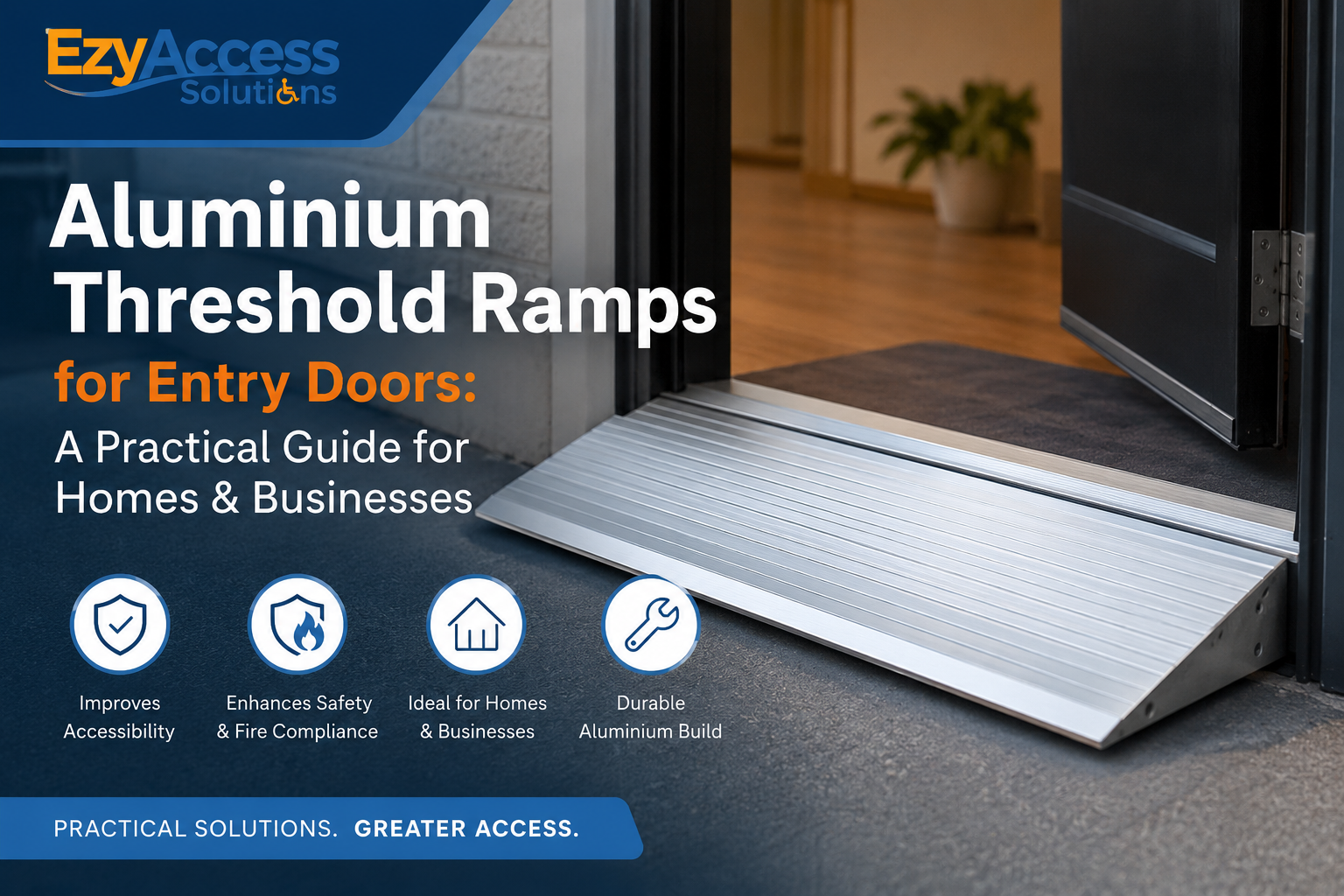
Aluminium threshold ramps solve a much smaller, more specific problem: the little lip you get at a doorway or sliding door track. They’re light, easy to install yourself, and come in graded rise heights — 12mm, 15mm, 20mm and 25mm — so you can match the exact step instead of using something that’s either too shallow or unnecessarily bulky.
Widths run 1000mm, 1500mm or 2000mm, and prices land between $75 and roughly $220 depending on rise and width. They cope fine indoors or out, and handle wheelchairs, walkers, mobility scooters and everyday trolley traffic without any fuss.
Full sizing and pricing is on our aluminium threshold ramps page.
What Are Aluminium Threshold Strips?
This is the one that trips people up when they’re searching online, because “threshold strip” sounds a lot like “threshold ramp” but does something quite different. A strip isn’t for stepping over a rise — it’s a finishing trim that joins two different flooring surfaces flush, so you don’t get a lip or gap where tile meets timber, or carpet meets vinyl.
They’re rust-proof, UV-resistant and scratch-resistant, and come in four widths — 50mm, 75mm, 100mm and 150mm — to suit basically any floor-to-floor transition you’ll find in an Australian home or office. Pricing runs from $59 up to $139 depending on width.
If what you actually need is a strip rather than a ramp, our aluminium threshold strips range covers all four sizes.
Comparison at a Glance
| Product | Solves | Material | Price Range | Indoor/Outdoor |
|---|---|---|---|---|
| Rubber Ramps | Steps, raised thresholds, uneven ground | 100% recycled rubber | $65 – $599 | Both, built for outdoor wear |
| Aluminium Threshold Ramps | Small precise doorway/sliding door rises (12–25mm+) | Lightweight aluminium | $75 – $220+ | Both |
| Aluminium Threshold Strips | Flush joins between two floor types (no real rise) | Aluminium, rust/UV/scratch-resistant | $59 – $139 | Indoor & covered outdoor |
How to Choose the Right One
Grab a tape measure first. Is there an actual height difference at the doorway, or are you just dealing with two floors meeting? Anything under a few millimetres probably doesn’t need a ramp at all — that’s strip territory.
Small rise at a doorway or sliding door, up to about 25mm? An aluminium threshold ramp is usually the neatest fix — low profile, quick to install.
Bigger step, or somewhere exposed to weather — driveway, garage, outdoor entry? Rubber handles the wear and the rain better, and comes in longer runs if you need them.
No rise at all, just two floors meeting? That’s a strip, not a ramp — no point paying for something you don’t need.
Doorway’s an odd shape or height that nothing standard fits? That’s what custom rubber ramps are for.
Still not sure? Run the numbers through our ramp calculator to check the gradient works for AS1428.1, or just get in touch for a free quote — our Melbourne team can usually tell you what you need over the phone.
Compliance & Funding
If the ramp needs to work for a wheelchair or mobility scooter, it’s worth sticking to AS1428.1 — as a general rule, a minimum 1000mm width between handrails and a gradient no steeper than 1:14 (1:10 is sometimes acceptable for shorter rises). If you’re on an NDIS plan, ramps and threshold ramps are commonly covered as a home modification — check with your support coordinator, OT or plan manager on what’s included, and we’re happy to help get a compliant quote sorted.
FAQs
What’s the difference between a threshold ramp and a threshold strip?
Simple way to think about it: a ramp gets you over a step, a strip just tidies up where two floors meet. If there’s no real height difference, you don’t need a ramp.
Can I use a rubber ramp for a wheelchair?
Definitely — it’s one of the most common uses, especially outdoors on driveways or for steps where an aluminium ramp isn’t substantial enough to handle the traffic or the weather.
How do I know what size aluminium threshold ramp I need?
Measure the rise at the doorway in millimetres and match it to the closest size — 12mm, 15mm, 20mm or 25mm. If it doesn’t land on a standard size, a custom rubber ramp is usually the better call.
Are aluminium threshold ramps suitable for outdoor use?
Yes, they hold up fine indoors or out. For heavy-wear outdoor spots like a garage or driveway though, rubber tends to last longer.
Does NDIS cover the cost of ramps and threshold ramps?
Often, yes — ramps are commonly included as a home modification under an NDIS plan, but it depends on your individual plan and whether an OT assessment is required. Your support coordinator can confirm, or reach out to us and we’ll help you get a compliant quote sorted.
Do I need a custom ramp, or will a standard size work?
Standard sizes cover most doorways and steps without any trouble. It’s really only worth going custom if your entry has an unusual height, angle, or an uneven surface a standard ramp won’t sit flush against.

One thought on “Rubber Ramps vs Aluminium Threshold Ramps vs Aluminium Threshold Strips: Which One Do You Need?”
Comments are closed.