


How to Choose Grab Rails and Handrails for Elderly Safety

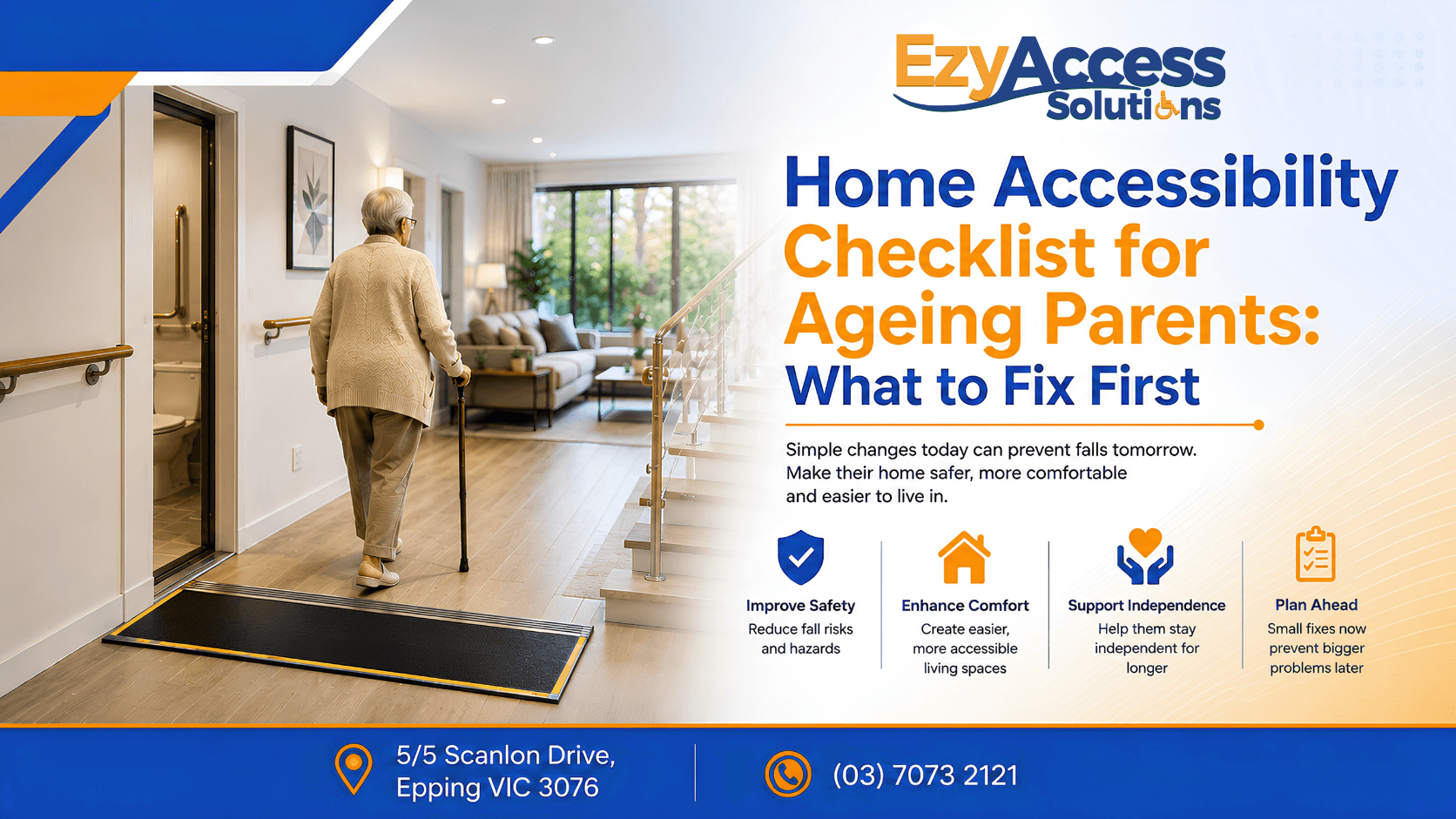
Most families don’t plan a grab rail. They notice something instead — a hand going out to the vanity every time someone stands up from the toilet, a pause at the top of the back steps that didn’t used to be there, a shower that’s started getting skipped.
The rail comes after that. And it’s usually bought in a hurry, positioned by guesswork, and screwed into plasterboard. All three of those are fixable, and getting them right is the difference between a rail someone trusts and one they avoid.
Quick Answer
Put grab rails where someone changes position — beside the toilet, at the shower entry, along the shower wall, beside the bed. Put handrails where someone travels — stairs, ramps, long hallways, outdoor steps. Grab rails sit 800–810mm above the floor and are 30–40mm across; handrails sit 865–1000mm above the stair nosing and are 30–52mm across. The rail must be fixed into a stud, noggin or backing plate, never into plasterboard alone, and rated to take 1,100 N from any direction.
In This Article
- Grab rail or handrail — they’re not the same thing
- Where rails actually earn their place
- Choosing the rail: diameter, length, orientation, finish
- Heights, in one place
- The fixing matters more than the rail
- Warning signs an existing rail isn’t safe
- NDIS, Home Care Packages and OT assessments
- Frequently asked questions
1. Grab Rail or Handrail — They’re Not the Same Thing
People use the words interchangeably. The standards don’t, and neither do installers.
A grab rail is short and fixed, and it’s gripped for a moment during one specific action: lowering onto a toilet seat, stepping over a shower hob, rising from the edge of a bed. It takes load in an unpredictable direction, often suddenly.
A handrail is long and continuous, and it’s held throughout a movement: walking up a flight of stairs, travelling along a ramp, moving down a hallway. It guides more than it catches.
The distinction matters because it changes every specification that follows — height, diameter, length, and how hard the fixing has to work.
2. Where Rails Actually Earn Their Place
An occupational therapist will assess the individual, and that assessment beats any general list. But these are the locations that come up in most homes.
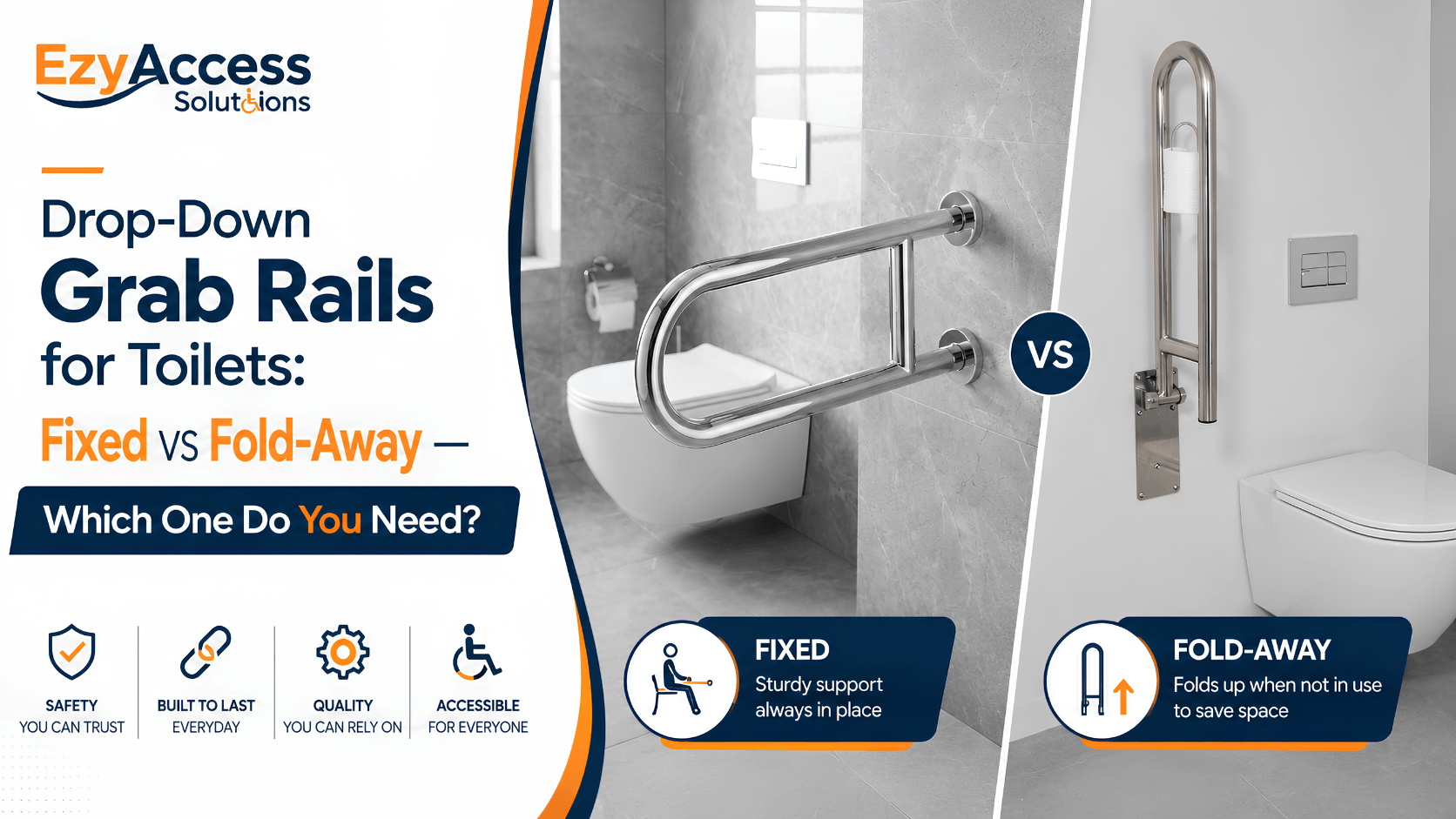
Beside the toilet. Standing up from a seated position is the most physically demanding thing most older adults do repeatedly each day. A horizontal or angled rail lets the person push down rather than haul themselves up. Where space is tight or the bathroom is shared, a fold-away rail keeps the floor clear — we compare the two in fixed vs fold-away toilet grab rails.
At the shower entry. The step from dry floor to wet floor is where a large share of bathroom falls happen. A vertical rail at the entry gives something to hold while one foot is committed and the other isn’t.
Inside the shower. A horizontal rail on the wall opposite the showerhead supports the standing phase — washing hair, turning, reaching for soap, all of which move the centre of balance.
Along the bath. Lowering into and rising out of a bath are the two hardest actions in the room. A rail along the long wall carries both.
Beside the bed. A bed transfer rail is one of the most quietly useful modifications there is. It often decides whether someone gets up at night independently or waits for help.
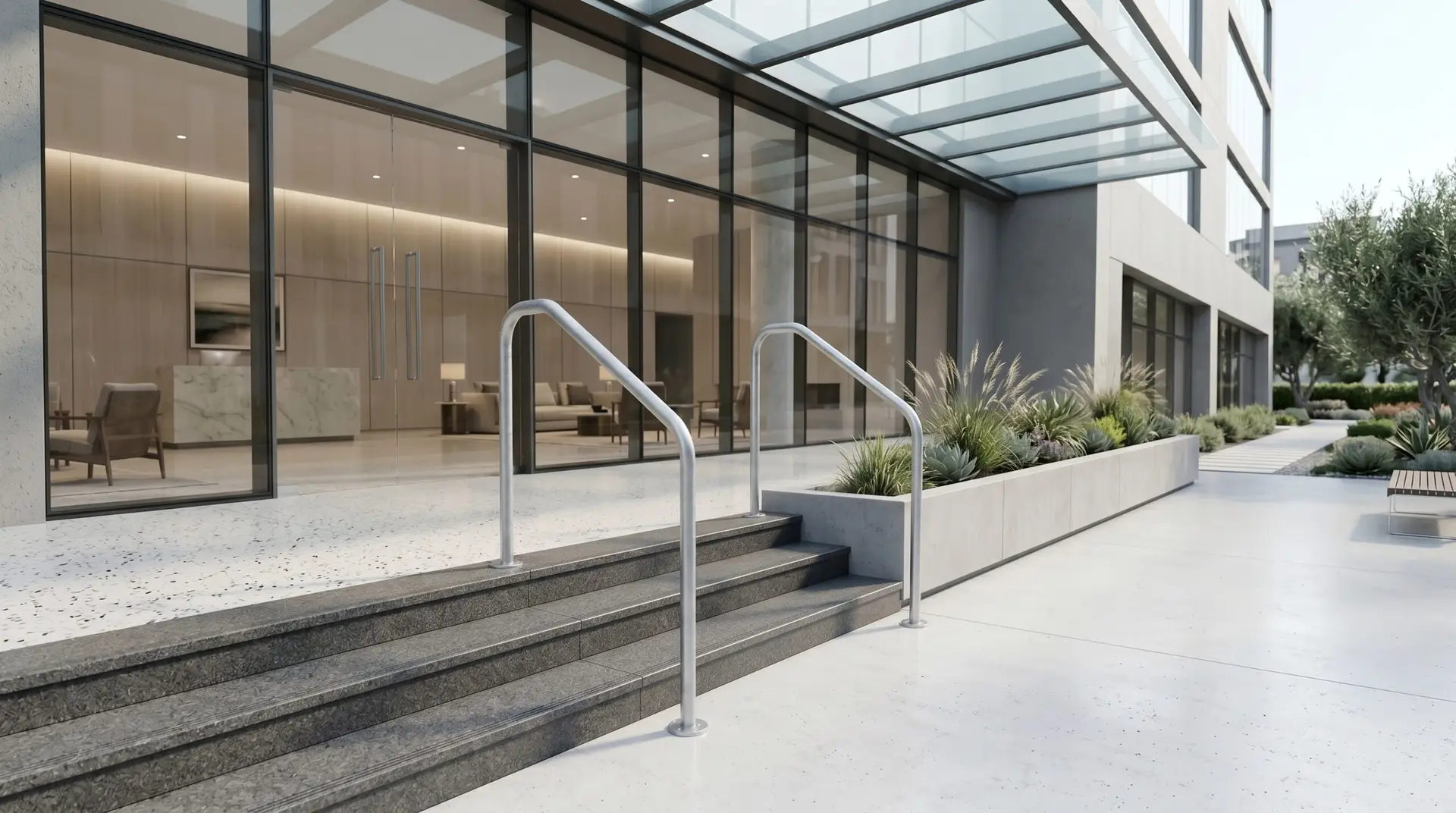
Stairs, inside and out. Any staircase in a home with an older occupant wants at least one continuous handrail along the full flight. Rails on both sides are better where one side is stronger than the other. Outdoor steps at the front door, back door or garage get overlooked constantly, and they’re the ones that get wet.
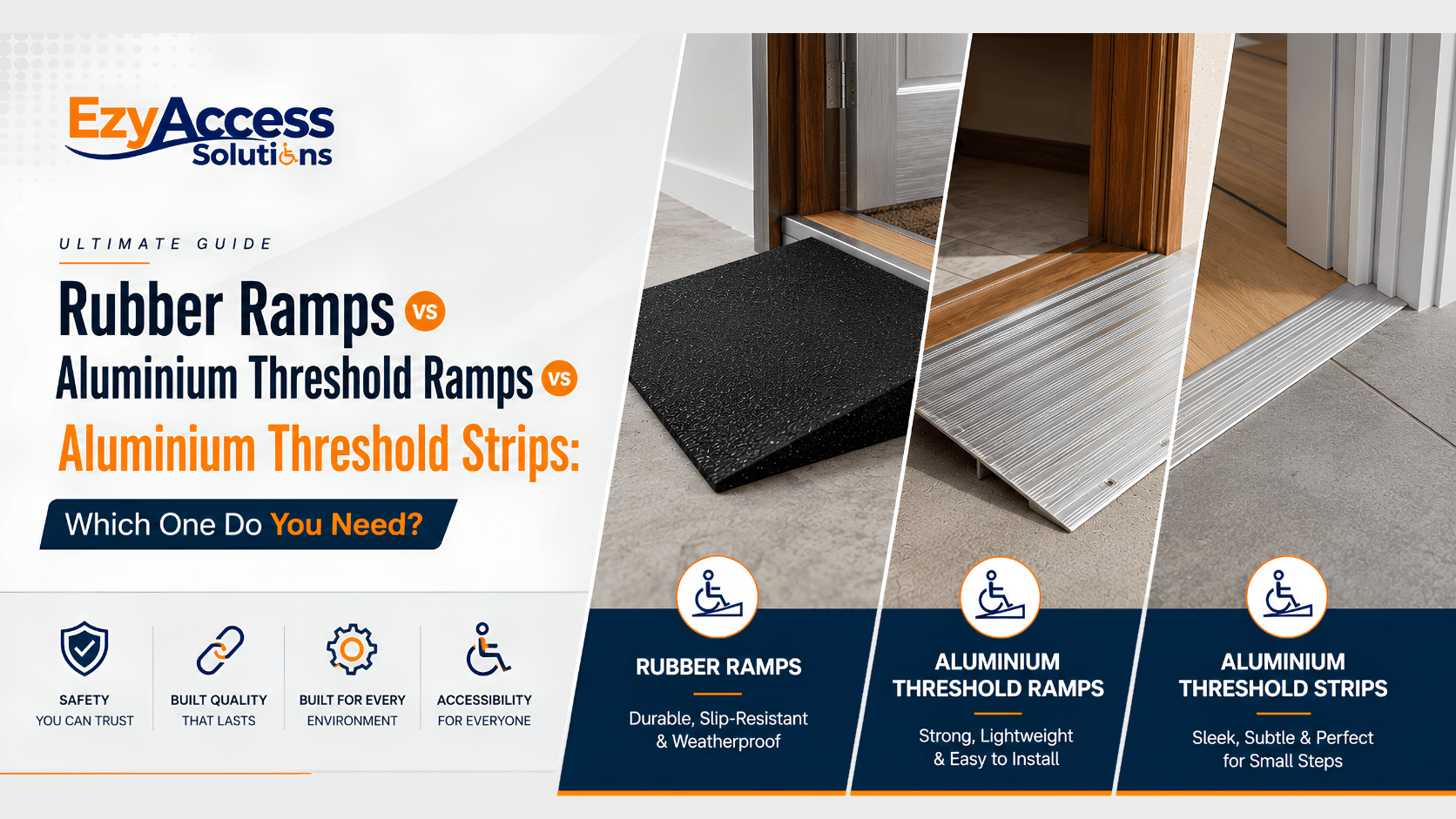
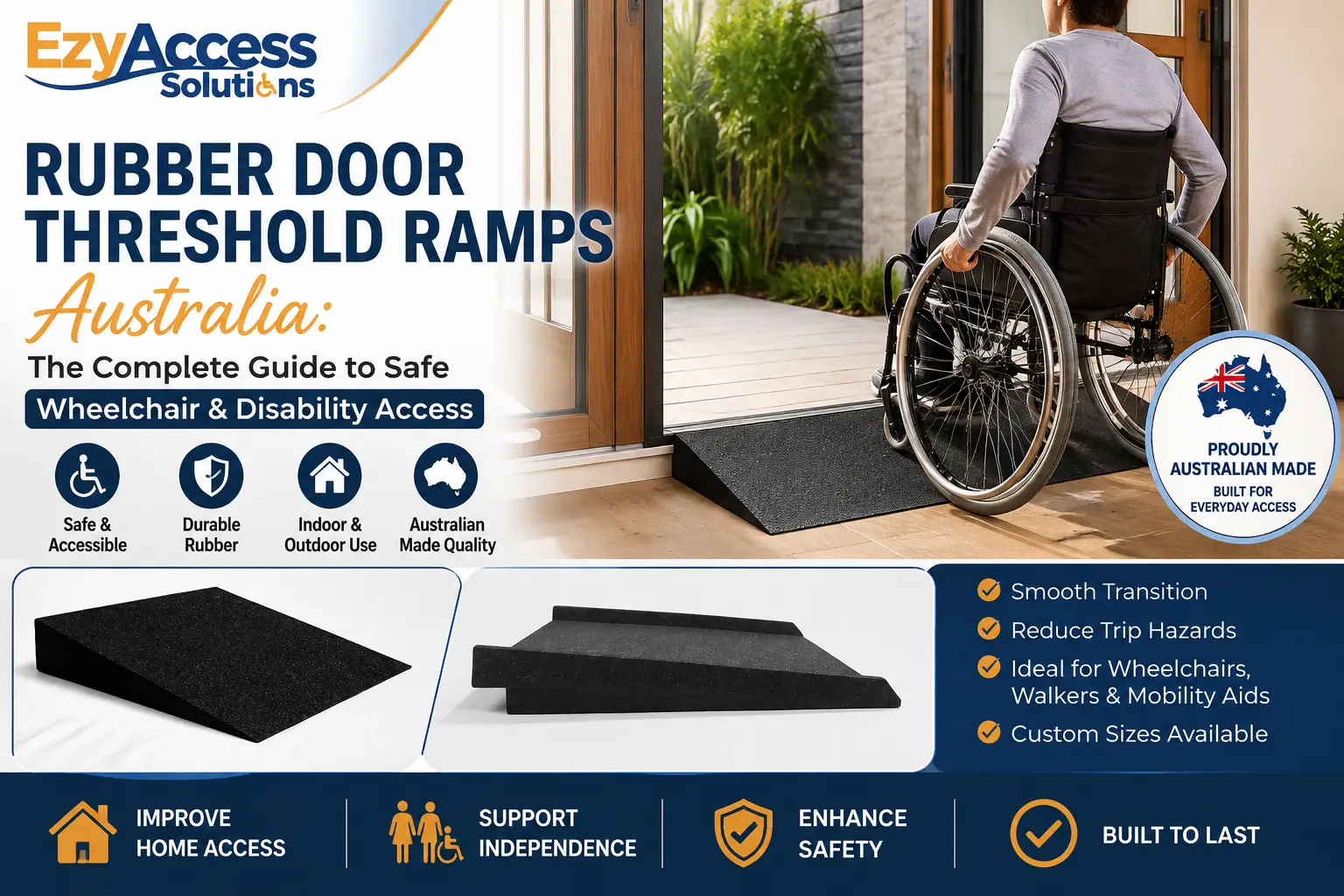
Ramps. Where a ramp has been installed for wheelchair or walker access, handrails give ambulant users something to work against. Whether they’re required depends on the ramp’s rise and gradient — our ramp gradient guide covers where that line sits.
3. Choosing the Rail: Diameter, Length, Orientation, Finish
Diameter: 30–40mm for grab rails. AS 1428.1-2021 specifies 30–40mm for grab rails and 30–52mm for handrails. Toward the lower end suits smaller hands and reduced grip strength. Too thick and the hand can’t close around it; too thin and it cuts in under load.
Length by function. Toilet rails generally run 600–900mm horizontally, extending at least 450mm forward of the front of the pan. Shower entry rails run 600–900mm vertical or angled. Shower and bath rails run 900–1200mm horizontally, and AS 1428.1 asks for at least 1,200mm across the main shower wall in accessible facilities.
Orientation follows the movement. Horizontal rails support weight-bearing and lateral balance. Vertical rails support the rising and lowering action. Angled rails — usually around 45° — do a bit of both, which is why they’re common in compact bathrooms where only one rail will fit.
Finish. Stainless steel is the default in wet areas: it doesn’t corrode, cleans easily, and holds its strength. Powder-coated steel or aluminium works in dry areas and outdoors. Avoid chrome plating in a bathroom — the plating can lift over time, and once it does the grip goes with it. A knurled or ribbed surface grips far better than polished, which matters most for the people who need the rail most.
4. Heights, In One Place
| Rail | Height | Measured from | Diameter |
|---|---|---|---|
| Toilet grab rail (horizontal) | 800–810mm | Finished floor | 30–40mm |
| Shower grab rail (horizontal) | 800–810mm | Finished shower floor | 30–40mm |
| Vertical grab rail | Set to the user | Assessed individually | 30–40mm |
| Stair handrail | 865–1000mm | Nosing line of the treads | 30–52mm |
| Ramp / landing handrail | 865–1000mm | Finished floor level | 30–52mm |
Handrail height has to stay consistent along the whole flight — a rail that drifts is a hazard in itself. There’s more detail on measuring correctly in our guide to handrail height in Australia.
5. The Fixing Matters More Than the Rail
A well-made rail screwed into plasterboard is more dangerous than no rail at all, because someone will trust it.
Find the substrate first. Timber stud, steel stud, masonry, or tile over any of those — each needs different hardware. This is the step that gets skipped.
Fix into something solid. A stud, a noggin, or a backing plate installed behind the sheet. Plasterboard anchors are not rated for the loads involved.
Check the load rating. AS 1428.1 works to a rail withstanding 1,100 N from any direction at any point — roughly 110kg applied suddenly, in whatever direction the person happens to be falling. That’s the number the whole assembly has to meet, not just the rail.
Leave 50–60mm clearance. Between the rail and the wall, so a hand can close right around it.
Position for the person, not the tape measure. The standard gives a range. Within that range, where the rail goes depends on the user’s height, reach and how they transfer.
6. Warning Signs an Existing Rail Isn’t Safe
Any movement at all. A rail that shifts, rotates or flexes under a firm pull has a fixing problem, not a tightening problem.
Cracked or crazed tile around the flange. Usually means the fixing is working loose behind the surface.
Rust staining at the base. Water has got behind the flange and is working on the fixings you can’t see.
Chrome lifting or flaking. The grip is compromised and the rail underneath may be corroding.
It’s a towel rail. Towel rails and toilet-roll holders get used as grab rails constantly. They are not rated for it, and they fail.
7. NDIS, Home Care Packages and OT Assessments
Rails are among the most commonly funded minor home modifications in Australia, through both NDIS and Home Care Packages. Funding almost always follows an occupational therapy assessment, which specifies the type, height and position for that person in that bathroom.
AS 1428.1 is written for public and commercial buildings, so in a private home it’s a best-practice reference rather than a legal requirement. But funded work is generally expected to align with it, so hitting those figures is usually what gets a modification approved and signed off.
8. Frequently Asked Questions
What height should a toilet grab rail be?
Horizontal rails sit 800–810mm above the finished floor under AS 1428.1. Vertical rails are positioned to the individual user rather than to a fixed height.
Can a grab rail go on any bathroom wall?
Only where there’s solid backing behind the sheeting — a stud, noggin or backing plate. If the wall doesn’t have it, backing can usually be added during installation.
What’s the difference between a grab rail and a handrail?
A grab rail is short and gripped during one action; a handrail is long and held through a whole movement. They have different heights, diameters and load paths.
How much weight should a grab rail hold?
AS 1428.1 works to 1,100 N from any direction at any point on the rail — about 110kg applied suddenly. The fixing has to meet that, not just the rail.
Do I need an OT assessment?
Not for a straightforward private purchase. For NDIS or Home Care Package funding, an occupational therapy assessment is usually required.
Are angled rails better than horizontal ones?
They’re more versatile, supporting both rising and balance, which is why they’re common where only one rail fits. Where there’s room for two, purpose-specific rails generally work better.
Can I install a grab rail myself?
It’s legal to, but the failure mode is someone falling while holding it. Identifying the substrate and matching the fixing is the part worth paying for.
Sources
Figures are drawn from AS 1428.1-2021 Design for access and mobility (grab rail and handrail dimensions, clearances and load requirements). Current editions are available from Standards Australia, and National Construction Code requirements from the Australian Building Codes Board. Standards are revised periodically — check the current edition before specifying work.
Not sure what the right rail is, or whether the wall will take it? That’s the assessment, and it’s worth doing before anything gets ordered. The EZY Access Solutions team assesses, supplies and installs grab rails and handrails across Melbourne and surrounding areas from our Epping workshop, and supplies Australia-wide.
Browse grab rails · Browse banister rails and handrails · Get a free quote · Book a service
Phone (03) 7073 2121 · [email protected] · 5/5 Scanlon Drive, Epping VIC 3076 · Mon–Fri 8am–5pm