


Rubber Door Threshold Ramps Australia: The Complete Guide to Safe Wheelchair & Disability Access

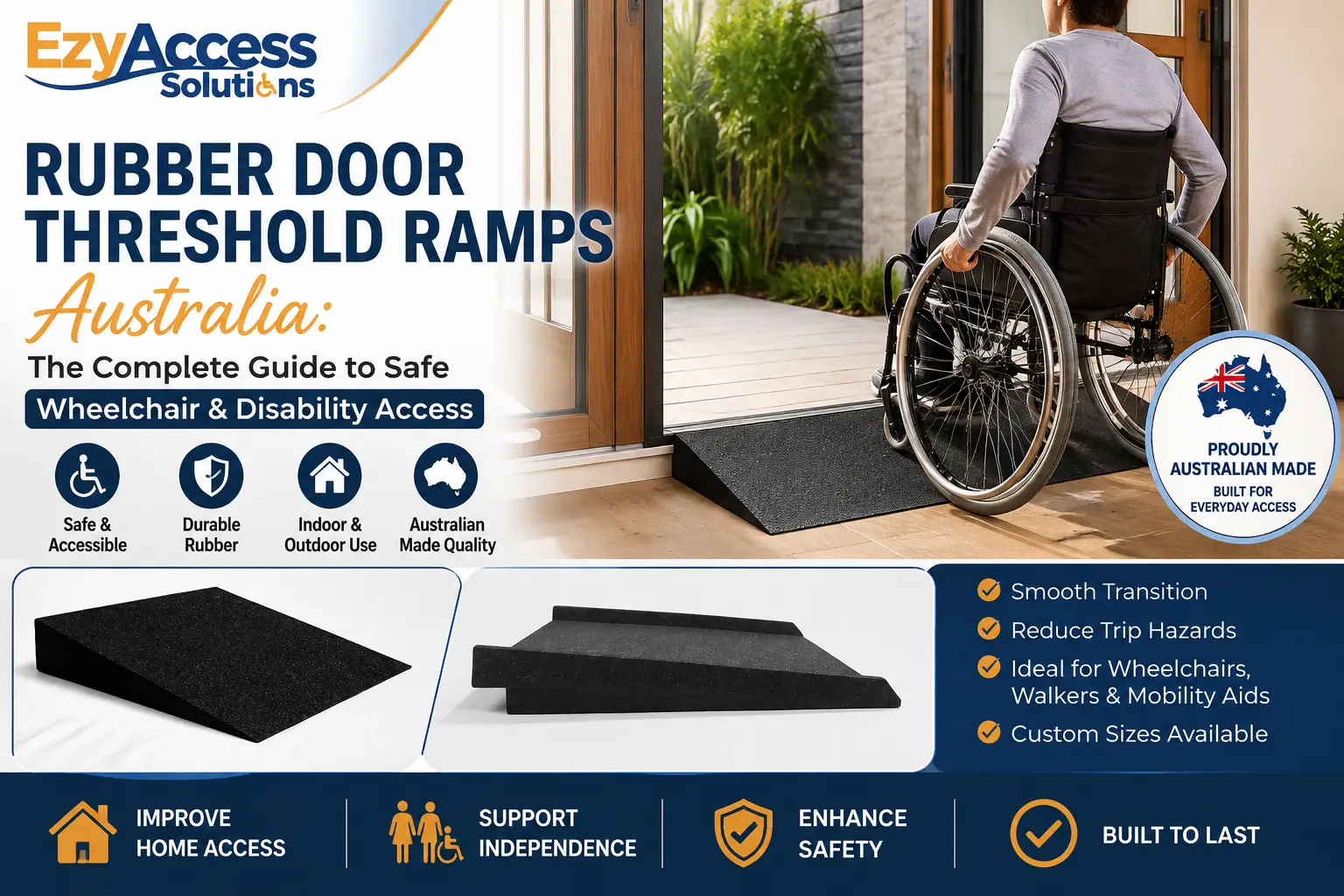
Tripping over a raised doorway shouldn't be a daily risk in your own home. Yet for thousands of Australians using wheelchairs, mobility scooters, walkers, or simply managing joint pain, a 20mm lip at the front door is more than an inconvenience — it's a genuine safety hazard.
That's the gap rubber door threshold ramps were built to close. They're quiet, affordable, and quick to install, which is exactly why they've become one of the most searched access solutions in Australia — from Melbourne apartments to Perth retirement villages.
At Ezy Access Solutions, we've fitted threshold ramps into homes, aged care facilities, and commercial entries right across the country. This guide pulls together everything we know — the practical, the technical, and the "nobody tells you this" details — so you can choose the right rubber wheelchair ramp for doorway access with total confidence.
Key Takeaways
- Rubber door threshold ramps smooth out door lips between 6mm and 50mm, making entry safer for wheelchairs, mobility scooters, prams, and walking frames.
- They're a top pick for renters and homeowners because most require no drilling or permanent fixing.
- Ramp height should never exceed a 1:2 gradient for safe wheelchair use — steeper ramps increase tip-back risk.
- Rubber outperforms aluminium for grip, noise reduction, and weather resistance, but aluminium wins on heavy scooter loads and extreme temperature swings.
- NDIS participants can often claim threshold ramps under Core Supports or Home Modifications, depending on their plan.
What Is a Rubber Door Threshold Ramp?
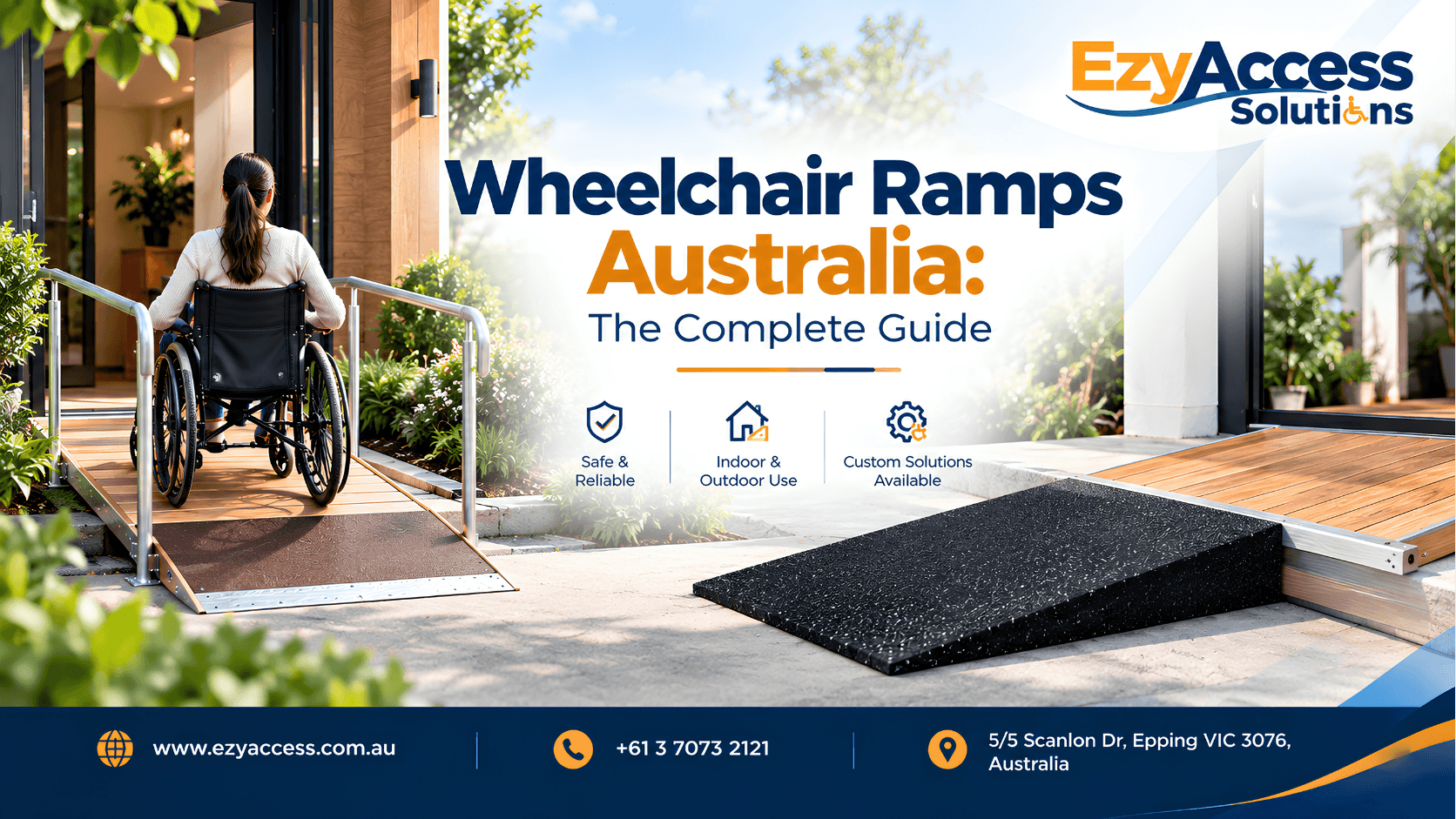
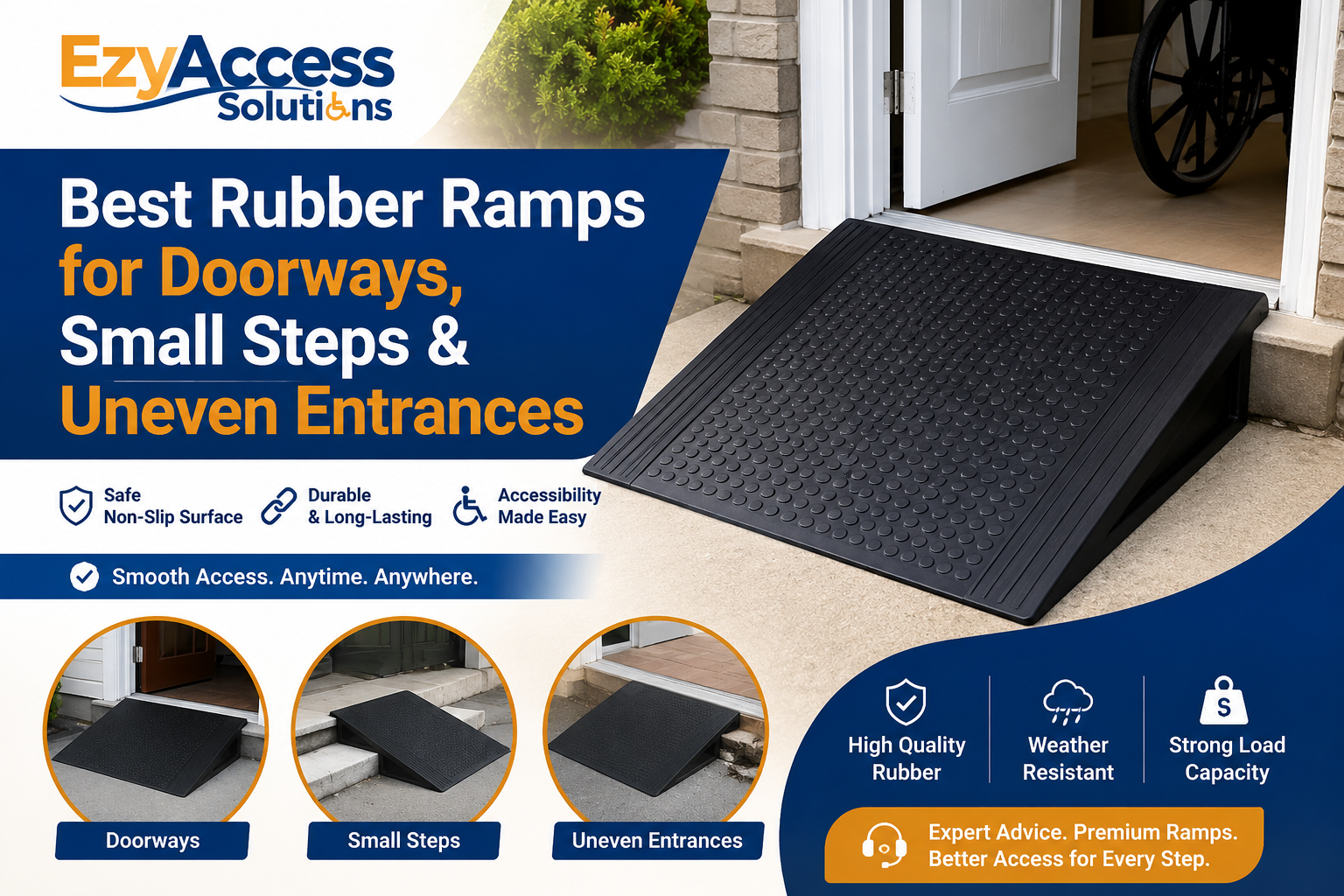
A rubber door threshold ramp is a low-profile, wedge-shaped ramp made from durable, weather-resistant rubber compound, designed to sit directly over an existing door threshold or step. It creates a smooth, gradual slope so wheelchairs, scooters, prams, and walking aids can roll over the gap instead of catching on it.
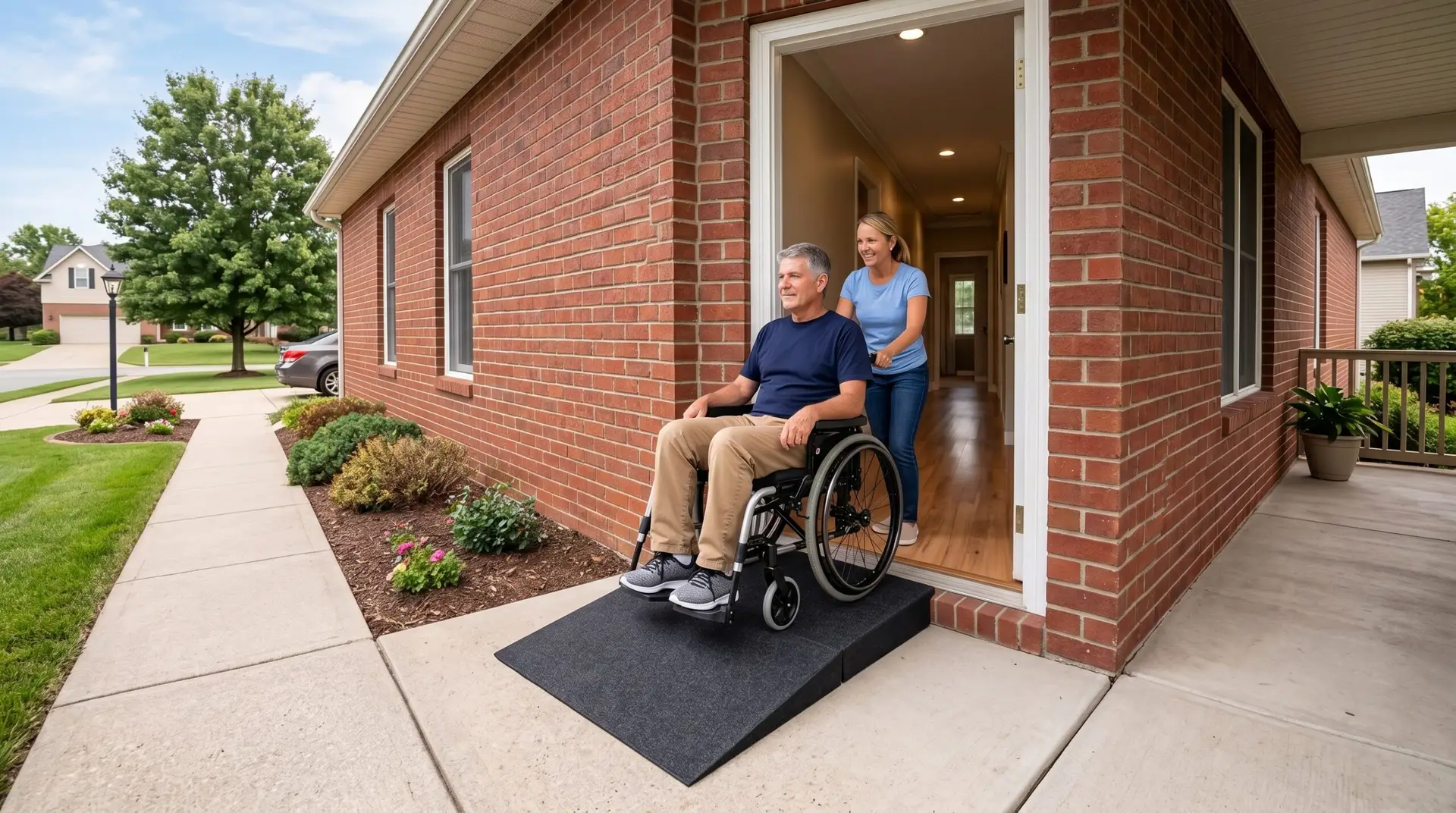
Unlike permanent ramps, most rubber threshold ramps are a placement solution — no concrete, no council permits, and in many cases, no tools required. That's why they're often the first access upgrade people search for after a hospital discharge, an NDIS assessment, or simply getting older in place.
Why Rubber Threshold Ramps Are Essential for Australian Homes and Businesses
Australia's population is ageing quickly. According to the Australian Institute of Health and Welfare, roughly 1 in 6 Australians now lives with disability, and that number climbs sharply past age 65. Combine that with the growing number of NDIS participants living independently, and doorway access has become a mainstream home safety issue — not a niche one.
A few real-world reasons our customers reach for a rubber handicap ramp instead of a full ramp build:
- Renters can't modify the property — a rubber ramp is removable and leaves no damage.
- Budget-conscious families need a solution that costs a fraction of a timber or concrete ramp.
- Aged care and NDIS providers need fast, compliant fixes across multiple properties.
- Business owners need to meet accessibility obligations under the Disability Discrimination Act without a full shopfront renovation.
If your entryway has any lip, step, or transition greater than 6mm, it technically counts as a trip hazard under Australian access guidelines — and that's precisely the gap rubber ramps are engineered to solve.
Best Rubber Door Threshold Ramps for Australian Homes
Not every ramp suits every doorway. Here's how to think about the best doorway ramps Australia has to offer, based on what we install most often.
What Makes a Threshold Ramp "The Best" One for You?
The best rubber threshold ramp isn't the most expensive one — it's the one matched correctly to your door height, door type, and who's using it daily.
Look for these features before buying:
- Bevelled, tapered edges on all sides for smooth wheel transition
- UV-stabilised rubber if the ramp will sit in direct sun
- Slip-resistant surface texture, wet or dry
- Weight rating that comfortably exceeds your heaviest mobility device
- Colour options (black or grey) that blend with your entry rather than standing out as "medical equipment"
Quick Comparison: Common Rubber Threshold Ramp Types
Ramp Type | Best For | Typical Height Range | Indoor/Outdoor |
Self-adjusting rubber ramp | Uneven or variable gaps | 0–50mm | Both |
Solid wedge ramp | Single fixed-height step | 6–40mm | Both |
Sliding door threshold ramp | Sliding & bi-fold doors | 10–30mm | Indoor/Patio |
Corner/end caps ramp | Wide entries, garages | 20–50mm | Outdoor |
Modular rubber ramp kit | Multiple steps, decking | Custom | Outdoor |
For most standard Australian homes with a single step or door lip, a solid wedge ramp between 20mm and 30mm covers the majority of cases. You can browse our full range on the rubber ramps collection page.
How to Choose the Right Rubber Door Threshold Ramp
Getting this decision right the first time saves you a return shipment and, more importantly, keeps the person using it safe.
Step 1: Measure Your Doorway Height First
Use a tape measure at the highest point of the lip, not the lowest. Rubber ramps are typically sold in flat increments — 10mm, 20mm, 30mm, and 40mm — so round up to the nearest size rather than down.
Step 2: Consider Indoor vs Outdoor Use
Outdoor rubber ramps need UV stabilisation and drainage grooves so water doesn't pool underneath. Indoor ramps can prioritise a lower profile and quieter surface, since they won't face rain or harsh sun.
Step 3: Think About Who's Using the Ramp
- Manual wheelchair users need a gentler gradient and firm grip texture.
- Mobility scooter users need a wider ramp bed and a higher weight rating.
- Elderly walkers or frame users benefit from a slightly textured, non-glossy surface.
- Prams and trolleys generally cope well with almost any threshold ramp under 30mm.
Step 4: Confirm the Gradient Is Wheelchair-Safe
Australian Standard AS1428.1 recommends a maximum gradient of 1:8 for ramps, though for very short threshold transitions, 1:2 to 1:4 is generally accepted in practice because the rise is so small. As a rule of thumb: the lower the ramp, the steeper it can safely be.
What Height Rubber Ramp Do You Need for Your Doorway?
This is one of the most common questions we get, so here's a straightforward breakdown.
Door Lip Height | Recommended Ramp | Suitable For |
6–10mm | 10mm threshold ramp | Prams, light foot traffic, minor trip hazards |
11–20mm | 20mm threshold ramp | Most standard door thresholds, walking frames |
21–30mm | 30mm threshold ramp | Wheelchairs, common sliding door tracks |
31–40mm | 40mm threshold ramp | Mobility scooters, garage steps, higher door frames |
40mm+ | Modular ramp system or two stacked ramps | Multiple steps, uneven ground, custom entries |
Rule of thumb: if you're unsure between two sizes, choose the smaller one for wheelchair use and the larger one for mobility scooters — scooters generally handle a touch more gradient without tipping risk.
Need help confirming your measurement? Our team can talk you through it — see our contact page or check the full rubber ramps range for exact sizing options.
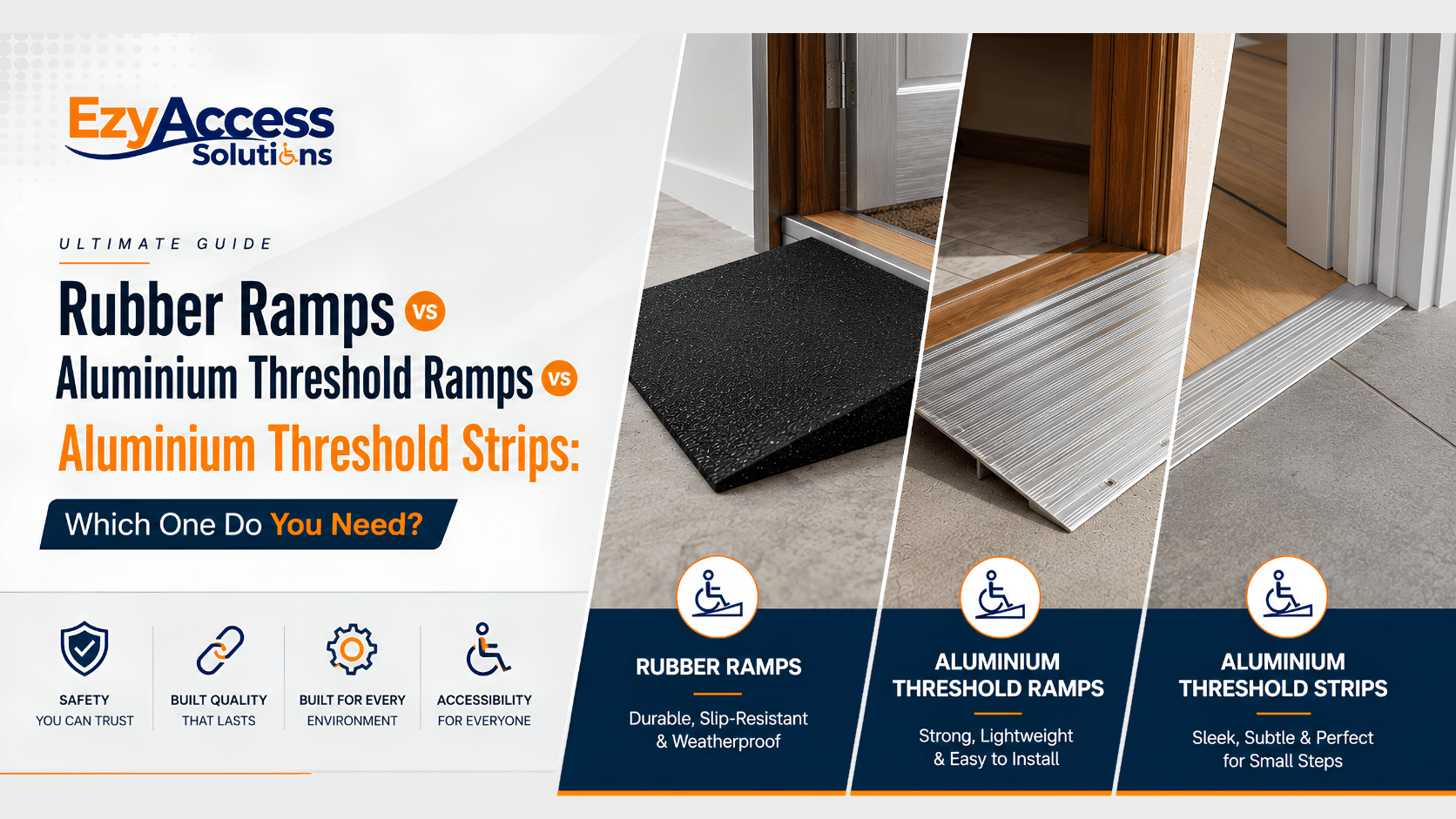
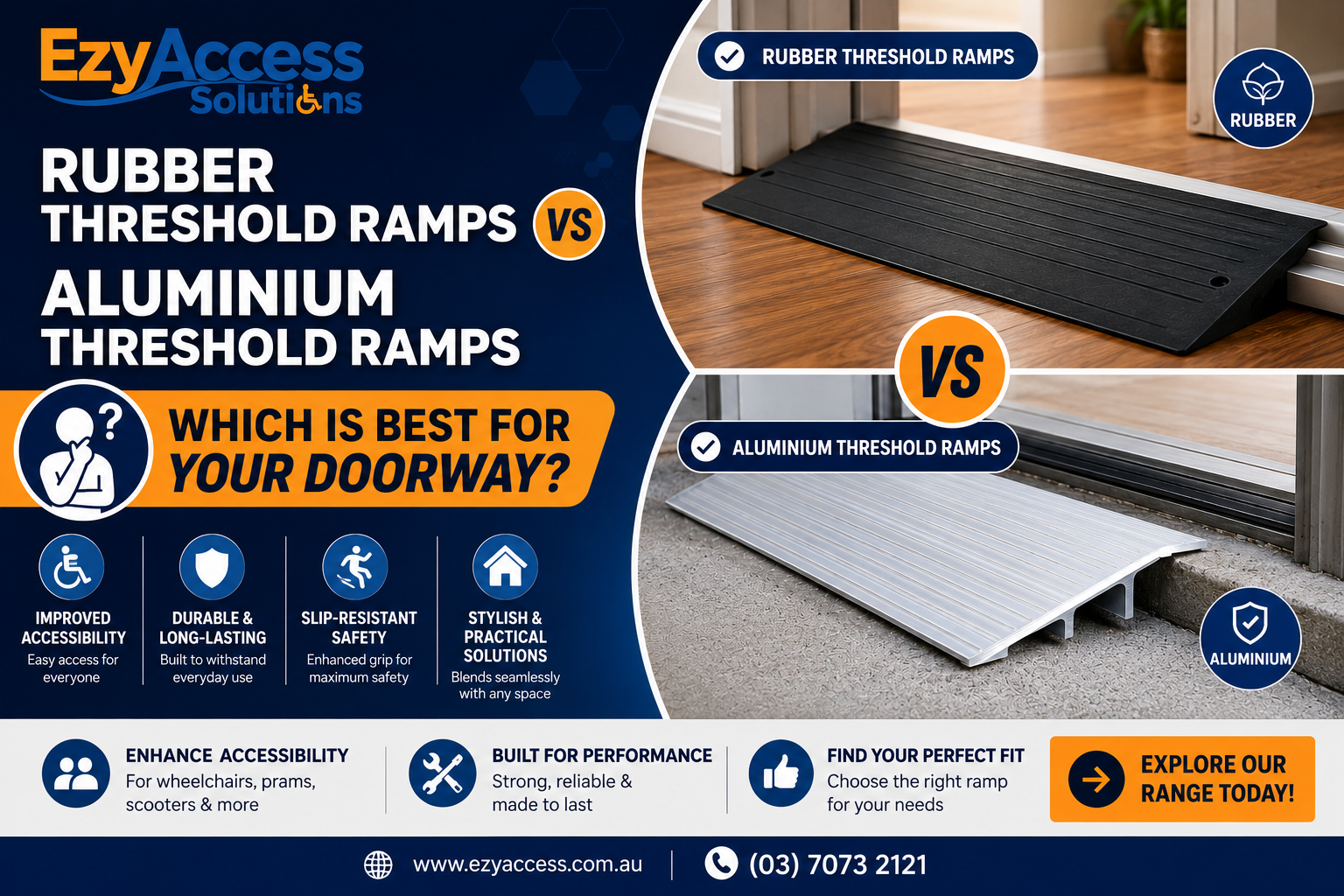
Rubber vs Aluminium Threshold Ramps: Which Is Better?
This comes up in almost every consultation, so let's settle it properly.
Feature | Rubber Threshold Ramps | Aluminium Threshold Ramps |
Grip/slip resistance | Excellent, even wet | Good, but can be slippery when wet |
Noise | Quiet, absorbs impact | Louder, especially with scooters |
Weight capacity | Good for wheelchairs, light scooters | Higher — better for heavy-duty scooters |
Weather resistance | Very good with UV-stable rubber | Excellent, doesn't warp |
Installation | No tools needed, easy to move | Often screwed/bolted down |
Cost | Generally lower | Generally higher |
Best suited to | Homes, rentals, indoor/patio doors | Commercial entries, heavy scooter traffic |
In short: choose rubber for everyday home use, quiet operation, and flexibility. Choose aluminium when you're dealing with very heavy mobility scooters, permanent commercial installs, or extreme outdoor exposure. A lot of our customers actually end up using both — rubber for the front door, aluminium for a permanent side ramp.
Rubber Threshold Ramps Across Australia
Doorway access needs don't change much from state to state, but climate and housing styles do. Here's what we typically see:
- Rubber Threshold Ramps Melbourne — high demand for indoor/outdoor combo ramps due to unpredictable weather and older weatherboard homes with raised entries.
- Rubber Threshold Ramps Sydney — popular in apartment complexes and townhouses with sliding door tracks.
- Rubber Threshold Ramps Brisbane — UV-stabilised ramps are essential given the harsher sun exposure.
- Rubber Threshold Ramps Perth — strong demand for outdoor ramps that resist heat warping.
- Rubber Threshold Ramps Adelaide — common in retirement villages and single-level homes.
- Rubber Threshold Ramps Canberra — cold-weather durability matters here; rubber holds up better than plastic alternatives.
- Rubber Threshold Ramps Hobart — moisture and drainage grooves are a priority in wetter climates.
- Rubber Threshold Ramps Darwin — heat and UV resistance are non-negotiable.
- Rubber Threshold Ramps Gold Coast — high uptake for holiday rentals and beachside units.
- Rubber Threshold Ramps Geelong — growing demand tied to the region's ageing population.
Wherever you're based, you can buy rubber threshold ramps online through Ezy Access Solutions with delivery available Australia-wide — check our shipping and delivery information for details.
Are Rubber Threshold Ramps NDIS Approved?
Rubber threshold ramps themselves aren't "approved" or "unapproved" as a category — approval depends on your individual NDIS plan and whether the item is deemed reasonable and necessary by your planner or Local Area Coordinator. That said, threshold ramps commonly fall under Assistive Technology or Home Modifications line items when they support daily access and independence.
Practical tip: get a written quote and a short justification (often from an OT) confirming the ramp addresses a specific access barrier. This is usually enough to have it considered under Core Supports funding.
Are Rubber Ramps Slip Resistant and Weatherproof?
Yes — quality rubber threshold ramps are manufactured with a textured, slip-resistant surface that performs well in wet and dry conditions, which is one of the biggest advantages rubber has over smooth aluminium or plastic. UV-stabilised rubber also resists cracking, fading, and warping from sun exposure, making it a genuinely reliable choice for outdoor Australian conditions.
That said, not all rubber ramps are equal. Cheaper, non-UV-treated rubber can harden and crack within a year or two of outdoor use — always check the product specs before buying an outdoor rubber ramp.
Can Rubber Ramps Be Cut to Size? Custom Solutions Explained
Many rubber threshold ramps can be trimmed on-site to match irregular doorway widths, especially modular and self-adjusting styles. However, cutting isn't recommended for ramps with internal reinforcement or moulded bevel edges, as this can compromise the slope and create a new trip hazard.
If your doorway is an unusual width or shape, it's worth asking your supplier about custom rubber threshold ramps built to exact measurements rather than trimming a standard one yourself.
Common Mistakes to Avoid When Buying a Threshold Ramp
Even a simple purchase like this trips people up — here's what we see most often.
- Buying based on door width only, ignoring height — the gradient matters more than the footprint.
- Choosing a glossy, decorative-looking ramp over a textured one — looks good, performs poorly in rain.
- Ignoring the weight rating for mobility scooters, which can weigh well over 100kg with a rider.
- Skipping the gradient check and ending up with a ramp that's technically too steep for safe wheelchair use.
- Assuming one ramp fits all doors in the home — side and rear entries often have different lip heights.
- Not checking UV rating for a ramp that will sit in full sun for years.
Expert Insight: What Access Consultants Recommend
Occupational therapists and access consultants consistently flag the same principle: the safest ramp is the one that matches the exact height of the step — not the one that "should be close enough." Even a 10mm miscalculation can turn a smooth transition into a genuine trip hazard for a walking frame user.
Consultants also tend to recommend testing the ramp with the actual mobility device before finalising a purchase, particularly for scooters, since wheel size and turning radius vary significantly between models.
How to Install a Rubber Door Threshold Ramp
Most rubber ramps are designed for tool-free placement, but here's the general process:
- Clean and dry the doorway surface thoroughly.
- Measure the threshold height at its highest point.
- Position the ramp flush against the door frame, tapered edge facing outward.
- For high-traffic entries, use the manufacturer's adhesive strips or anchor kit for extra stability.
- Test with the actual wheelchair, scooter, or walker before regular use.
For sliding doors specifically, make sure the ramp doesn't obstruct the door track — a rubber ramp for sliding doors should sit just outside the sliding channel.
Frequently Asked Questions
What is the best rubber threshold ramp for wheelchairs?
The best option is typically a solid wedge or self-adjusting rubber ramp rated for at least 250kg, with a gradient no steeper than 1:4 for low rises. It should have a textured, slip-resistant surface and match your exact door height for a smooth wheel transition.
Are rubber ramps suitable for outdoor use in Australia?
Yes, as long as the ramp is made from UV-stabilised rubber. Standard indoor-grade rubber can crack or fade quickly under Australian sun, so always check that the product is specifically rated for outdoor exposure before installing it at a front entry or patio.
What height doorway ramp do I need?
Measure your door lip at its highest point, then round up to the nearest standard size — 10mm, 20mm, 30mm, or 40mm. For wheelchairs, aim for the gentlest gradient possible; for mobility scooters, a slightly steeper ramp is usually manageable.
Can rubber ramps be cut to size?
Many modular and self-adjusting rubber ramps can be trimmed to fit non-standard doorway widths. Solid moulded ramps with reinforced edges generally shouldn't be cut, as it can affect the slope and safety of the transition.
Are rubber threshold ramps NDIS approved?
There's no blanket approval — funding depends on your individual NDIS plan and whether the ramp is assessed as reasonable and necessary, usually under Home Modifications or Assistive Technology. A supporting quote or OT recommendation strengthens the funding request.
What's the difference between rubber and aluminium threshold ramps?
Rubber ramps offer better grip, quieter operation, and easier tool-free installation, making them ideal for homes and rentals. Aluminium ramps handle heavier loads and extreme weather better, making them more common in commercial or permanent installations.
How much weight can a rubber threshold ramp support?
This varies by product, but quality rubber threshold ramps typically support anywhere from 200kg to over 500kg. Always check the manufacturer's weight rating against your wheelchair or mobility scooter's fully loaded weight, including the user.
Final Thoughts: Making Doorway Access Simple
A doorway shouldn't be the hardest part of someone's day. Whether you're fitting out a single home entry or managing access across multiple NDIS properties, a well-chosen rubber door threshold ramp solves a real, everyday problem — safely, quietly, and without a major renovation.
At Ezy Access Solutions, we stock a full range of rubber ramps for wheelchairs, mobility scooters, and everyday doorway access, with sizing support and Australia-wide delivery.