



When a Small Doorway Lip Becomes a Daily Safety Risk: Practical Access Fixes for Australian Homes

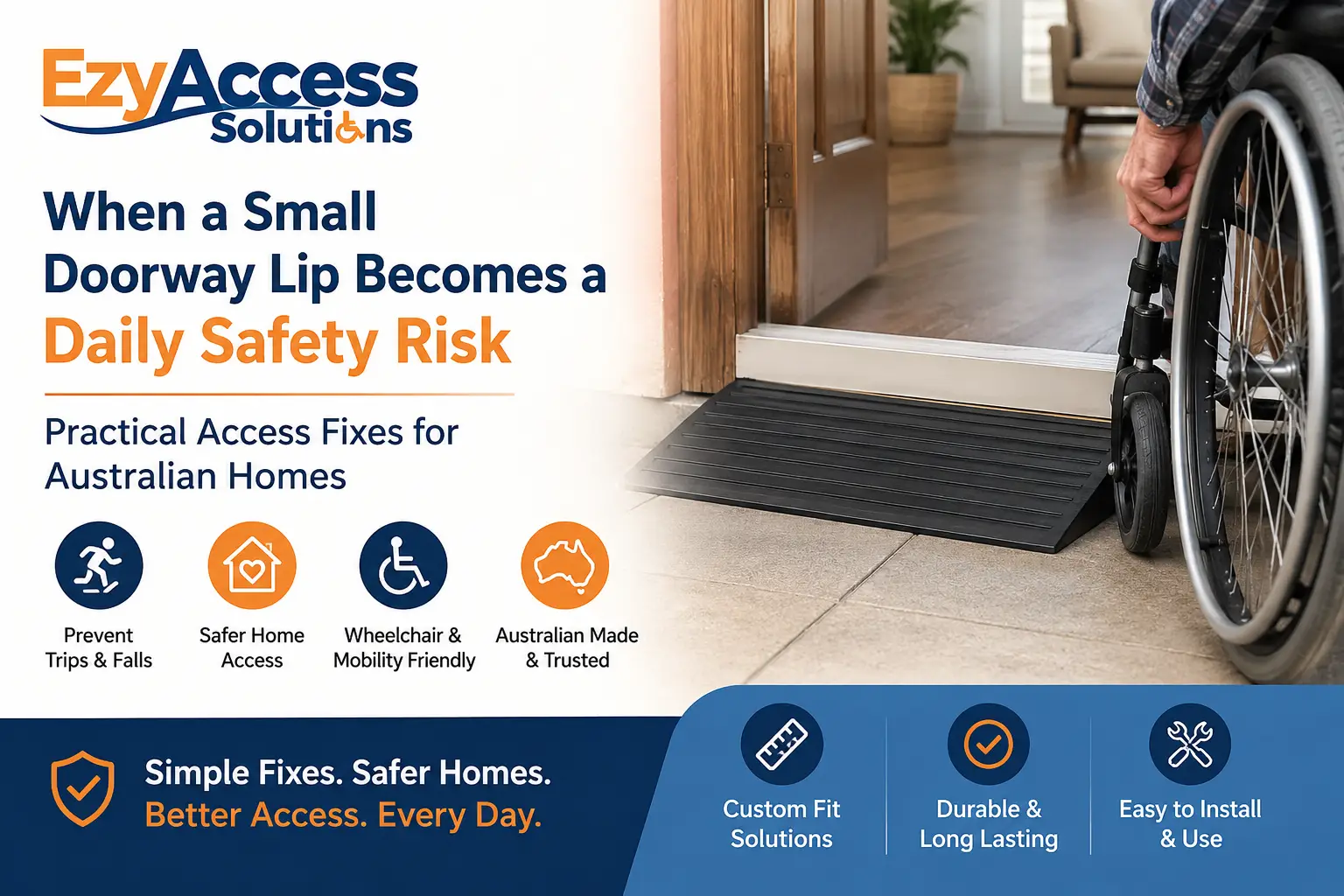
A small lip at the front door may not look like much. It might be only a few centimetres high, barely noticeable to someone who walks confidently and carries nothing heavier than a shopping bag.
For an older person, a wheelchair user, someone recovering from surgery, or a family member using a walking frame, that same doorway lip can become a daily obstacle.
It can catch wheels, interrupt balance, make people hesitate and turn a simple trip through the doorway into a stressful task. Over time, people may begin avoiding the entrance altogether or rely on someone else for help every time they need to move in or out of the home.
That is why a rubber door threshold ramp is often one of the simplest and most practical home access improvements an Australian household can make.
It does not require a major renovation. It does not need to change the appearance of the whole entrance. When selected and fitted correctly, it creates a smoother transition over the doorway threshold and helps people move with greater independence.
At Ezy Access Solutions, we understand that small access problems can have a large impact on everyday life. The right solution should feel stable, practical and suited to the person using it, not like a temporary piece of equipment that gets in everyone’s way.
Why a Small Doorway Threshold Can Become a Serious Problem
Door thresholds are designed to help seal entrances, protect against weather and support the door frame. In many homes, however, the height difference between one surface and another creates an awkward step.
This can be found at:
- Front and back doors
- Sliding patio doors
- Garage entrances
- Bathroom doorways
- Laundry entrances
- Internal transitions between flooring types
- Doors leading to verandahs or outdoor areas
For someone with good mobility, a raised threshold may be easy to step over. For someone with limited movement, the risk is different.
The front wheels of a wheelchair may stop suddenly against the lip. A walking frame may need to be lifted. A person with reduced leg strength may not raise their foot high enough. Someone carrying groceries may misjudge the change in height.
The danger is not always a dramatic fall. It can begin with smaller signs, such as:
- Scuffed toes
- Wheelchair wheels catching
- A walking frame becoming unstable
- Hesitation before crossing the doorway
- Needing to hold onto the door frame
- Asking another person for support
- Avoiding the doorway during wet weather
These moments are easy to overlook until someone loses balance or stops using that entrance independently.
The Hidden Impact on Daily Independence
Accessibility is not only about whether a person can technically enter or leave a building. It is also about whether they can do so comfortably, confidently and without unnecessary assistance.
Imagine needing help every time you want to sit outside, collect the mail, take out the rubbish or attend an appointment. The doorway may be small, but the loss of independence can feel significant.
A suitable rubber door threshold ramp can help make common daily activities easier, including:
- Entering the home with a wheelchair
- Moving between indoor and outdoor areas
- Using a mobility scooter
- Pushing a walker across the threshold
- Moving a pram through the doorway
- Carrying shopping bags without watching every step
- Transporting household items on a trolley
- Helping a pet with reduced mobility
The benefit is not limited to one person. A safer doorway can improve convenience for visitors, carers, family members and delivery workers as well.
What Is a Rubber Door Threshold Ramp?
A rubber door threshold ramp is a compact ramp designed to bridge a small change in floor height. It creates a gradual incline over or up to the raised threshold, reducing the need to lift wheels, walking aids or feet abruptly.
These ramps are commonly made from dense, durable rubber. Their weight helps them remain stable during use, while the surface is usually textured to improve grip.
Unlike large permanent ramps, threshold ramps are designed for smaller height differences. They may be placed at a front door, sliding door, garage entry or internal doorway, depending on the layout of the home.
The goal is simple: reduce the sharp edge of the threshold and create a smoother pathway.
Why Rubber Works Well Around Doorways
There are several materials available for access ramps, including aluminium, timber, concrete and rubber. Each has its place, but rubber is particularly useful for smaller doorway transitions.
It provides a solid, grounded feel
Rubber ramps usually have enough weight to sit firmly against the threshold. This can help reduce unwanted movement when a wheelchair, walker or trolley passes over the surface.
It handles everyday knocks
Doorway access products are often exposed to shoes, wheels, prams, mobility aids and outdoor conditions. Quality rubber can cope with repeated daily use without feeling fragile.
It offers useful surface grip
A textured rubber surface can provide better traction than a smooth board or improvised piece of timber. This matters near entrances where water, dirt or leaves may be present.
It can be easier to fit into existing homes
Many households do not want a major construction project. Rubber ramps can provide a straightforward access improvement without extensive structural changes.
It suits different access needs
Rubber ramps for doorways can support wheelchair users, older adults, people with temporary injuries and anyone who finds the existing threshold uncomfortable or unsafe.
Who Can Benefit From Rubber Threshold Ramps?
A threshold ramp may be suitable for more people than many homeowners realise.
Older Australians
Ageing can affect balance, vision, leg strength and reaction time. A doorway that was once easy to cross may gradually become difficult.
Reducing small level changes can support safer movement and allow older family members to remain more confident in their own homes.
Families looking for safe home access solutions for seniors often start with entrances, bathrooms and other frequently used areas where minor obstacles cause repeated difficulty.
Wheelchair users
Wheelchairs can struggle with raised lips because the smaller front castors may stop against the edge. The user may need extra momentum, assistance or a wheel lift to cross.
Properly sized wheelchair rubber ramps reduce the abrupt height change, helping the chair roll more smoothly through the doorway.
People using walking frames
A person using a walker may need to lift or tilt the frame over a threshold. This movement can reduce stability, especially if the person is also trying to hold the door open.
A gradual ramp allows the frame to move across the entrance with less interruption.
People recovering from surgery or injury
After knee surgery, hip surgery, a fracture or a period of hospitalisation, even a small step may be painful or intimidating.
A threshold ramp can support temporary recovery needs and reduce the risk of a setback caused by a trip or awkward movement.
People with disability
Rubber disability ramps can improve access for people with physical disabilities, neurological conditions, muscle weakness and reduced coordination.
The right ramp should be chosen according to the user’s mobility aid, strength, control and the doorway height.
Families with prams or trolleys
Accessibility improvements often make homes easier for everyone. Prams, shopping trolleys, cleaning equipment and wheeled bags all move more easily across a smooth transition.
Warning Signs That Your Doorway Needs Attention
Homeowners often become accustomed to small hazards because they see them every day. The doorway lip starts to feel normal, even when it is causing difficulty.
You may need to consider a threshold ramp if:
- A wheelchair needs a push to cross the doorway
- A user regularly reverses and tries again
- A walking frame catches on the threshold
- Someone holds the wall or frame for balance
- The entrance becomes slippery after rain
- The user avoids going outside alone
- The door cannot be crossed while carrying items
- Temporary timber or mats are being used as a makeshift ramp
- The threshold has caused previous trips
- A carer needs to lift mobility equipment over the lip
These are not minor inconveniences. They are signs that the entrance is not supporting the user safely.
Why Makeshift Fixes Can Create New Risks
It is common for people to place a loose mat, piece of plywood or timber offcut near the doorway. This may seem like a quick solution, but it can introduce additional hazards.
Loose materials may:
- Slide away from the threshold
- Bend under weight
- Become slippery
- Create an uneven angle
- Leave gaps where wheels can catch
- Move when someone steps on the edge
- Rot or weaken outdoors
- Interfere with the door swing
A ramp should be designed to carry the expected load and meet the height of the threshold correctly. A product that is too low will still leave a sharp bump. A ramp that is too high may create a new raised edge.
Choosing the Right Rubber Door Threshold Ramp
Not every ramp will suit every doorway. Measuring and matching the product to the environment is important.
Measure the vertical rise
Measure from the lower floor surface to the top of the threshold or higher surface. This measurement helps determine the correct ramp height.
Do not rely on a visual guess. A difference of a few millimetres can affect how smoothly wheels cross the transition.
Check the available space
The ramp needs enough room to create a manageable incline without blocking movement through the area.
Consider nearby walls, screen doors, steps, furniture and the direction in which the main door opens.
Measure the doorway width
The ramp should provide enough usable width for the wheelchair, mobility scooter or walking aid.
A narrow product may cause wheels to travel close to the edge, which can feel unstable.
Think about the user’s equipment
A manual wheelchair, power wheelchair, walker and mobility scooter place different demands on a ramp.
Consider:
- Wheel size
- Total weight
- Ground clearance
- Turning space
- Whether assistance is usually available
- Whether the user approaches straight or at an angle
Consider indoor and outdoor conditions
For outdoor use, the ramp may be exposed to rain, heat, dust and leaves. Drainage and grip become particularly important.
The surrounding surface should also be firm enough to support the ramp.
Check the threshold shape
Some doorways have a simple straight lip. Others have tracks, rounded edges, raised frames or uneven paving. These details may affect the most suitable ramp style.
How Rubber Ramps for Doorways Improve Confidence
A safer entrance changes more than the physical pathway. It changes how a person feels when approaching the door.
Instead of preparing for a jolt, asking for help or worrying about catching a wheel, the user can focus on where they are going.
This sense of confidence matters.
When people feel uncertain around a doorway, they may move too slowly, tense their body or rush to get through. Each reaction can increase instability.
A smooth access transition supports a more natural movement pattern. It can make the entrance feel like part of the home again, rather than a barrier that needs to be managed.
Wheelchair Rubber Ramps and Carer Safety
Carers often compensate for poor access by pushing harder, pulling a wheelchair backwards or lifting the front castors over a threshold.
These actions can place strain on the carer’s back, shoulders and arms. They may also make the wheelchair user feel less secure.
A correctly selected threshold ramp can reduce the force needed to move the chair through the doorway. This may support safer handling and make daily routines less physically demanding.
Good access should protect both the person using the mobility aid and the person providing assistance.
Where Rubber Disability Ramps Can Be Used
Rubber threshold ramps may be useful in several parts of an Australian home.
Front entrances
A front door is one of the most frequently used access points. A ramp can support everyday movement, appointments, visitors and emergency access.
Sliding doors
Sliding glass doors often have raised tracks that are difficult for small wheels. Depending on the design, ramps may be needed on one or both sides.
Garage access
Many homes have a small step between the garage and the interior. This area may be used daily and can become difficult for anyone carrying items or using mobility equipment.
Bathrooms and wet areas
A small bathroom threshold may interfere with walkers, shower chairs or wheelchairs. Any ramp used near a wet area should be selected carefully, with attention to grip and drainage.
Outdoor living areas
Access to patios, decks and verandahs can have a major effect on quality of life. A simple threshold improvement may allow someone to enjoy fresh air, family gatherings and outdoor meals more easily.
Practical Safety Checks After Installation
Once a ramp has been positioned, it should be tested before regular use.
Check that:
- The ramp sits flush against the threshold
- There is no gap for small wheels to enter
- It does not rock or shift
- The incline feels manageable
- The door can open and close properly
- The ramp does not create a trip edge
- Water does not collect around it
- The surface remains clear of mud, leaves and debris
- The user can approach it in a straight line
- The mobility aid has enough clearance
The ramp should also be checked over time. Doorways and outdoor surfaces can move, settle or wear. A quick inspection can identify issues before they become hazards.
Why the Cheapest Ramp Is Not Always the Best Value
Price matters, but an access product should be judged by more than the initial cost.
A ramp that does not match the threshold height may be uncomfortable to use. A lightweight option may shift. A narrow ramp may not suit the wheelchair. A poorly designed surface may become slippery.
The better question is whether the ramp improves safety and independence in the real environment where it will be used.
A suitable rubber door threshold ramp can provide value every day by:
- Reducing the need for assistance
- Making entrances easier to use
- Supporting ageing in place
- Reducing carer strain
- Improving wheelchair movement
- Helping prevent trips
- Making the home more welcoming
How Ezy Access Solutions Can Help
Choosing access equipment can feel confusing, especially when products appear similar online. The correct solution depends on the doorway, the threshold height, the surrounding space and the person using it.
Ezy Access Solutions supplies practical access products designed to help Australians move more safely through their homes and everyday environments.
Our range of rubber ramps for doorways, wheelchair rubber ramps and rubber disability ramps can support small height transitions without the disruption of a major building project.
The aim is not simply to cover a doorstep. It is to create a solution that feels secure, fits the space and supports the user’s daily routine.
A Small Change Can Make a Doorway Feel Usable Again
A raised doorway lip may be small in size, but its effect can be felt every day.
It can slow down a wheelchair, unsettle someone using a walker and make an older person think twice before stepping outside. Left unresolved, it can gradually reduce confidence and independence.
A well-fitted rubber door threshold ramp offers a practical way to smooth the transition and remove one of the home’s most repeated access barriers.
For many households, that simple change means fewer awkward movements, less assistance and more freedom to move through the home without fear.
Ezy Access Solutions can help you find a ramp that suits your entrance, your equipment and the people who use the space every day.
Frequently Asked Questions
Rubber threshold ramps are available in different heights to suit small doorway rises. The correct option depends on the vertical measurement from the lower surface to the top of the threshold. Accurate measurement is important because a ramp that is too low or too high may still create an obstacle.
Many rubber ramps can support power wheelchairs, but the product must be rated for the combined weight of the chair and user. The ramp width, incline and approach space should also suit the wheelchair’s wheelbase and ground clearance.
Yes, many rubber threshold ramps are suitable for outdoor entrances. The installation area should be firm, level and free from standing water. Regular cleaning is recommended to remove leaves, dirt and other material that may affect grip.
Quality rubber ramps are generally heavy and designed to sit firmly on the surface. However, stability depends on the ramp, floor material, incline and installation. It should always be tested for movement before use and checked regularly.
Some sliding door tracks create a raised obstacle on both the indoor and outdoor sides. In these situations, a ramp may be needed on each side to create a smoother crossing. The correct setup depends on the track shape, available space and mobility equipment being used.