



Why Recycled Rubber Ramps Are Becoming a Smarter Choice for Accessible Australian Homes

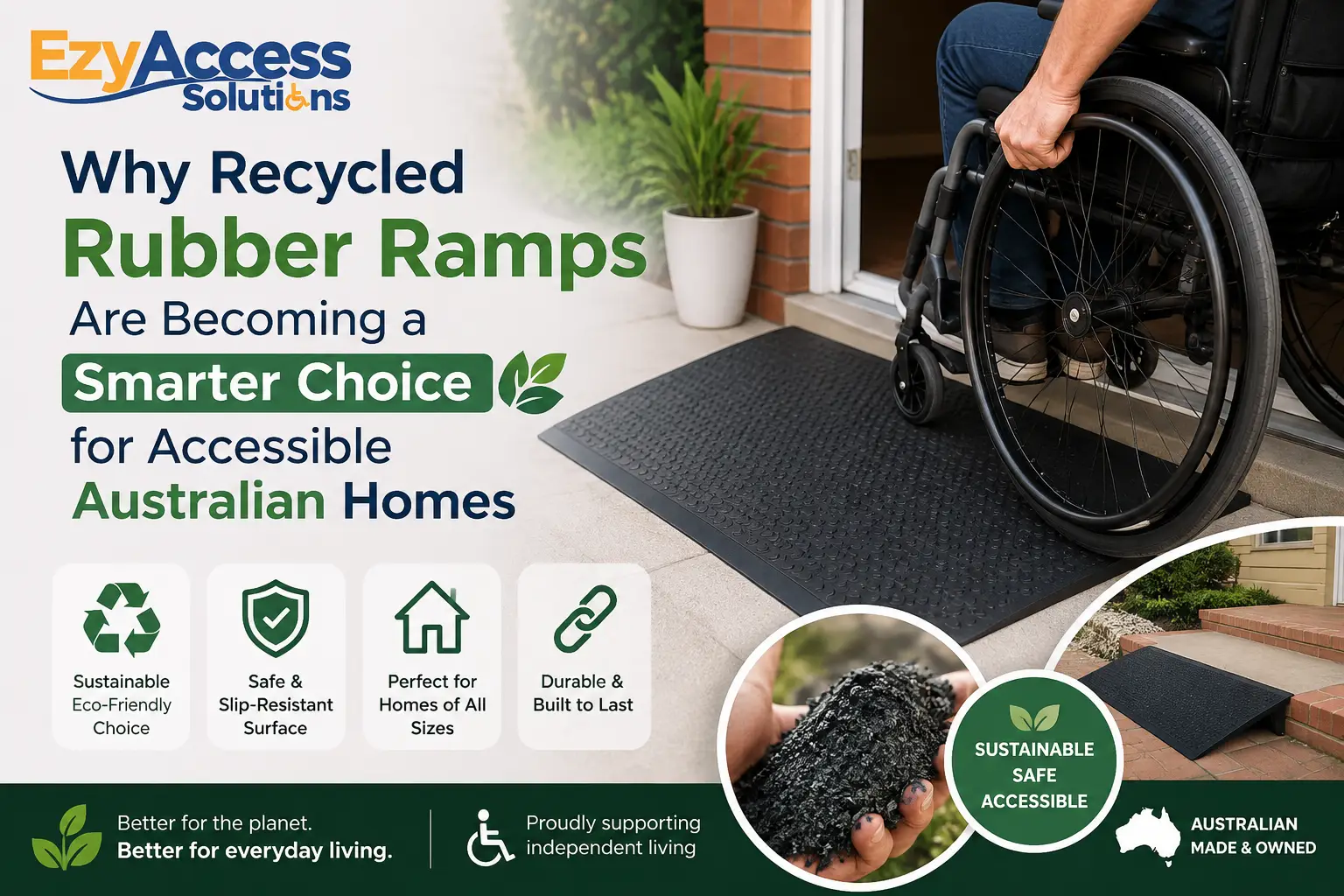
Creating an accessible home should not feel like an overwhelming renovation project. For many Australian households, the biggest mobility challenge is often only a few centimetres high.
A raised doorway, sliding door track, small patio step or uneven entrance can make daily movement difficult for wheelchair users, older Australians, people recovering from surgery and anyone living with limited mobility. These obstacles may look minor, but they can affect safety, confidence and independence.
This is where rubber ramps are making a real difference.
Practical, durable and easy to install, recycled rubber ramps offer a simple way to improve access without committing to permanent structural work. They can help create smoother transitions at entrances, bathrooms, garages, balconies and internal doorways while blending neatly into the surrounding area.
At Ezy Access Solutions, we understand that accessibility products need to do more than meet a basic function. They must feel secure underfoot, suit the property and make everyday life easier. Recycled rubber access products do exactly that, which is why more Australian homeowners, carers, builders and support providers are choosing them.
What Are Recycled Rubber Ramps?
Recycled rubber ramps are access ramps manufactured from repurposed rubber materials, often including rubber recovered from used tyres and other industrial products.
The material is processed and shaped into a strong, dense ramp that can bridge small changes in floor height. Depending on the model, the ramp may be used at a doorway, kerb, shower entry, patio or other raised threshold.
Unlike temporary wooden boards or makeshift metal plates, recycled rubber ramps are designed specifically for mobility access. Their weight helps them remain stable, while the textured surface provides grip for wheelchairs, walkers, mobility scooters and pedestrians.
Rubber threshold ramps are particularly useful for low rises where a full modular or permanent ramp system would be unnecessary. They provide a gradual incline across the obstacle, reducing the effort required to move from one surface to another.
Why Australian Homes Need Better Threshold Access
Many homes across Australia were built before accessible design became a priority. Even newer properties may include small lips and steps that create problems for people using mobility equipment.
Common trouble spots include:
- Front and rear door thresholds
- Sliding glass door tracks
- Garage entrances
- Bathroom doorways
- Laundry exits
- Patio and balcony doors
- Garden shed entrances
- Small internal floor level changes
A threshold that barely registers for one person may stop a wheelchair user from moving independently. It may also become a serious trip hazard for an older person or someone using a walking frame.
Accessible home design is not always about major changes. Sometimes, the most effective improvement is a well-fitted ramp placed exactly where it is needed.
Wheelchair rubber ramps can transform these awkward transitions into smoother, safer access points, often without altering the building itself.
Recycled Rubber Offers Strength Without Excessive Complexity
One of the most appealing qualities of rubber ramps is their straightforward design.
They do not usually require concrete foundations, extensive drilling or lengthy installation work. Many models can simply be positioned against the raised surface and used immediately. Some can be trimmed or modified to better suit a doorway, giving homeowners greater flexibility.
The density of recycled rubber provides a reassuring sense of strength. It can support wheelchairs, walkers, mobility scooters and regular foot traffic without feeling light or unstable.
This makes recycled rubber ramps suitable for busy households where the access point may be used many times throughout the day.
For property owners, the lack of complicated installation also means less disruption. There is no need to turn a doorway into a construction zone simply to overcome a small step.
A More Sustainable Accessibility Option
Australians are becoming more thoughtful about the materials used in their homes. Accessibility products are now being judged not only by how well they perform, but also by how responsibly they are made.
Recycled rubber ramps give discarded rubber a useful second life. Instead of sending the material directly to landfill, manufacturers reshape it into a product that improves safety and independence.
This circular approach makes recycled rubber ramps an attractive option for homeowners who want practical accessibility upgrades with a reduced environmental impact.
Sustainability alone is not enough, of course. An access product must still be reliable. Recycled rubber performs well because it is tough, resilient and suited to demanding conditions.
Choosing recycled materials does not mean settling for an inferior product. In this case, the material itself is one of the reasons the ramp works so effectively.
Non-Slip Rubber Access Ramps Provide Reassuring Grip
Slipping is one of the biggest concerns around home entrances, particularly during rain or when surfaces become damp.
Non-slip rubber access ramps are designed with textured surfaces that help provide traction for wheels and footwear. This is especially useful at external entrances, covered patios, garages and other locations where moisture may be present.
Rubber also tends to feel less harsh underfoot than metal. It does not create the same sharp, cold surface and can offer a more forgiving contact point for walkers, canes and wheelchair tyres.
The grip provided by the material helps users approach a threshold with greater confidence. That confidence matters. People should not have to hesitate every time they enter or leave their own home.
Proper placement and maintenance remain important. The ramp should sit firmly against the threshold, and leaves, dirt or water should be cleared when necessary. When correctly fitted, a non-slip rubber ramp can make the access point feel much more secure.
Rubber Threshold Ramps Suit a Wide Range of Doorways
No two homes are exactly alike. Door thresholds vary in height, width, shape and location, so accessibility products need to offer practical sizing options.
Rubber threshold ramps are available in different heights and gradients, allowing buyers to select a product that suits the rise they need to overcome.
The correct fit is important. A ramp that is too low may leave an awkward lip, while a ramp that is too steep may be difficult to use. Measuring the vertical height of the threshold is one of the first steps when selecting a ramp.
You should also consider:
- The available space in front of the doorway
- The width of the wheelchair or mobility scooter
- Whether the door opens inward or outward
- The weight capacity required
- Whether the ramp will be used indoors or outdoors
- The amount of daily traffic across the area
Ezy Access Solutions can help customers choose rubber ramps that better match their doorway and access needs. A small amount of planning can make the final result safer, neater and easier to use.
A Smart Choice for Wheelchairs, Walkers and Mobility Scooters
Wheelchair rubber ramps are not limited to wheelchair users.
They can also assist people using walking frames, rollators, crutches, mobility scooters and other mobility aids. Parents pushing prams and household members moving trolleys or equipment may also find the smoother transition useful.
For wheelchair users, the gradual incline reduces the need to lift the front castors over a raised edge. This can make independent movement easier and reduce strain on carers or family members who assist with pushing.
For people using walkers, a ramp can remove the need to step up and over a lip while balancing the mobility aid. The user can move forward in a steadier, more controlled motion.
The benefit may seem simple, but the effect on everyday life can be significant.
Suitable for Temporary and Long-Term Access Needs
Not every accessibility requirement is permanent.
A person recovering from surgery may need easier access for several weeks or months. A family member may be staying temporarily. A tenant may be unable to make structural changes to the property.
Rubber ramps can be a sensible option in these situations because they are often portable and removable. They can be positioned when needed and relocated if the access requirements change.
At the same time, their durability makes them suitable for long-term use.
This flexibility gives households room to adapt. A ramp can begin at the front doorway and later be moved to a patio, garage or another property. That makes it a practical investment rather than a one-location product.
Lower Maintenance Than Many Traditional Materials
Timber ramps can look appealing, but they may require sealing, painting and ongoing checks for splinters, rot or moisture damage. Metal ramps can corrode in certain conditions and may become hot in direct sunlight.
Recycled rubber ramps are comparatively easy to maintain.
Routine care usually involves removing dirt and debris, checking that the ramp remains firmly positioned and washing the surface when required. The material does not need painting, and it is not vulnerable to rust.
Rubber is also well suited to Australian weather conditions. It can cope with regular outdoor exposure, though correct placement and drainage should still be considered.
For homeowners seeking a low-fuss accessibility product, this reduced maintenance burden is a major advantage.
Better Access Can Support Greater Independence
The true value of rubber ramps is not found in the material alone. It is found in what the product allows a person to do.
A well-positioned ramp may help someone leave the house without assistance. It may make it easier to reach the garden, enter the bathroom or move between the garage and living area.
These small improvements can restore privacy, reduce reliance on carers and help people feel more at ease in their own homes.
Accessibility should not draw unnecessary attention to a person’s limitations. It should quietly remove obstacles.
Recycled rubber ramps do this particularly well. They are uncomplicated, discreet and focused on practical movement.
Why Buy Rubber Ramps from Ezy Access Solutions?
Choosing the right access ramp involves more than finding a product that looks close enough to the required height.
The ramp must suit the threshold, mobility equipment, available space and expected level of use. Poor sizing can make the incline uncomfortable or leave a gap that creates another hazard.
Ezy Access Solutions provides practical access products for Australian homes, businesses and care environments. Our range is selected with real-world mobility needs in mind.
When shopping with Ezy Access Solutions, customers can explore wheelchair rubber ramps, rubber threshold ramps and non-slip rubber access ramps suited to different access points.
Our goal is to make the purchasing process easier. We want customers to feel confident that the product they choose will improve the space rather than create another complication.
A Small Change That Can Make Home Life Easier
Accessibility upgrades do not always need to be expensive, disruptive or permanent.
For many Australian homes, recycled rubber ramps provide a sensible answer to everyday threshold barriers. They are durable, stable, low maintenance and suitable for a variety of mobility aids.
They also support a more responsible approach to material use by turning recycled rubber into a practical product with lasting value.
Most importantly, rubber ramps can make a home easier to navigate.
At Ezy Access Solutions, we believe every person should be able to move through their home with greater safety, dignity and confidence. The right ramp may be a small addition to the property, but for the person using it, the difference can feel much bigger.
Frequently Asked Questions
Recycled rubber ramps are used to bridge small steps, raised door tracks and uneven thresholds. They can help wheelchair users, people with walkers and mobility scooter users move between surfaces more safely.
Many rubber ramps are suitable for outdoor locations such as front doors, garages and patios. The product should be placed on a stable surface and checked regularly for dirt, water and movement.
Measure the vertical rise from the lower surface to the top of the threshold. Select a ramp designed for that height and make sure there is enough room for a gradual, usable incline.
The textured surface of non-slip rubber access ramps provides better grip than many smooth materials. The ramp should still be kept clear of standing water, mud, leaves and other debris.
Many wheelchair rubber ramps can be relocated because they do not require permanent installation. Their weight provides stability, while their removable design allows them to be used at different access points.