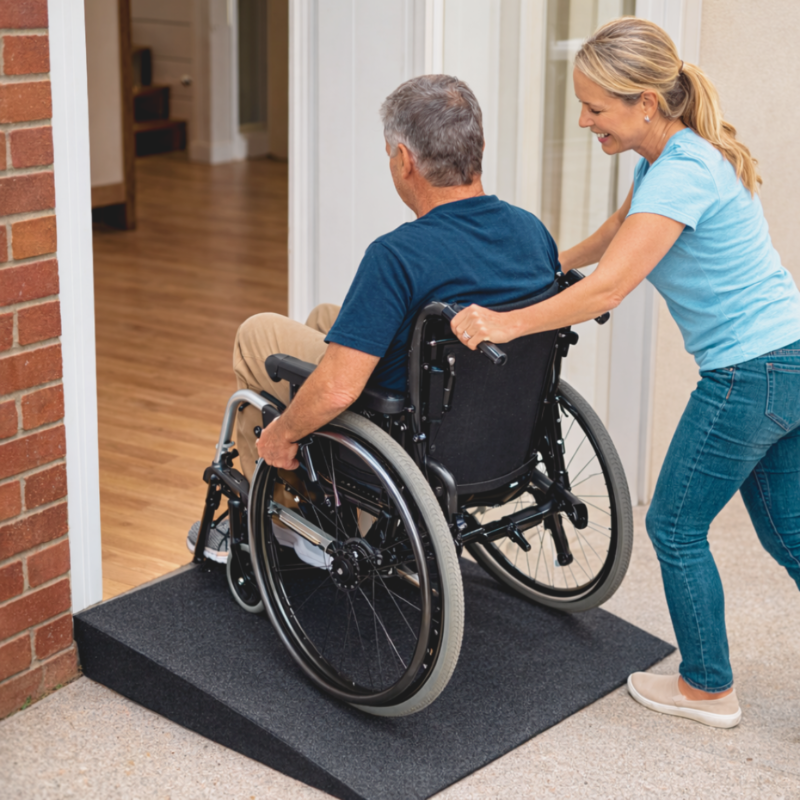
Understanding Ramp Height and Slope Grades
Once you have your height and distance measurements, you can calculate the right ramp grade.
Common Ramp Heights and Recommended Slopes
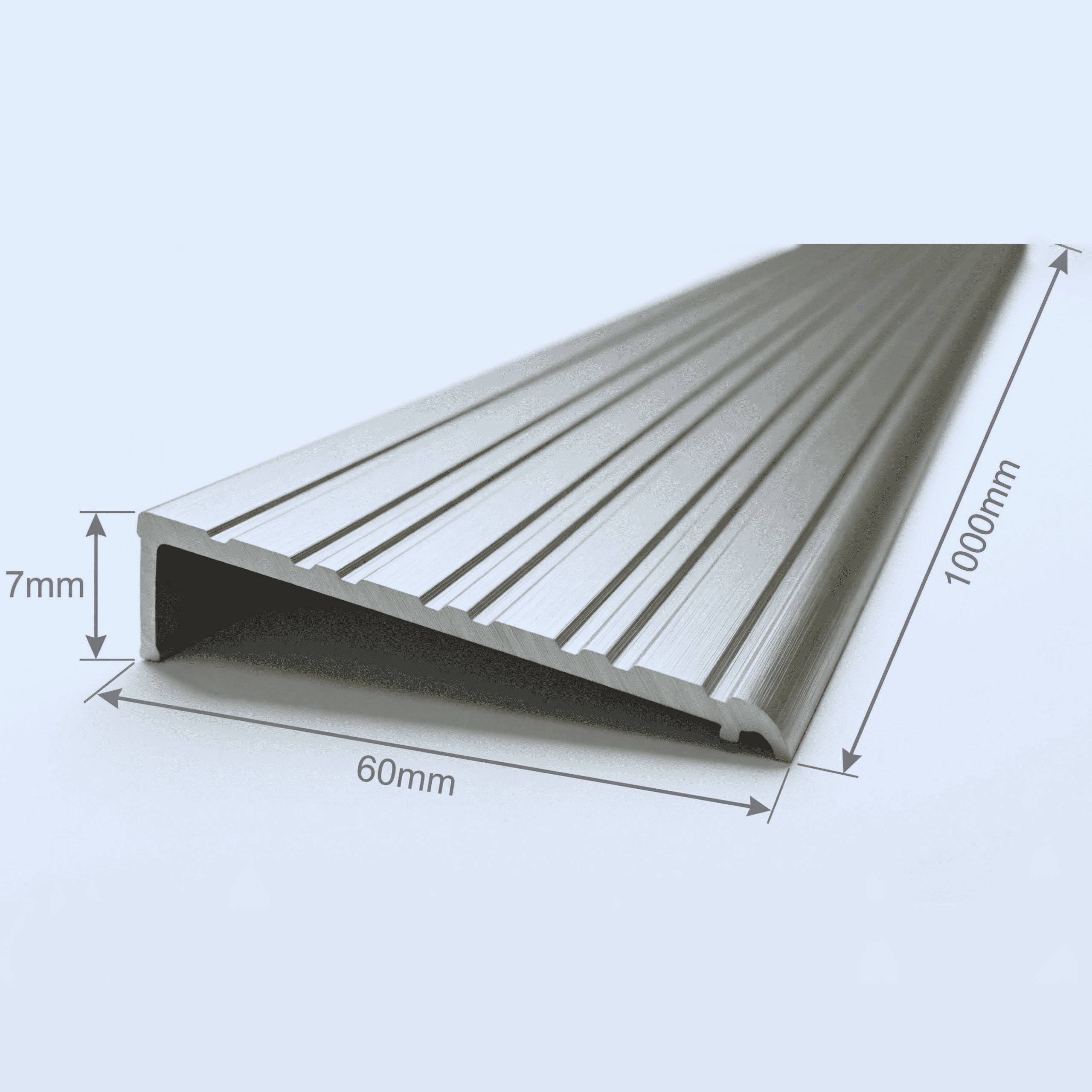
| 10–25mm | 1:12 (very gentle) | Slight thresholds, gentle grade ramps |
| 25–50mm | 1:10 to 1:12 | Standard door thresholds |
| 50–150mm | 1:8 to 1:10 | Single to double steps |
| 150–300mm | 1:6 to 1:8 | Multiple steps |
**Slope Ratio Explanation:** A 1:12 slope means for every 1mm of height, you need 12mm of horizontal distance.
**Example:** For a 100mm high threshold with a 1:10 slope, you'd need 1000mm (1 metre) of ramp length.
---
Measuring for Sliding Door Ramps
Sliding doors present unique challenges since you can't simply place a ramp across the threshold without affecting the door's operation.
Steps to Measure for Sliding Doors
1. **Threshold height** – Measure the lip height as with standard doors
2. **Door frame width** – Measure the full width of the sliding door opening
3. **Space beside the door** – Measure the space available to one side of the door
4. **Clearance depth** – Ensure your ramp doesn't block the door's path
Many sliding doors require a [Link: /rubber-threshold-ramps] specifically designed not to interfere with door operation.
---
Checking for Surface Issues
Before ordering, inspect the area where your ramp will sit.
### Look For:
- **Uneven or sloped surfaces** – Use your spirit level to check. Major slopes (more than 10mm) may require a tapered base ramp
- **Cracks or damage** – The base surface should be reasonably smooth
- **Moisture or drainage** – Ensure water won't pool at the ramp base (rubber ramps handle moisture well, but the base shouldn't be waterlogged)
- **Temperature extremes** – Recycled rubber performs well in Melbourne's climate from hot to cold
---
Recording Your Measurements
Create a simple measurement sheet:
```
Location: _______________
Height: _____ mm
Width: _____ mm
Available depth: _____ mm
Surface condition: _______________
Photos attached: Yes / No
Special notes: _______________
```
Taking photos from multiple angles helps our team confirm measurements before manufacturing your custom ramp.
---
When to Choose Different Ramp Heights
Your choice of ramp height depends on your specific accessibility need:
- **10–25mm ramps** – Small thresholds, door lips, slightly uneven surfaces
- **50–100mm ramps** – Single steps, basement transitions
- **100–200mm ramps** – Double steps, significant height changes
- **200–300mm ramps** – Triple steps, significant level changes
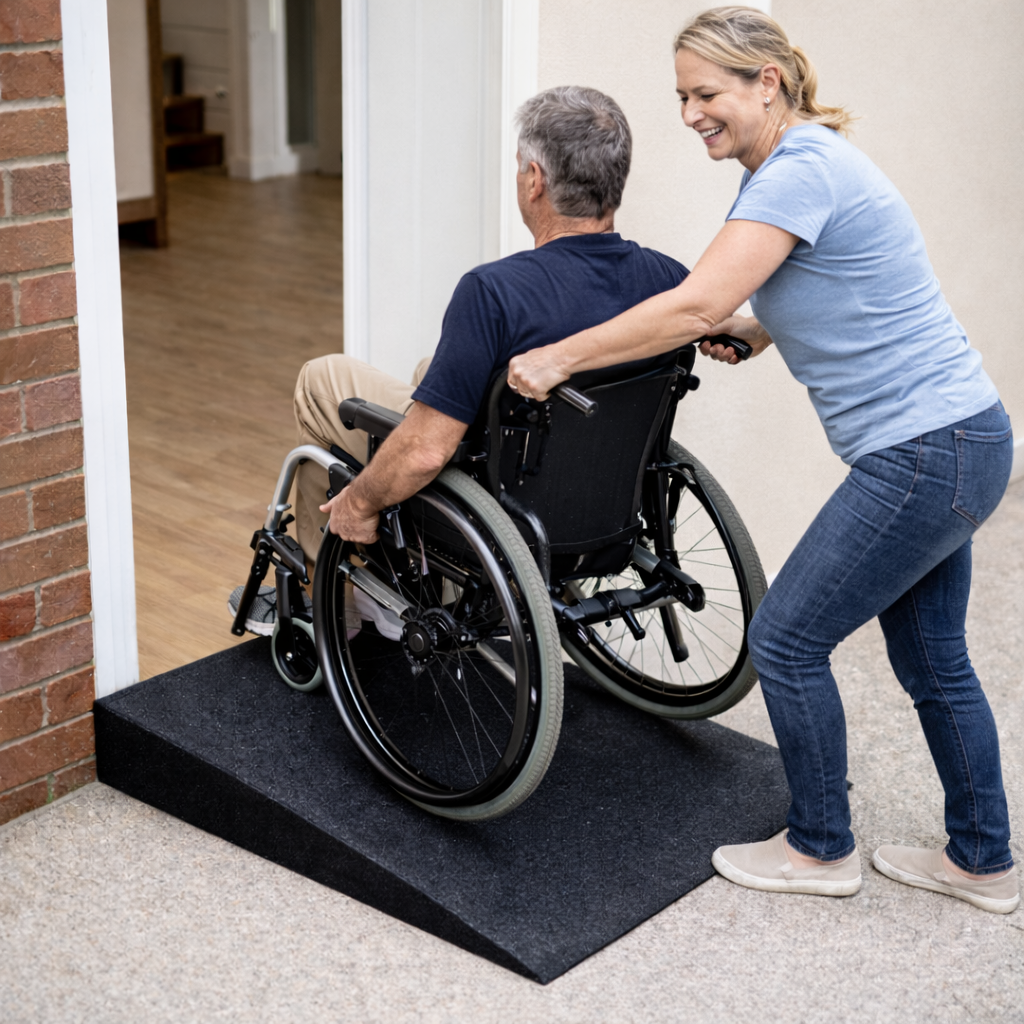
For wheelchair users, the gentler the slope, the better. Always opt for the longest possible ramp length if space allows.
Why Accurate Measurements Matter
Inaccurate measurements lead to:
- Ramps that don't fit properly
- Slopes that are too steep for wheelchair users
- Safety issues during installation
- Wasted money on products you can't use
- Delays in getting your accessibility solution
Professional measurement takes 15–20 minutes and saves significant headaches later.
---
Common Measurement Mistakes to Avoid
1. **Measuring only at one point** – Thresholds aren't always level; measure multiple points
2. **Forgetting the slope ratio** – A 200mm rise needs 2400mm of ramp length for a 1:12 slope
3. **Not accounting for handrails** – If you need handrails, they reduce usable ramp width
4. **Ignoring the available space** – Measure the actual space you have before choosing ramp length
5. **Mixing millimetres and metres** – Keep all measurements in millimetres for clarity
---
Ready to Order Your Rubber Ramp?
Once you've taken these measurements, you have everything needed to order the perfect recycled rubber ramp for your space. EZY Access Solutions manufactures custom ramps to your exact specifications, using high-quality recycled rubber that's durable, slip-resistant, and environmentally friendly.
Free Ramp Sample
Unsure about rubber ramp quality or colour? Request a **free sample** of our recycled rubber material. Feel the durability and see the finish for yourself before committing to a full ramp.
[Contact EZY Access Solutions today for your free sample and expert advice on ramp selection.]
---
Key Takeaways
- Measure height, width, and available depth carefully
- Use the 1:12 slope ratio as your accessibility gold standard
- Record all measurements in millimetres
- Take photos of your space for reference
- Check the surface for issues that might affect installation
- Contact professionals if you're unsure about any measurement