How Recycled Rubber Ramps Are Made – From Tyres to Access Solutions
Learn how recycled rubber ramps are manufactured from waste tyres. Discover the eco-friendly process behind sustainable wheelchair ramps and discover why they're superior to traditional materials.
How Recycled Rubber Ramps Are Made - From Tyres to Access Solutions
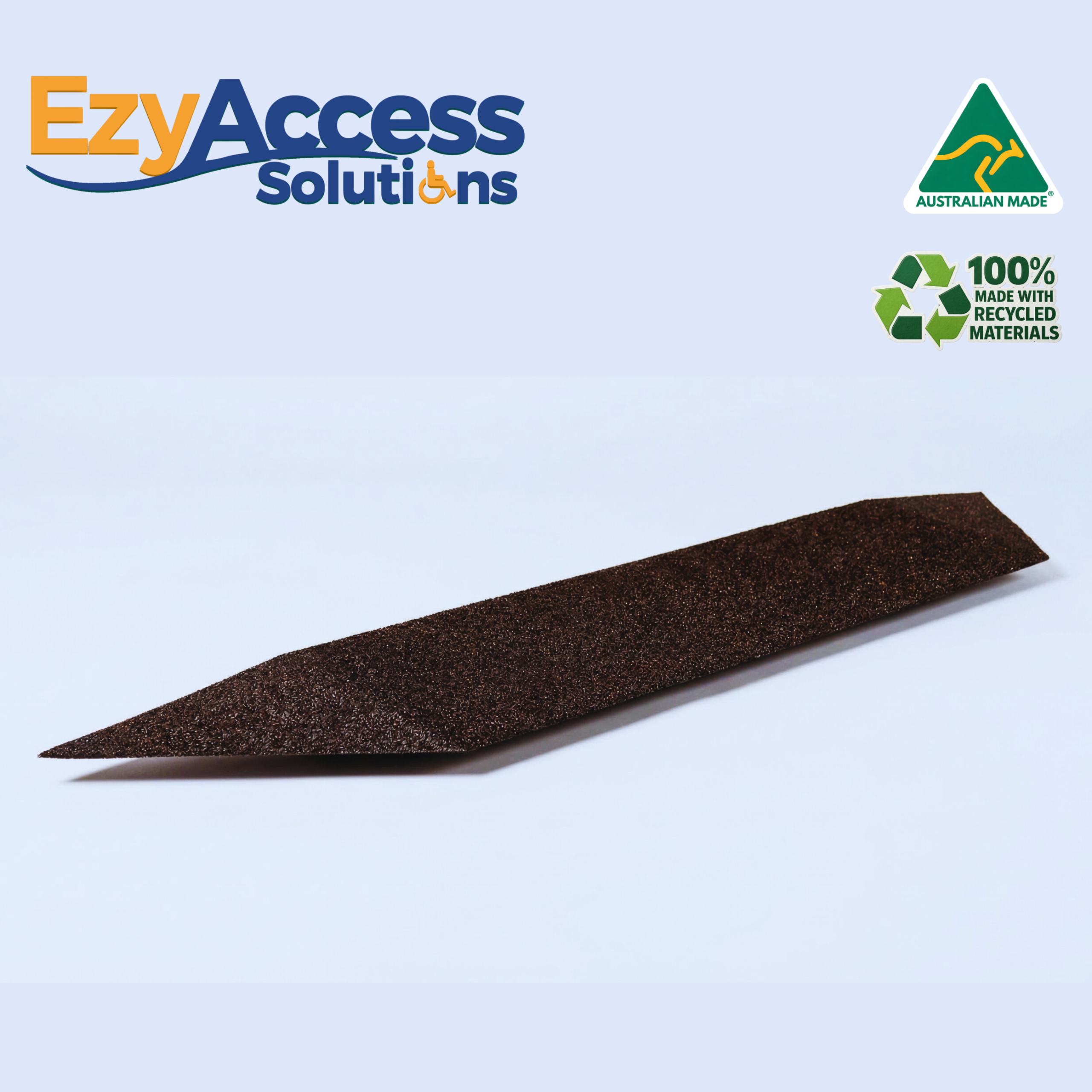
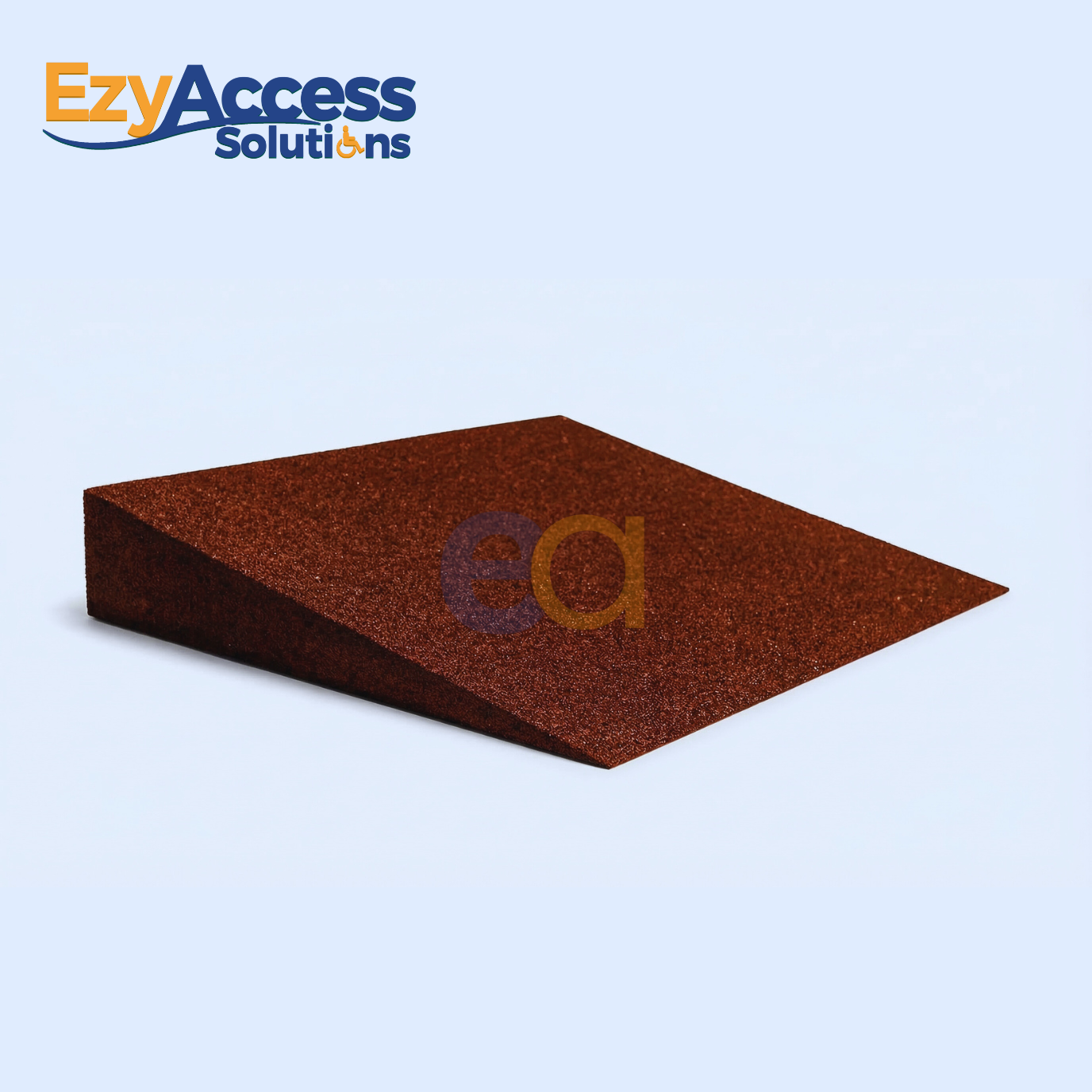
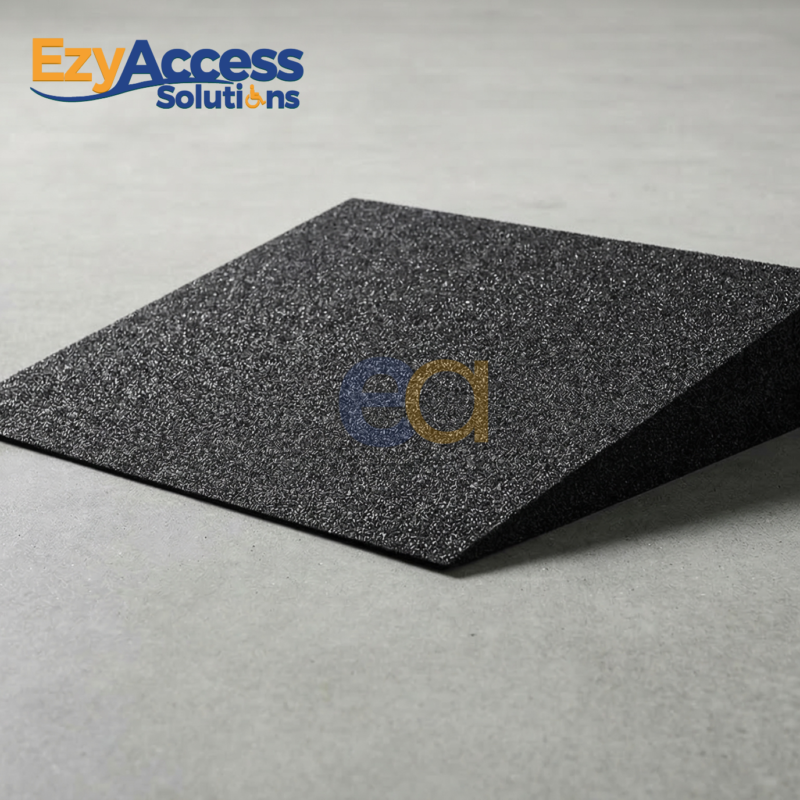
In Australia, millions of tyres are discarded each year, creating a significant environmental challenge. Yet innovative manufacturers are transforming this waste into high-performance products that solve real-world accessibility problems. At EZY Access Solutions, we've pioneered the manufacturing of recycled rubber ramps—a sustainable alternative to concrete and timber that delivers superior performance for wheelchair access, mobility aid support, and general accessibility.
This comprehensive guide explores how recycled rubber ramps are manufactured, from the initial tyre collection through to the finished product installed in homes and facilities across Melbourne and beyond.
he Environmental Challenge: What Happens to Old Tyres?
Before understanding how recycled rubber ramps are made, it's important to recognise the scale of the problem they solve. Australia generates approximately 400,000 tonnes of waste tyres annually. These tyres don't biodegrade—they can persist in landfills for over 1,000 years.
Traditional disposal methods create environmental hazards:
- **Landfill accumulation**: Tyres take up significant space and leach chemicals into soil and groundwater
- **Illegal dumping**: Uncollected tyres often end up in illegal dump sites
- **Burning**: Incineration releases toxic air pollutants and greenhouse gases
- **Habitat damage**: Tyres in natural environments provide breeding grounds for disease-carrying insects
The Australian recycling industry has developed innovative solutions to divert tyres from landfills. One of the most successful applications is the transformation of used tyres into durable, functional products like recycled rubber ramps.
The Manufacturing Process: From Tyre to Ramp
tage 1: Collection and Sorting
The recycled rubber ramp manufacturing process begins with systematic tyre collection. Sources include:
- Tyre retailers and automotive workshops- Waste management facilities- Construction and demolition waste- Industrial scrap yards
Collected tyres are sorted by condition and type. Tyres destined for ramp manufacturing must meet quality standards to ensure the final product performs safely and durably.
### Stage 2: Shredding and Granulation
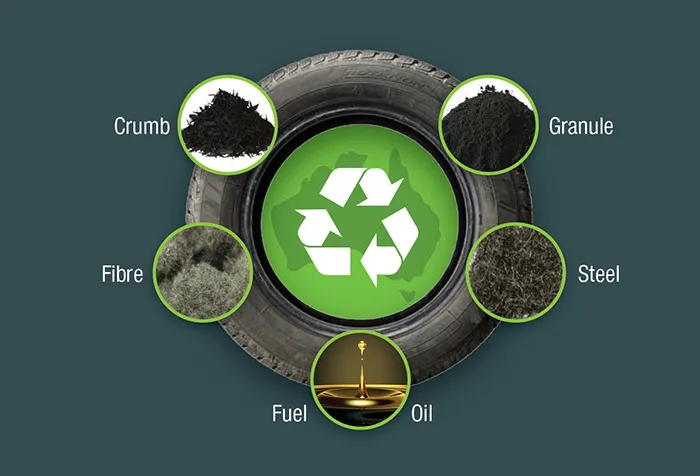
Once sorted, tyres are transported to processing facilities where they undergo mechanical shredding. This process:
1. **Removes steel wire reinforcement**: Steel belts and wires are extracted using magnetic separation equipment, making the material safe for further processing2. **Shreds the rubber**: Industrial shredders reduce tyres to smaller pieces, typically 25-50mm fragments3. **Grinds to granules**: Further processing reduces material to granules suitable for binding
This mechanical process differs from chemical recycling—no solvents or harsh chemicals are required, making it an environmentally responsible approach.
### Stage 3: Binding and Compression
Raw rubber granules require binding to create solid, cohesive products. The binding process involves:
- **Mixing with binders**: Recycled rubber granules are combined with polyurethane or rubber-based binders that create structural integrity- **Moulding**: The mixture is placed into moulds or presses that define the shape and dimensions- **Compression**: High-pressure equipment compresses the mixture into dense, solid forms- **Curing**: The material is left to cure, allowing the binder to fully set and create a durable finished product
### Stage 4: Quality Control and Testing
Before recycled rubber ramps leave the manufacturing facility, they undergo rigorous quality testing to ensure safety and performance:
- **Durability testing**: Ramps are tested for compression resistance and long-term stability- **Slip resistance testing**: Surface friction is measured to ensure safety in wet conditions- **Weather testing**: Samples are exposed to UV radiation and temperature cycling to simulate years of outdoor use- **Load testing**: Ramps are tested with heavy loads to verify they can safely support wheelchairs, walking frames and people with mobility aids- **Dimensional verification**: Each ramp is checked to ensure it meets custom specifications exactly
### Stage 5: Custom Fabrication and Finishing
At EZY Access Solutions, we manufacture recycled rubber ramps as a custom product, tailored to each customer's specific requirements. This final stage includes:
- **Custom cutting**: Ramps are cut to precise dimensions specified for the customer's entry points or thresholds- **Edge finishing**: Edges are smoothed and reinforced to prevent damage and ensure safety- **Surface texturing**: The top surface is textured to maximise grip, particularly important in Australia's variable weather conditions- **Custom colours** (where available): Ramps can be manufactured in colours that complement your home or facility- **Quality assurance**: Final inspection confirms every ramp meets specifications before delivery
## Why Recycled Rubber Outperforms Traditional Materials
Understanding how recycled rubber ramps are made reveals why they deliver superior performance compared to traditional alternatives.
The recycled rubber ramp manufacturing process begins with systematic tyre collection. Sources include:
- Tyre retailers and automotive workshops- Waste management facilities- Construction and demolition waste- Industrial scrap yards
Collected tyres are sorted by condition and type. Tyres destined for ramp manufacturing must meet quality standards to ensure the final product performs safely and durably.
### Stage 2: Shredding and Granulation
Once sorted, tyres are transported to processing facilities where they undergo mechanical shredding. This process:
1. **Removes steel wire reinforcement**: Steel belts and wires are extracted using magnetic separation equipment, making the material safe for further processing2. **Shreds the rubber**: Industrial shredders reduce tyres to smaller pieces, typically 25-50mm fragments3. **Grinds to granules**: Further processing reduces material to granules suitable for binding
This mechanical process differs from chemical recycling—no solvents or harsh chemicals are required, making it an environmentally responsible approach.
### Stage 3: Binding and Compression
Raw rubber granules require binding to create solid, cohesive products. The binding process involves:
- **Mixing with binders**: Recycled rubber granules are combined with polyurethane or rubber-based binders that create structural integrity- **Moulding**: The mixture is placed into moulds or presses that define the shape and dimensions- **Compression**: High-pressure equipment compresses the mixture into dense, solid forms- **Curing**: The material is left to cure, allowing the binder to fully set and create a durable finished product
### Stage 4: Quality Control and Testing
Before recycled rubber ramps leave the manufacturing facility, they undergo rigorous quality testing to ensure safety and performance:
- **Durability testing**: Ramps are tested for compression resistance and long-term stability- **Slip resistance testing**: Surface friction is measured to ensure safety in wet conditions- **Weather testing**: Samples are exposed to UV radiation and temperature cycling to simulate years of outdoor use- **Load testing**: Ramps are tested with heavy loads to verify they can safely support wheelchairs, walking frames and people with mobility aids- **Dimensional verification**: Each ramp is checked to ensure it meets custom specifications exactly
### Stage 5: Custom Fabrication and Finishing
At EZY Access Solutions, we manufacture recycled rubber ramps as a custom product, tailored to each customer's specific requirements. This final stage includes:
- **Custom cutting**: Ramps are cut to precise dimensions specified for the customer's entry points or thresholds- **Edge finishing**: Edges are smoothed and reinforced to prevent damage and ensure safety- **Surface texturing**: The top surface is textured to maximise grip, particularly important in Australia's variable weather conditions- **Custom colours** (where available): Ramps can be manufactured in colours that complement your home or facility- **Quality assurance**: Final inspection confirms every ramp meets specifications before delivery
## Why Recycled Rubber Outperforms Traditional Materials
Understanding how recycled rubber ramps are made reveals why they deliver superior performance compared to traditional alternatives.
Recycled Rubber vs. Concrete
oncrete ramps** are rigid and durable but present several disadvantages:
- Less slip-resistant, particularly in wet weather (a critical factor in Melbourne's climate)
- Requires council approval for permanent installation
- Cannot be easily relocated or customised
- Contributes to urban heat island effect (concrete absorbs and radiates heat)
- Manufacturing cement has significant carbon footprint
Recycled rubber ramps provide superior grip through textured surfaces and are portable, requiring no approvals or structural work.
### Recycled Rubber vs. Timber
**Timber ramps** offer aesthetic appeal but suffer from significant limitations:
- Deteriorate in wet weather, becoming slippery and unstable
- Require regular maintenance and replacement
- Vulnerable to rot, termites and weather damage
- Not suitable for Melbourne's damp climate
- Cannot support heavy loads long-term
Recycled rubber maintains performance year-round, requires minimal maintenance, and provides consistent load-bearing capacity.
Recycled Rubber vs. Aluminium
**Aluminium ramps** are lightweight but have drawbacks:
- Become extremely slippery when wet
- Prone to denting and surface damage
- More expensive than recycled rubber
- Not as environmentally sustainable as recycled materials
- Can be noisy when wheelchairs or walking aids are used
Recycled rubber provides superior grip, durability and quieter operation.
## Environmental Benefits of Recycled Rubber Ramp Manufacturing
Beyond solving accessibility challenges, recycled rubber ramp manufacturing delivers significant environmental advantages:
### Waste Diversion
Each recycled rubber ramp removes approximately 10-15kg of waste tyres from landfills, preventing decades of persistence in the environment.
### Carbon Reduction
Manufacturing recycled rubber products requires significantly less energy than producing new materials from raw resources. A typical recycled rubber ramp has approximately 40-50% lower carbon footprint compared to equivalent concrete ramp.
### Resource Conservation
Using recycled materials reduces demand for virgin rubber, plastic, and concrete, conserving finite resources and reducing mining and extraction impacts.
### Circular Economy Support
Recycled rubber ramp manufacturing exemplifies circular economy principles—transforming waste into valuable products rather than extracting new resources.
## Australian-Made Quality and Expertise
EZY Access Solutions manufactures recycled rubber ramps in Melbourne, combining local expertise with sustainable practices. As Australia's only manufacturer specialising in custom recycled rubber access ramps, we understand the specific requirements of Australian homes and facilities.
Our manufacturing process ensures:
- **Custom sizing**: Perfect fit for your specific application
- **Australian climate optimisation**: Textured surfaces and materials selected for performance in variable weather
- **Local expertise**: Understanding of Australian building practices and accessibility requirements
- **Quick turnaround**: Manufactured to order with efficient delivery across Melbourne and beyond
## Durability and Longevity
Recycled rubber ramps manufactured to high standards can maintain performance for 15-20+ years with minimal maintenance. This longevity is superior to timber (which typically requires replacement every 5-10 years) and comparable to concrete, with the added benefits of superior grip, flexibility and environmental credentials.
## Conclusion
The journey from waste tyre to functional access solution represents innovation in sustainable manufacturing. Recycled rubber ramps demonstrate that environmental responsibility and practical performance aren't opposing goals—they work together.
By choosing recycled rubber ramps, you're not only investing in a superior accessibility solution for your home or facility, but also supporting circular economy principles and reducing environmental impact. Every recycled rubber ramp keeps tyres out of landfills whilst providing safe, reliable access for years to come.
EZY Access Solutions specialises in manufacturing custom recycled rubber access ramps, threshold ramps and safety products right here in Melbourne. We're committed to delivering sustainable accessibility solutions that don't compromise on performance.
71 Pilgrim Avenue
Chevy Chase,
MD 20815
Related Posts
Rubber Ramps vs Aluminium Ramps: Which is Right for You?
**Aluminium ramps** are lightweight but have drawbacks:
- Become extremely slippery when wet
- Prone to denting and surface damag...
NDIS Handyman Services by Ezy Access Solutions
Finding the right NDIS handyman is essential when creating a home that supports independence, mobility, and safety. Whether you are an ...